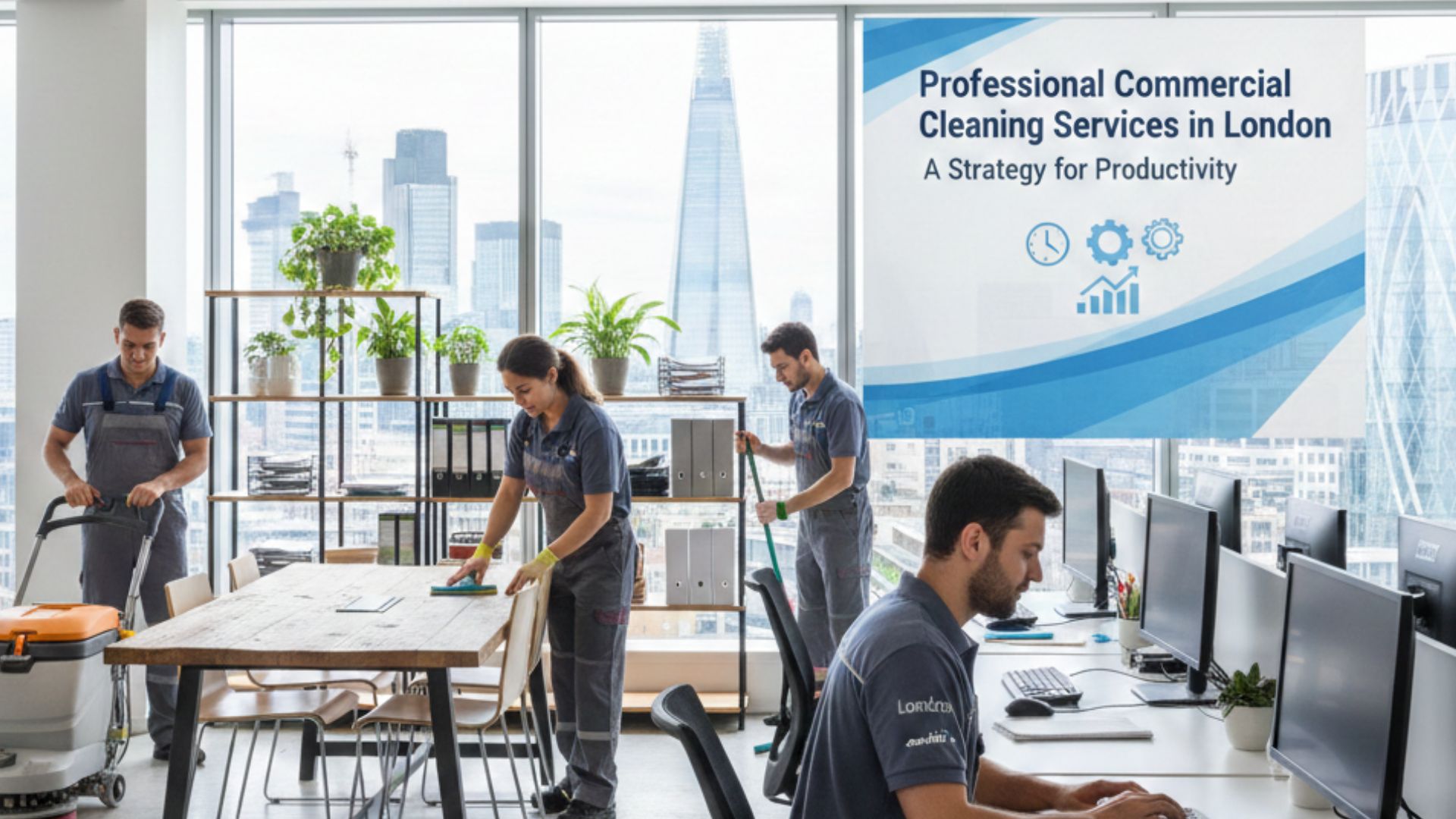
What separates a clean building from one that is consistently well managed? With corporate building cleaning, it is not always clear where routine tasks end and specialist work begins, or how standards will hold across rooms, shifts and changing occupancy. Defining what the service covers, and how you will review its delivery, matters as much as the finished appearance.
Effective cleaning is a coordinated service, not a checklist of isolated tasks. This guide explains how to define coverage, distinguish recurring duties from specialist requirements and shape a schedule around building use, access and operational priorities. It also shows how to reduce disruption, set clear expectations and review completed work so issues can be addressed. UF Cleaning supports organisations with flexible schedules and real-time quality monitoring through Taskbe. A clear plan helps maintain a hygienic, presentable workplace and gives facilities teams better oversight of service quality.
Key Takeaways
- Define what corporate building cleaning covers, separating regular upkeep from specialist tasks.
- Organise routines around how spaces are occupied and used to help limit disruption.
- Assess quality through visible results, completion records, inspections and feedback from building users.
- Map spaces, priorities, access needs and operational constraints before setting a cleaning schedule.
- See how flexible schedules, eco-friendly products and Taskbe monitoring can support consistent service delivery.
What does corporate building cleaning cover, and why does scope matter?
Corporate building cleaning is the planned cleaning and hygiene maintenance of workplaces and shared business premises, organised to keep each area suitable for its use. It can include everyday tasks such as wiping surfaces, cleaning floors and attending to touchpoints, alongside periodic treatments for carpets, windows or hard floors. A clear plan separates recurring routines from specialist work, so regular upkeep does not get confused with tasks carried out less often.
Scope matters because different parts of a building have different uses. Reception areas and meeting rooms may be prominent to visitors, while kitchens and washrooms are shared throughout the working day. A task plan should reflect each room’s function, occupancy and access, rather than assigning the same routine everywhere. For a general overview of the scope of commercial cleaning, see the common duties and equipment associated with the wider field.
Which areas and tasks belong in a corporate cleaning plan?
A useful plan accounts for workspaces, meeting rooms, shared kitchens, washrooms, reception areas and circulation routes such as corridors and entrances. Routine duties may include cleaning accessible surfaces, floors and frequently touched points. Periodic specialist treatments can address surfaces or areas that need a different method, including carpet care, window cleaning or hard-floor treatment.
Set frequency according to how a space is used, its condition and the service priorities agreed for the building. A meeting room booked throughout the day may need more regular attention than one used occasionally. Listing what happens routinely, what is periodic and which areas take priority gives site teams a practical basis for consistent delivery.
How does building use change cleaning priorities?
A lightly used office with occasional meetings has different demands from a busy, visitor-facing workplace. In the latter, entrance floors, reception touchpoints and meeting spaces can show the effects of use more quickly, while quieter work areas may need a less frequent routine. Shared kitchens and washrooms often need particular attention because many occupants use them throughout the day.
Occupancy patterns also affect access. Cleaning during a busy period may interrupt meetings or restrict movement through shared routes. Scheduling work for quieter periods can help maintain normal operations. Consider when teams are present, which rooms are booked and where visitors move through the building. This makes corporate building cleaning responsive to actual site use, rather than assigning identical tasks at the same time everywhere.
Scope makes expectations visible. It clarifies which areas receive routine care, where specialist treatments fit and how priorities may shift as use changes. With those distinctions in place, the next step is to organise delivery across the site, including access, inspection and a clear process for resolving issues.
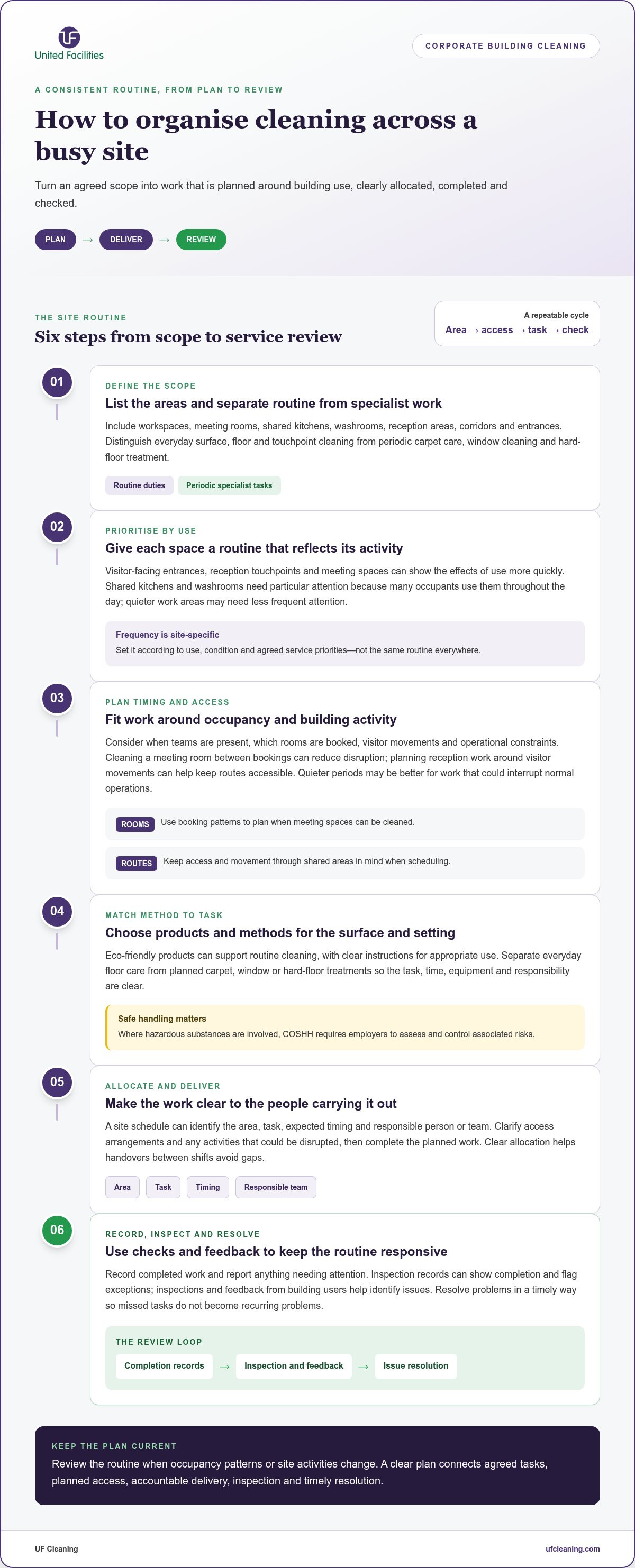
How do corporate building cleaning routines work across a busy site?
A dependable routine turns an agreed scope into work that can be delivered and checked. Start by allocating tasks by area, clarifying access arrangements and identifying activities that could be disrupted. Cleaning staff then complete the planned work, record what has been done and report anything that needs attention. Inspections and a clear process for resolving issues help keep the routine responsive, rather than allowing missed tasks to become recurring problems.
A consistent recurring cleaning routine connects agreed tasks, planned access, accountable delivery, inspection and timely resolution of issues. This gives site teams a shared understanding of what should happen and helps maintain standards across different areas and shifts.
How should cleaning be organised around daily building activity?
Schedule work around when people use each space and what else is happening on site. Cleaning a meeting room between bookings, for example, can reduce disruption. In a busy reception, plan tasks around visitor movements to help keep routes accessible. Washrooms and shared spaces can be included at planned points throughout the service period, with timing adjusted to occupancy and the building’s operating needs.
There is no single frequency that suits every site. Account for access, expected use and practical constraints, then review the routine when occupancy patterns or activities change.
How do supplies, methods and specialist tasks fit together?
Choose methods and products to suit the surface, task and setting. Eco-friendly products can support routine cleaning, while clear instructions help staff use them appropriately. Where hazardous substances are involved, COSHH requires employers to assess and control associated risks. Safe handling arrangements should therefore form part of how cleaning work is organised.
Everyday floor care is different from specialist treatment. A routine may include keeping floors presentable, while periodic hard-floor, carpet or window cleaning calls for a planned task suited to the surface and its condition. Separating these activities makes it easier to allocate the right time, equipment and responsibility without interrupting routine duties.
Consistency also depends on clear task allocation. A site schedule can identify the area, task, expected timing and person or team responsible, so handovers between shifts do not leave gaps. Inspection records can show whether work was completed and flag exceptions. Feedback can also identify issues that may not be apparent during a walk-through.
For a reference point when describing cleaning outcomes, the ISSA Clean Standards for commercial facilities set out a framework for commercial cleaning. A monitoring platform such as Taskbe can provide real-time visibility of service quality, helping teams follow up on reported issues and review delivery across site areas.
UF Cleaning’s flexible schedules support routines shaped around building activity and operational requirements. Organisations planning recurring corporate cleaning services can align access, tasks and review points with the way their site works.
How can businesses assess cleaning quality and service consistency?
A reliable review looks beyond whether a task has been marked complete. Clean touchpoints, presentable floors and well-maintained shared areas are visible outcomes. Records, inspections and building-user feedback help show how consistently those outcomes are achieved. Visible standards reflect what occupants experience, while recorded checks reveal whether service is consistent and where follow-up is needed.
Choose a small set of indicators tied to the building’s priorities. Decide what evidence will demonstrate each one and how often it will be reviewed. The review frequency can vary by task and level of use. A practical framework might include:
- Task completion: Compare the agreed schedule with completed work records during the service review.
- Visible condition: Inspect priority touchpoints, floors and shared areas at intervals suited to their use.
- Inspection findings: Record observations by location and task, then look for recurring findings over time.
- Building-user feedback: Note reported concerns and compare them with the relevant area and service activity.
Which indicators help reveal whether cleaning is working?
These measures complement one another. A completion record shows that a task was logged, but not necessarily that the result met the expected standard. An inspection checks the condition directly, while user feedback can identify issues that arise between inspections or affect a particular team. Together, they provide a more balanced view than any one measure alone.
Look for patterns rather than treating every concern as an isolated incident. If the same issue keeps appearing in one location or around the same task, the routine may not match actual site use. Keep the review practical: focus on agreed priorities, record what was observed and assign a clear follow-up. This makes service discussions specific and constructive.
How does real-time monitoring support service oversight?
UF Cleaning uses the Taskbe platform for real-time quality monitoring. Recorded observations can make service quality more visible, support follow-up on identified issues and provide a clearer basis for discussing performance. The platform complements, rather than replaces, inspection and feedback processes. Each offers a different perspective on how cleaning is delivered and experienced.
For organisations in the UK, quality measures should be grounded in the site’s own requirements and applicable local guidance. OSHA’s workplace sanitation standards are a United States reference, not UK requirements. They should not replace UK guidance or be used as the basis for judging local compliance.
A concise review record can bring the evidence together: the indicator, what was observed, when it was checked and any action taken. Reviewing that information at an agreed frequency helps facilities teams recognise strong performance, address repeated concerns and adjust priorities as building use changes.
How can you plan corporate building cleaning around site needs?
Start with how the building is used, rather than applying a standard timetable to every room. Map the spaces, note occupancy and access constraints, then agree priorities. This gives cleaning teams a clearer basis for organising work and helps facilities teams explain what matters most. It also makes it easier to assess whether the schedule remains suitable as site activity changes.
Use this sequence to turn site information into a workable cleaning plan:
- Map the spaces. List each zone, its surface types and its function, from offices and meeting rooms to shared facilities and visitor areas.
- Establish priorities. Identify areas needing particular attention because of frequent use, public access, appearance or operational importance.
- Plan access. Record when spaces are occupied, when activities take place and any access windows or constraints that affect cleaning.
- Agree routines. Match tasks and timing to each area’s use, distinguishing regular upkeep from periodic work.
- Review outcomes. Compare the plan with site conditions and feedback, then adjust priorities or timing when needs change.
What should a building needs assessment record?
Keep the assessment concise and practical. Record building zones, surface types, access windows and patterns of use, alongside shared spaces that need particular attention. Note activities that require coordination, such as scheduled meetings or busy reception periods. Include current concerns and the expected cleaning outcomes, so the plan reflects both site conditions and organisational priorities.
Make details specific. For example, note that a meeting room is regularly booked throughout the working day rather than simply labelling it “busy”. A sensitive area may need restricted access or careful timing. Recording particulars like these helps translate broad expectations into tasks that can be scheduled and reviewed, while making it clearer where disruption should be minimised.
How can schedules adapt as workplace needs change?
Occupancy can shift as teams change their working patterns, seasons affect site use or operations introduce new activities. Regular reviews help identify when the original schedule no longer reflects demand. If a shared area becomes more heavily used, its priority or timing may need reconsideration. If a space is used less, attention can be allocated according to agreed needs.
Flexible schedules allow service timing to follow site activity while keeping tasks and priorities clear. A review does not need to begin with a major change. Compare observed conditions and user feedback with the plan, record any recurring mismatch and decide whether an adjustment is appropriate. This keeps corporate building cleaning responsive without assuming every site follows the same pattern.
For a plan shaped around your building’s use, discuss a tailored cleaning plan with UF Cleaning.
How UF Cleaning supports corporate building cleaning across the UK
UF Cleaning provides commercial cleaning and facilities support to organisations across the UK, combining recurring workplace cleaning with specialist support where needed. The business has served organisations since 2010 and shapes schedules around building use and operational requirements. This helps make service practical for the people who work in, visit and manage each site.
A building may include busy shared areas, individual workspaces and surfaces requiring periodic specialist care. Flexible schedules help align cleaning with site activity, while eco-friendly products support routine work. Real-time quality monitoring through the Taskbe platform gives organisations visibility of service delivery and clearer context for discussing issues. UF Cleaning also provides 24/7 operational support, extending support beyond the individual cleaning tasks carried out on site.
What can a tailored commercial cleaning service include?
A recurring service can be shaped around the building, its priorities and how its spaces are used. Office cleaning can sit alongside routine floor care, with specialist hard-floor, carpet or window cleaning planned as complementary work where appropriate. UF Cleaning also supports commercial environments including retail, industrial and manufacturing, education, and events and venues, adapting the approach to the setting rather than treating every site alike.
The aim is coordinated delivery: regular maintenance supports day-to-day presentation, while identified specialist needs can be planned as a distinct part of the service. Agreeing priorities, access arrangements and timing connects these elements without losing sight of normal building operations. As use changes, the schedule can be reviewed to keep the service aligned with organisational requirements.
What happens when an organisation requests a quote?
A free quote starts a conversation about a suitable service approach. Sharing the building type, main cleaning priorities and preferred service pattern gives UF Cleaning useful context. Details such as high-use shared spaces, specialist surfaces or operational activities can help define the scope of the discussion.
The next step is to consider how recurring cleaning and relevant specialist work can be organised around those needs. This helps establish priorities and practical timing without assuming every site requires the same arrangement. The focus is on a considered plan, a clear service discussion and practical next steps.
For organisations planning corporate building cleaning, a focused conversation can turn site requirements into a service approach shaped around daily use and quality oversight. Request a free cleaning quote to discuss your building’s priorities with UF Cleaning.
Set your workplace up for consistent care
Turn your organisation’s priorities into a clear starting point for service planning. Consider what a well-maintained environment should make easier for employees, visitors and facilities teams, then identify the practical requirements that will support it. A focused conversation can translate those expectations into an approach that fits your building and its day-to-day operations.
Well-planned corporate building cleaning should provide more than a presentable space on the day work is completed. It should support a workplace that feels cared for over time, with a service approach that can be reviewed as your needs evolve. Setting priorities now gives your team a clear route forward.
Request a free cleaning quote to discuss a workplace cleaning plan shaped around your organisation.
Frequently Asked Questions
What is included in corporate building cleaning?
Corporate building cleaning can include regular care of workspaces, meeting rooms, reception areas, kitchens, washrooms and internal routes, with tasks adjusted to each area’s purpose. Desk-side surfaces, tiled entrance floors and shared kitchen worktops, for example, may each need a different approach. The agreed scope should clarify which areas and surfaces are covered, how specialist requirements are handled and what outcome is expected for each space.
How often should a corporate building be cleaned?
There is no single schedule suited to every corporate building. Frequency depends on factors such as occupancy, visitor numbers, activity in each area and how quickly surfaces become soiled. A washroom serving a busy floor may need more frequent attention than a seldom-used meeting room. Start with the building’s patterns of use, then review the schedule if occupancy or operations change.
Can corporate building cleaning take place whilst employees are working?
Yes. Cleaning can be planned around an occupied workplace when tasks and access are coordinated with site activity. Lower-disruption work, such as wiping an unoccupied meeting room or tidying a shared area between busy periods, may fit into the working day. Make access routes and temporarily occupied rooms clear so employees can continue their work with minimal interruption.
How can a business monitor the quality of its cleaning service?
Use more than one form of evidence: compare agreed work records with observations of the finished space, and consider feedback from employees who use it. A simple log can note the area, issue, date and follow-up, making repeated concerns easier to distinguish from one-off problems. UF Cleaning uses Taskbe for real-time quality monitoring, giving organisations another way to maintain visibility of service delivery.
Are eco-friendly products suitable for corporate building cleaning?
Eco-friendly products can be suitable for routine workplace cleaning when the product and method are appropriate for the surface and task. The approach for a kitchen worktop, for instance, may differ from the one used on a floor finish. Good planning considers the required cleaning outcome and the setting, and includes clear product-use instructions for those carrying out the work.
Does corporate building cleaning include carpet and window cleaning?
It can. Carpet and window cleaning are specialist tasks that may complement routine workplace cleaning, alongside hard-floor care. Their timing and scope depend on the building’s surfaces, condition and operational priorities. An organisation may, for example, plan carpet treatment as a distinct task rather than part of everyday floor upkeep. A clear service plan shows how this work fits alongside regular maintenance.
How can cleaning be arranged to minimise disruption?
Share the building’s working patterns, room bookings and activities that need uninterrupted access. This helps align task timing with quieter periods or gaps in room use, and makes it easier to avoid obstructing busy routes. A meeting space, for example, can be scheduled for attention between bookings. If plans change, communicating the change promptly helps cleaning teams adapt to the day’s priorities.
Does UF Cleaning provide ongoing support after cleaning begins?
Yes. UF Cleaning provides ongoing operational support, with real-time quality monitoring through Taskbe to help maintain visibility of the service. If a concern arises, recording its location and nature gives teams a useful starting point for follow-up. Regular communication can also keep cleaning aligned with changes in building use, priorities or access needs, supporting a consistent working relationship beyond the initial service arrangements.