A product’s label isn’t a substitute for assessing how it will be used at work. Commercial cleaning compliance with COSHH regulations means identifying hazardous substances, assessing the risks from the cleaning task and controlling workers’ exposure. The Health and Safety Executive says a COSHH risk assessment should address eight points under the COSHH Regulations 2002.
It’s easy to assume familiar or eco-friendly products need less scrutiny, but a product’s name or marketing does not determine whether an assessment is needed. Consider its hazards, how it is used and diluted, where it is used, and who could be exposed.
This article explains which cleaning products and tasks need assessment, why a Safety Data Sheet alone is not enough, and which records and training to maintain. It also covers employers’ responsibilities for in-house cleaning, including safe product use and reviewing controls when substances, methods or workplaces change.
Key Takeaways
- Assess cleaning products in the context of the task, including how and where they’re used, rather than relying on the label alone.
- Keep an organised record of products, assessments and staff training, and revisit it when products or working conditions change.
- A safety data sheet provides important hazard information, but staff also need practical instruction on safe use and controls.
- For in-house cleaning, clarify who is responsible for substances, staff and shared-site coordination before work begins.
Does every cleaning product need a COSHH assessment?
Not every product presents the same risk, but each cleaning task needs consideration when hazardous substances are involved. Assess the substance, how staff use it and which controls are required.
Assessing risks from cleaning substances
A COSHH assessment identifies substances hazardous to health, evaluates exposure and sets controls for the cleaning task. This matters because the same product can pose different risks when sprayed, diluted or used in a confined area. For example, assess a disinfectant by its ingredients, dilution, frequency of use, location and who may be exposed. The Health and Safety Executive says a cleaning-task assessment should address eight points under the COSHH Regulations 2002. Use those points to structure the assessment, rather than relying on a product label alone.
Using safety data sheets in assessments
Safety Data Sheets describe a product’s hazards and safe-handling information. A task-specific assessment applies that information to the workplace. For office cleaning, consider whether staff pour concentrate, use a spray or clean in a poorly ventilated room. Record relevant controls, such as safe dilution, ventilation, storage and protective equipment where needed. A Safety Data Sheet cannot assess the exposure created by a particular method, location or cleaning frequency. Keep the assessment up to date with the product in use.
Review assessments whenever a product, method or site changes, and include them in routine oversight. A new descaler, a different dilution process or a move to a smaller room can alter exposure. Update the assessment and communicate revised controls before staff use the changed product or procedure. When a product is replaced, remove outdated task information from active records so staff can identify the current instructions.
According to the UK legislation register, the Health & Safety at Work Act 1974 governs health and safety in contract cleaning in the UK. The Management of Health and Safety at Work Regulations 1999 require employers sharing a workplace to co-operate and co-ordinate on health and safety, so cleaning risks should be shared with relevant site contacts. The UK legislation register states that the Reporting of Injuries, Diseases and Dangerous Occurrences Regulations 2013 sets employers’ duties to report serious accidents, near misses or occupational diseases.
What are the penalties for failing to comply with COSHH regulations in the UK? Serious breaches can lead to prosecution and fines running into tens of thousands of pounds. The Health and Safety Executive can also issue improvement or prohibition notices.
Chemical inventories, training records and audits
Organised records link each chemical to its assessment, instructions and storage arrangements. Regular audits help ensure these records reflect the products and working practices in use.
What are the UK COSHH requirements for Safety Data Sheets and chemical inventories? Safety information can help staff understand chemical hazards, while task-specific assessments address how products are used. An inventory helps identify products in use and locate their safety information.
Maintaining chemical inventories
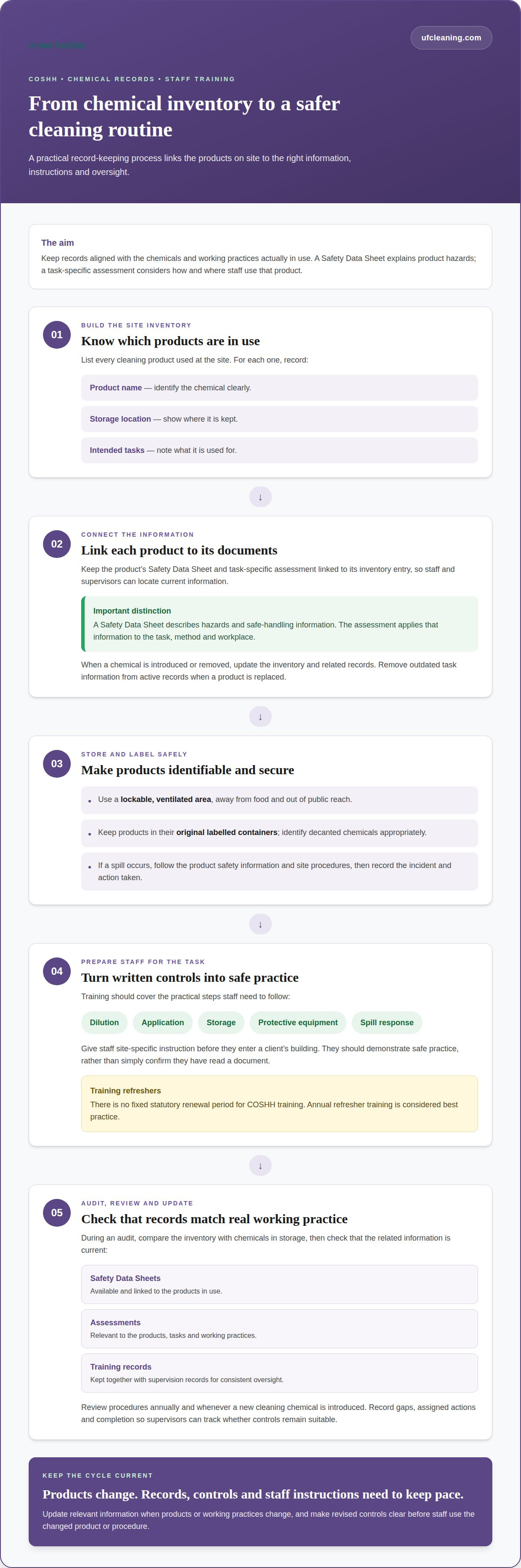
A chemical inventory lists the products used at a site and links them to their Safety Data Sheets and assessments. Include each product’s name, storage location and intended tasks. When a chemical is introduced or removed, update the inventory and related records. This helps supervisors identify current products and spot outdated instructions during an audit.
Storing and labelling chemicals safely
Store cleaning chemicals in a lockable, ventilated area, away from food and out of public reach. Clear labels help staff identify products and follow their handling instructions. Keep products in their original labelled containers; identify any decanted chemicals appropriately. If a spill occurs, staff should follow the product’s safety information and site procedures, then record the incident and action taken.
Training staff in safe chemical work
Training should explain how to handle products and follow task-specific controls. Cover dilution, application, storage, protective equipment and spill response. Staff should receive site-specific instruction before entering a client’s building and demonstrate safe practice, rather than simply confirm they have read a document. There is no fixed statutory renewal period for COSHH training; annual refresher training is considered best practice.
During audits, compare the inventory with chemicals in storage, then check that related Safety Data Sheets, assessments and training records are current. Review procedures annually and whenever a new cleaning chemical is introduced. Record any gaps, assigned actions and completion so supervisors can track whether controls remain suitable. Keep staff training and supervision records together to support consistent oversight.
Is a safety data sheet enough to meet COSHH?
No. A Safety Data Sheet explains a product’s hazards, but it cannot account for every workplace task. For commercial cleaning compliance with COSHH regulations, employers must consider how and where staff use each substance.
Recognising hazardous substances and pictograms
Recognising hazardous substances means identifying products that can harm health and understanding their warning symbols. This helps staff interpret hazards before starting a task. Cleaning environments commonly use nine GHS hazard pictograms, including symbols for corrosive or flammable substances. Staff should recognise relevant label warnings and consult Safety Data Sheets for more product information. Effective commercial cleaning compliance with COSHH regulations starts by identifying products and processes that could expose workers to harm.
Applying control guidance to cleaning tasks
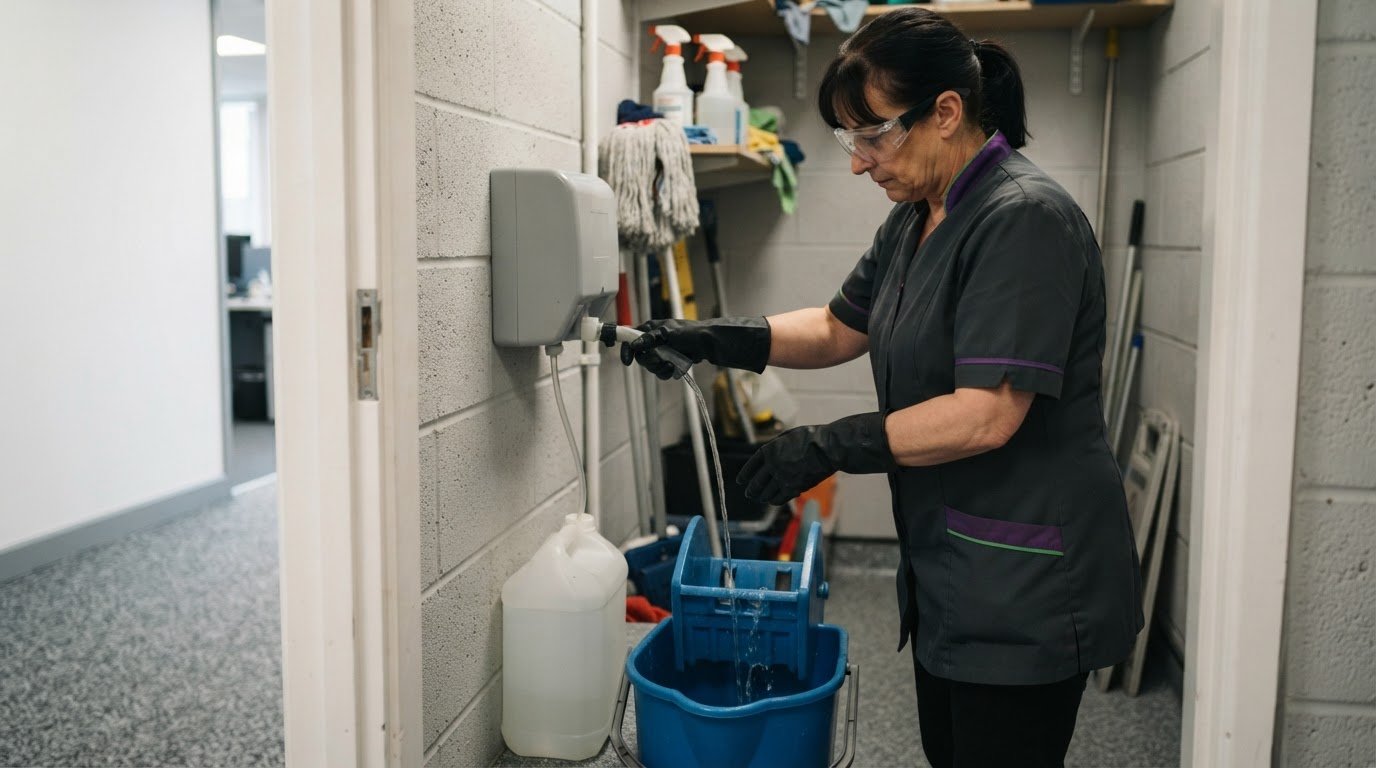
Control guidance turns identified hazards into practical measures for a specific process or task. For example, instructions for using a concentrated cleaner should explain safe dilution and application, not merely name the product. Consider possible exposure through skin contact, splashes or inhalation, then specify controls to reduce it. PPE is the last line of defence, so task instructions should also cover safe handling and suitable ventilation.
Training for handling and disposal
Training equips employees to handle hazardous substances safely and follow site-specific disposal instructions. UK employers are legally required under the COSHH Regulations 2002 to provide adequate information, instruction and training to employees who work with hazardous substances, according to the UK legislation register. Explain how to follow task instructions, respond to spills and apply control measures. Employees may refuse work they reasonably believe risks their health.
Selecting PPE for cleaning chemicals
Choose PPE according to the substance, task and exposure risks identified in the assessment. Nitrile gloves are recommended as a minimum for staff handling commercial cleaning chemicals; eye protection is appropriate where splashes are a risk. Match protective equipment to the hazard and explain how to wear, remove and store it safely. Review the selection if the product or cleaning method changes.
Employer responsibilities for in-house cleaning
Employers remain responsible for protecting staff who clean their workplace. Under the COSHH Regulations 2002, this includes assessing hazardous substances, preventing exposure where reasonably practicable, and controlling any remaining exposure. The same duties apply when cleaning forms part of employees’ wider roles, rather than a dedicated cleaning shift.
Start by identifying the substances and tasks in use. Establish who handles each product, where exposure could occur and which controls are needed. For example, an assessment should reflect whether staff dilute a concentrate, clean a confined area or risk splashes. Employers must provide suitable instruction, appropriate PPE and oversight, then review controls in response to health concerns or incidents. This makes safety responsibilities part of routine workplace management, not just a document kept on file.
A method statement should connect each identified hazard to a defined control measure. A generic office cleaning procedure may miss site-specific risks, such as a busy corridor or an area used by other staff. The Workplace Health, Safety and Welfare Regulations 1992 are identified as legislation relevant to UK office cleaning method statements, according to the UK legislation register. Employers should make instructions practical for the actual workplace and review them when tasks or conditions change.
When a cleaning contractor and an employer share a site, each is responsible for its own employees and substances. They must also co-operate and co-ordinate health and safety arrangements. Agreeing access, product use and communication routes helps prevent one team’s cleaning activity from exposing another. For in-house work, supervisors should explain relevant controls to employees and monitor whether procedures are followed.
The Health and Safety Executive can issue improvement or prohibition notices and prosecute employers for COSHH breaches. In serious cases, directors and managers can face personal liability. A reported chemical-related health concern or incident should prompt a review of the assessment, work method and protective measures. For support with cleaning arrangements in a workplace, discuss workplace cleaning requirements.
UF Cleaning
UF Cleaning provides commercial cleaning services for organisations seeking professional support with workplace cleaning. If you are considering outsourced cleaning after reviewing your COSHH responsibilities, discuss how the service can fit your premises and existing health and safety arrangements.
Services include office cleaning, housekeeping, hotel management and office hard floor cleaning. The right arrangement depends on the setting and its cleaning needs, while employers remain responsible for workplace risk assessments and employee safety. Clear communication about site procedures helps cleaning work fit the working environment.
For a considered discussion about your cleaning needs, contact UF Cleaning.
Make safe cleaning part of everyday operations
Make safe chemical use part of workplace cleaning plans, rather than treating it as a separate compliance exercise. Clear responsibilities, accessible instructions and consistent communication help staff apply controls during routine work. As premises, teams and cleaning needs evolve, keeping these arrangements connected to daily operations supports a considered approach to commercial cleaning compliance with COSHH regulations.
Where external cleaning support would help, UF Cleaning offers commercial cleaning, Housekeeping and Hotel Management. These services can support organisations seeking a coordinated approach to their cleaning requirements, while employers retain responsibility for their own workplace health and safety duties. A discussion can help establish how cleaning services fit the setting and its operational needs. Discuss your requirements with UF Cleaning, and take the next step towards a well-managed workplace.
Frequently Asked Questions
What is COSHH and what does it mean for commercial cleaning?
COSHH stands for the Control of Substances Hazardous to Health, the UK regulations covering hazardous substances at work. In commercial cleaning, this means considering risks from products such as bleach, disinfectants and descalers, as well as how staff use them. The task affects the potential hazard: spraying, pouring concentrate and working in an enclosed area can create different exposure concerns.
Who is responsible for COSHH, the client or the cleaning contractor?
Both parties have responsibilities relating to their own employees and substances. A cleaning contractor is responsible for its staff and the products it brings and uses; the client remains responsible for its staff and substances. At a shared site, they must co-operate and co-ordinate health and safety arrangements. For example, they should communicate site restrictions that could affect where or when cleaning products are used.
What Is COSHH & Why Does It Matter for Health and Safety?
COSHH matters because exposure to cleaning chemicals can harm health through contact, splashes or inhalation. For example, mixing bleach with an acid-based descaler releases chlorine gas, creating a serious hazard. Clear instructions help staff avoid incompatible products and respond appropriately to exposure concerns. The aim is to prevent exposure where reasonably practicable and control any remaining exposure, rather than relying on protective equipment alone.
When Is an Office Cleaning Method Statement Required?
A method statement is useful when cleaning work needs clear instructions about hazards and controls, such as cleaning shared corridors during occupied hours. A generic document may not account for the actual layout, access arrangements or people affected. Contractors must have a suitable and sufficient risk assessment; a site-specific method statement can explain how identified hazards will be controlled. Review it if the premises or work method changes.
Where should COSHH information be kept on site?
Keep COSHH information somewhere staff and supervisors can access before handling a product, such as an organised site file or accessible digital system. Link each product’s Safety Data Sheet to the relevant task assessment and work instructions. Staff should be able to find the information during their shift, including if a spill occurs. Store chemical containers in the designated secure area, separately from other materials.
What COSHH regulations apply to commercial cleaning businesses in the UK?
The COSHH Regulations 2002 apply to hazardous substances used or produced at work. The Health & Safety at Work Act 1974 governs health and safety in contract cleaning, according to the UK legislation register. For shared workplaces, the Management of Health and Safety at Work Regulations 1999 require co-operation and co-ordination, also according to the UK legislation register. RIDDOR 2013 covers employers’ reporting duties for serious accidents, near misses or occupational diseases.