The best cleaning schedule isn’t always the one that keeps staff out of sight. A day porter suits buildings that need visible upkeep and prompt attention to spills, restrooms and shared areas during operating hours. A night cleaning crew is better suited to scheduled cleaning when the premises are quieter. The pros and cons of a day porter versus a night cleaning crew depend on your property’s traffic, operating hours and priorities, and some sites benefit from combining both.
It’s understandable to weigh daytime disruption against the need to keep a workplace presentable throughout the day. The key difference is when each team works and what that makes practical: porters maintain cleanliness as activity unfolds, while night crews can focus on planned tasks with fewer interruptions to normal operations. This guide compares their typical responsibilities, advantages and limitations, then explains how to match a schedule to your property’s needs and patterns of use.
Key Takeaways
- Choose daytime support when shared areas, restrooms and entrances need attention while the building is in use.
- Use night cleaning for planned tasks that are easier to complete when staff and visitors have left.
- Assess foot traffic, operating hours and restroom demands to determine how much daytime coverage your property needs.
- Consider a combined schedule when immediate daytime upkeep and thorough evening cleaning both matter.
Choosing the Most Suitable Janitorial Service: Day or Night Porters?
The choice depends on when the facility needs attention and which tasks matter most. Day porters handle changing needs during operating hours; night crews focus on scheduled cleaning after occupants leave.
Day porter duties during business hours
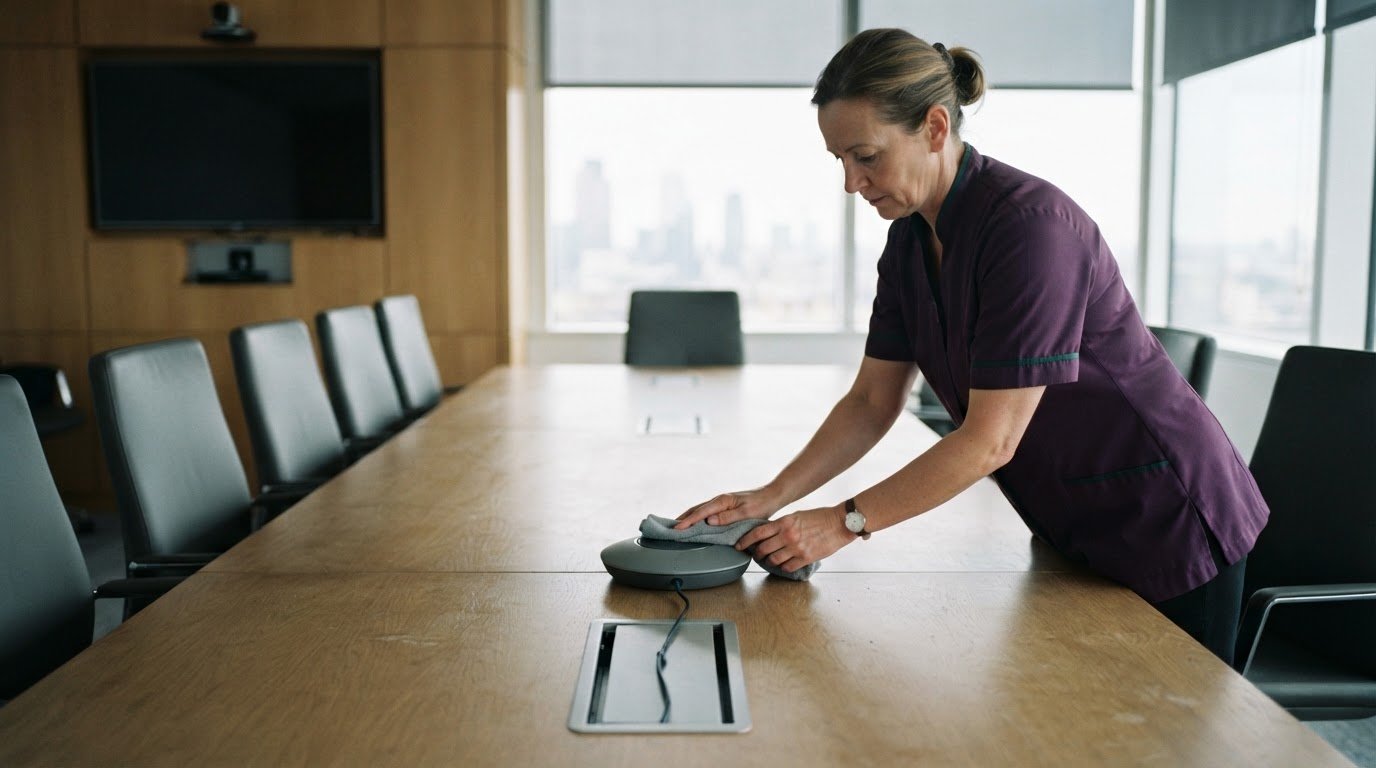
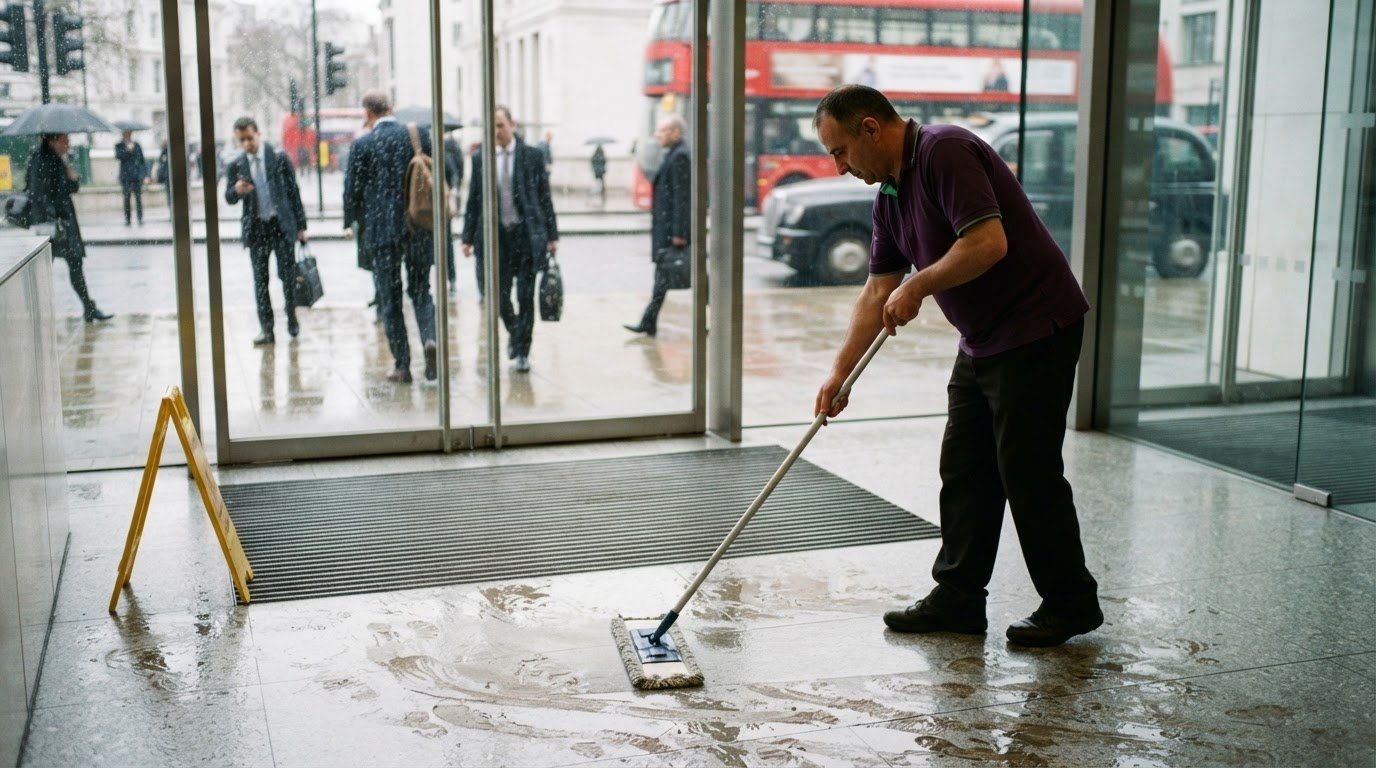
A day porter can conduct regular walkthroughs, wipe high-touch surfaces, empty bins and restock toilet supplies. They can also respond to spills and maintain entrances and shared areas as people use them. In offices, this may include resetting meeting rooms; in schools, keeping shared spaces presentable between busy periods. Healthcare facilities may require specialist cleaning skills and equipment, particularly for more demanding tasks.
Communicating shift duties and expectations
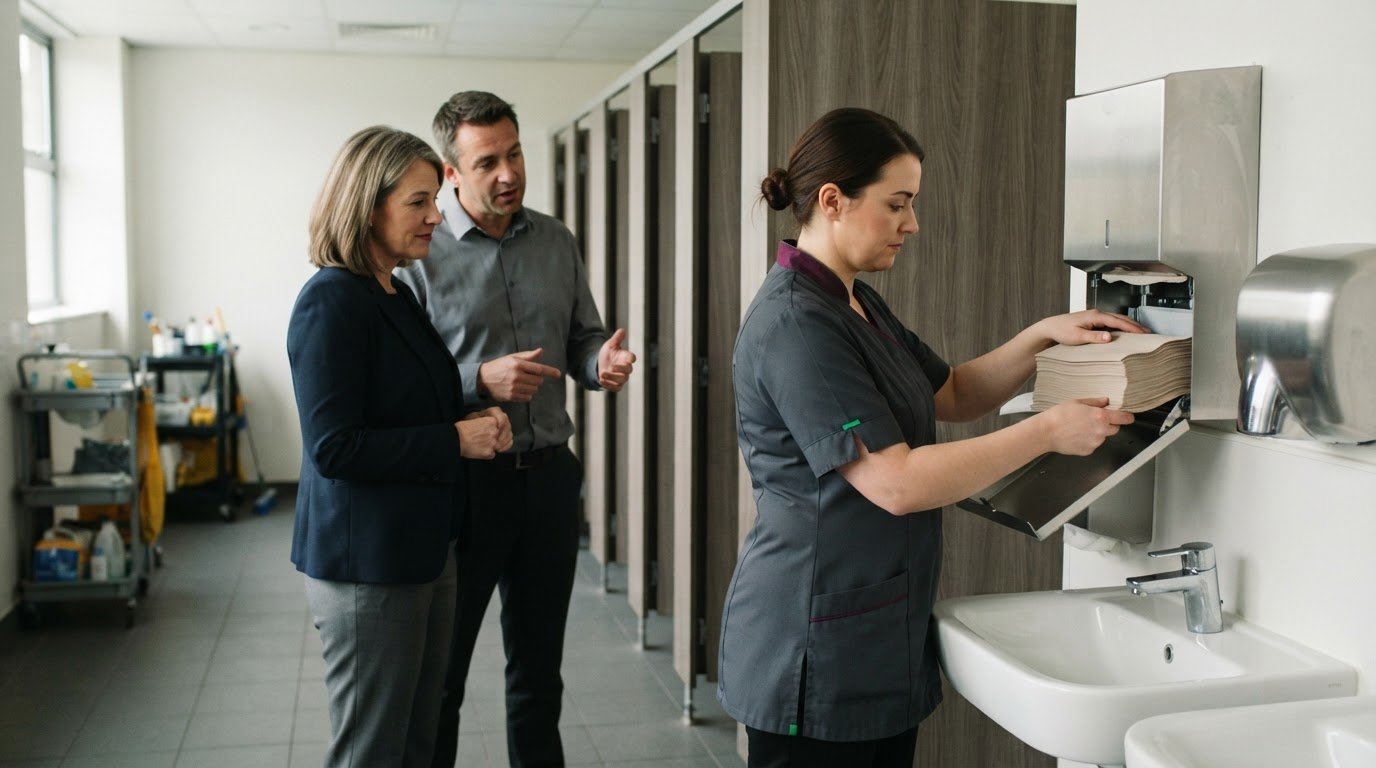
Clear communication turns a broad job title into a workable task plan. Agree the porter’s hours, priorities and routine duties, then route daytime requests through a designated contact. That person can prioritise urgent cleaning and refer tasks outside the agreed scope or training to the appropriate team. A written schedule also distinguishes daily upkeep from work assigned to the night crew.
Night cleaning crew duties after hours
Night crews perform scheduled cleaning after business hours, when fewer people are moving through the facility. Duties may include vacuuming carpets, scrubbing floors and deep-cleaning areas that are difficult to access during the day. Teams may also wash windows and clean high-use areas. Unlike a porter, a night crew is not on site to respond as spills or restroom needs arise.
Daytime and overnight cleaning pros and cons
A day porter’s advantage is immediate upkeep and visible attention; the trade-off is working around occupants and activity. A night crew can clean with fewer interruptions, but issues that arise during the day may wait until the next shift. Daytime risks include disruption and people entering active work areas; overnight arrangements need clear access procedures and shift handovers.
For health and safety, communicate where cleaning is under way and keep tasks within each worker’s agreed duties and training. This helps people move safely around cleaning activity without assuming either shift is risk-free.
| Option | Timing | Best suited to | Trade-off |
|---|---|---|---|
| Day porter | Business hours | Immediate upkeep | Works around occupants |
| Night crew | After hours | Scheduled, deeper cleaning | Less immediate response |
Choose according to when cleaning needs arise and how much work can wait until after hours.
Business types suited to day porter services
Day porter services suit workplaces where activity creates cleaning needs between scheduled visits. Retail spaces, medium-sized offices and shared work areas can benefit from attention to entrances, meeting rooms and toilets throughout the day. In offices with fewer than 10 employees, part-time coverage a few days per week may be appropriate. Daily coverage can suit medium offices and retail spaces with regular customer or staff traffic.
In customer-facing spaces, a porter can help keep reception tidy, clear a spill near an entrance or replenish toilet supplies. Visible daytime upkeep can reassure staff and customers, but tasks must fit around conversations, meetings and foot traffic. To protect privacy, cleaning staff should avoid disturbing occupied offices or handling papers and personal belongings. Agreed access instructions help safeguard private spaces.
Customise duties around the facility’s busiest areas and daily routine. For example, a retail schedule might prioritise entrances and customer toilets, while an office plan could focus on shared kitchens and meeting spaces. A designated contact can receive requests, prioritise urgent cleaning and direct work outside agreed duties or training to the appropriate team. This keeps the response organised without turning porter services into personal-assistance tasks.
Day porter service costs depend on coverage hours and days, assigned duties, facility traffic, training, supplies or equipment, supervision and absence cover. UF Cleaning provides a free, no-obligation quote based on a site-specific assessment. A tailored task list makes the requirements clearer: identify priority spaces, set the coverage period, then specify which supplies and equipment are included in the quotation. This detail helps align staffing with the level of upkeep required.
For offices that need cleaning shaped around working hours and shared spaces, Office Cleaning London can provide a relevant route to a planned service. The right schedule should reflect how employees and customers use the building, rather than applying identical porter services to every facility.
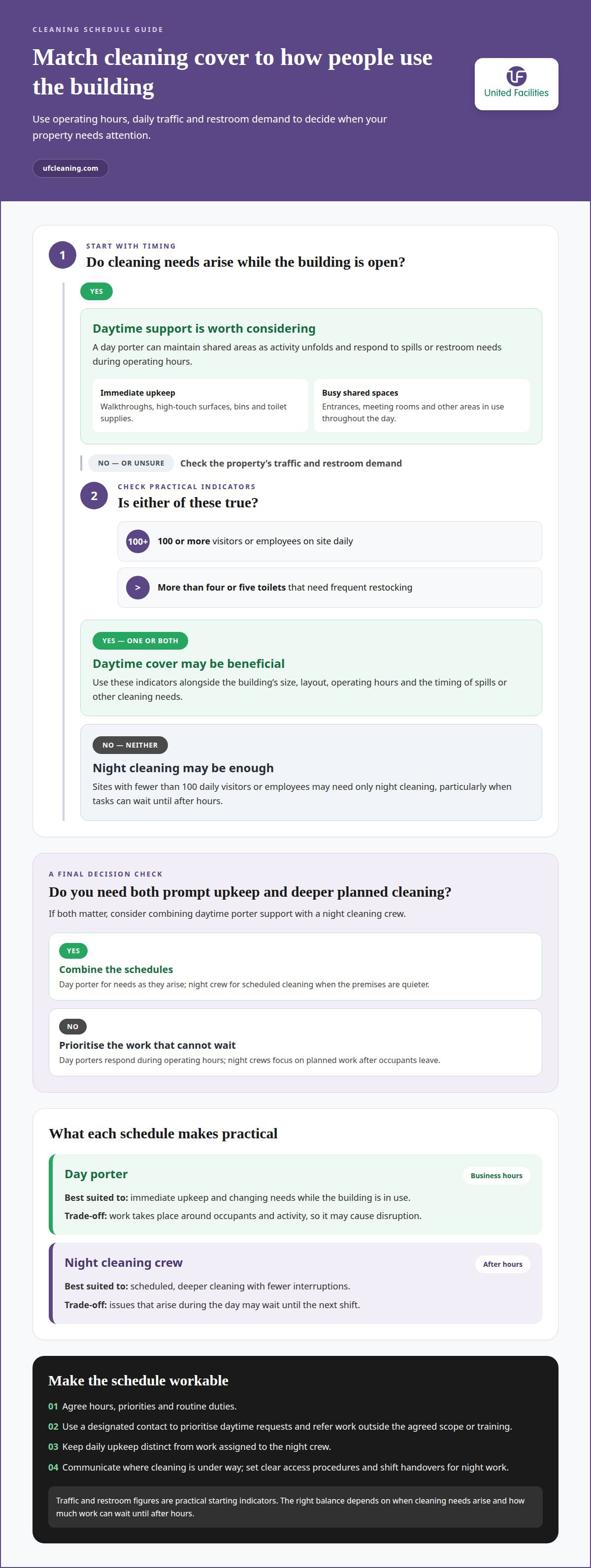
Choosing a cleaning schedule based on traffic and property needs
Match cleaning coverage to how people use the building, not simply its floor area. Daily traffic, restroom demand and the timing of spills all influence the balance between daytime upkeep and night cleaning.
Scheduling for facility size and foot traffic
Visitor numbers offer a practical starting point, alongside the facility’s size and layout. Properties with 100 or more visitors or employees daily may benefit from a day porter, while sites with fewer than 100 may need only night cleaning. More than four or five toilets requiring frequent restocking can also favour daytime cover. These indicators help shape a schedule around actual cleaning demands rather than floor area alone.
Daytime coverage for building needs
Choose daytime coverage when needs arise before the building closes. A busy reception may need entrance upkeep, while a shared restroom may require supplies to be replenished throughout the day. A porter can conduct walkthroughs, respond to spills and address immediate needs. Specific hours can suit a building that needs focused coverage rather than service throughout the entire business day. Prioritise the spaces with the most use.
Team-based night cleaning
Night cleaning suits tasks that can wait until occupants leave, including scheduled deep cleaning of floors and carpets. A team can follow an agreed task list across separate spaces, with dedicated tools for each shift to help reduce disruption and lost productivity. For larger or high-traffic facilities, full-time porter coverage or multiple shifts may be appropriate. A combined plan pairs daytime spill response, restroom checks and tidying with evening deep cleaning.
A commercial cleaning team can develop a schedule around building size, daily visitor and employee traffic, and the areas requiring frequent upkeep. It can assign immediate tasks to daytime coverage and planned work to the night shift, then clarify duties and priorities in the task list. If occupancy patterns or building use change, review the schedule to keep coverage aligned with the facility’s needs.
Day porter and night cleaning crew responsibilities
Businesses can combine a day porter with an overnight cleaning crew. The porter responds to immediate needs during operating hours, while the night team completes planned tasks after the workplace closes.
Day porter responsibilities
During a running business day, a porter conducts walkthroughs and addresses cleaning needs as they appear. This can include clearing spills, checking restrooms, maintaining entrances and preparing meeting rooms. They may also help set up or clear away after an event. Unlike a night crew, the porter works around clients and staff, so a clear task list helps keep attention on agreed priorities.
Night cleaning crew responsibilities
An overnight crew focuses on scheduled work across the premises, with fewer occupants moving through the workplace. Duties may include vacuuming carpets, scrubbing floors, washing windows and deep cleaning. Night staff may also check locks and windows or identify maintenance issues. These planned tasks differ from a porter’s immediate response to changing needs during operating hours.
A combined arrangement works best when responsibilities are divided rather than duplicated. For example, the porter can handle daytime restroom checks, spills and conference-room tidying; the night team can then deep-clean floors and carpets. A shared task schedule helps everyone understand which shift handles each area and what remains for the next team.
For effective handovers, record outstanding issues, such as a spill requiring follow-up or a meeting room used late. The day team can flag priority areas, while the night crew reports completed tasks and issues needing attention. Assigning dedicated tools to each shift can also help reduce disruption and lost productivity.
For a coordinated plan around a working commercial environment, discuss a cleaning schedule that separates daytime upkeep from overnight tasks.
UF Cleaning
UF Cleaning helps organisations turn cleaning priorities into a practical schedule. Once you’ve identified which areas need attention during operating hours and which tasks suit quieter periods, the next step is aligning the plan with the building’s use and cleaning requirements.
For workplaces, Office Cleaning London can support a planned approach to maintaining shared and working spaces. Retail Cleaning may suit customer-facing premises, while Office Hard Floor Cleaning can address specific floor-care needs. The right service depends on the setting and the tasks to be covered.
If you’re ready to discuss a cleaning schedule for your premises, contact UF Cleaning.
Shape a cleaning plan around your next priorities
Use your operating priorities to make the next decision: which areas need attention while people are present, and which can be cleaned later? Weigh the pros and cons of a day porter versus a night cleaning crew against your building’s routine, then define the tasks and shift expectations that will keep the plan practical.
UF Cleaning supports organisations with cleaning and facilities services for different settings. Its Office Cleaning London, Housekeeping and Hotel Management services address distinct workplace and guest-environment needs. A defined schedule gives the service a clear framework, with room to adjust priorities as the building’s use evolves.
Bring your property’s operating pattern and cleaning priorities into the conversation, so the proposed approach starts with what matters to you. Contact UF Cleaning to discuss your needs and take the next step towards a considered cleaning plan.
Frequently Asked Questions
Understanding the Role: What Does a Day Porter Do?
A day porter maintains a facility while it is in use, responding to routine requests within agreed duties. For example, they may notice a marked entrance floor during a walkthrough and prioritise cleaning it before the next busy period. A designated contact helps direct requests, so the porter can focus on cleaning rather than being treated as a general personal assistant.
What Is Night Cleaning?
Night cleaning is scheduled work carried out after a workplace closes or becomes quieter. It gives staff room to clean offices, kitchens and corridors with less daytime foot traffic. A business can use this period for tasks that would interrupt normal activity, while its daytime arrangements cover needs that arise during opening hours.
What is the Difference Between a Day Porter and a Janitor?
The main difference is usually the timing and focus of the work, rather than the job title alone. A day porter is generally present during operating hours for ongoing upkeep, while a janitor commonly performs scheduled cleaning after hours. Since titles aren’t universal specifications, a clear task list and agreed working times provide a more reliable comparison than the role name.
What does a day porter do compared with a night cleaning crew?
A day porter responds to needs as they emerge, whereas a night crew works through planned tasks when the premises are quieter. The practical difference behind the day porter vs night cleaning crew pros and cons is whether a task needs attention while the building is occupied or can wait until it is quieter. For instance, a porter can address a spill reported during the day; the night team can complete routine floor care later.
How do day porter and night cleaning services compare in cost in the UK?
Cost is one consideration in the day porter vs night cleaning crew pros and cons, so compare the complete scope rather than assuming either arrangement costs less. Daytime service costs depend on coverage hours and days, duties, traffic, training, supplies or equipment, supervision and absence cover. For a like-for-like comparison, define the same spaces, task standards and service frequency before assessing the overall cost.
What cleaning tasks are best done during the day versus overnight?
Tasks that respond to current use, such as clearing a spill or checking a busy shared space, suit daytime attention. Work that benefits from uninterrupted access, such as carpet vacuuming or floor scrubbing, is often better scheduled overnight. Some areas need both: a daytime check can address immediate presentation, while the evening shift completes the more thorough planned clean.