
What if the right time to change cleaning providers falls just after an automatic renewal deadline? Ending an agreement before its term expires isn’t always as simple as sending a cancellation letter. If you’re weighing how to terminate commercial cleaning contract early, the notice period, break clause and renewal terms can all affect your next steps.
It’s understandable to be concerned about charges or a dispute while still needing essential cleaning to continue. Start by identifying the contractual route available to you before giving notice. Then communicate your decision clearly and keep a written record.
This guide explains the main ways a UK business may be able to end a commercial cleaning agreement early, what to look for in termination and auto-renewal clauses, and how to approach notice and potential disagreements. It also covers how to plan a handover so cleaning can continue through the change. The details of your contract matter, so treat this as general information rather than legal advice.
Key Takeaways
- To understand how to terminate commercial cleaning contract early, gather the signed agreement, schedules and any written changes.
- Check the contract’s term, permitted termination routes, notice period, delivery method and notice address before acting.
- Distinguish between using a termination clause and requesting an agreed early release, and keep the relevant correspondence on record.
- Plan the notice date and site handover carefully so essential cleaning can continue through the transition.
- Before treating the agreement as ended, get written clarity on the end date and any remaining responsibilities.
How to terminate a commercial cleaning contract early: understand your options
Recurring concerns about cleaning standards, a change in how your premises are used or a budget review may prompt you to consider ending an agreement ahead of schedule. First separate the reason for reviewing the arrangement from the contractual route that may allow it to end. Wanting to change the service does not, by itself, establish a right to leave early.
Early termination means bringing an agreement to an end before its stated expiry date, subject to the contract and applicable law. The agreement is the starting point, not a notice period quoted elsewhere. Its wording may specify when termination is permitted, how notice must be given and which obligations continue. If your position depends on an alleged breach of contract, the facts and relevant terms matter. A service concern alone does not automatically settle the legal position.
Ending the agreement and changing cleaning providers are related but separate decisions. Establish whether and when the existing contract can end, then plan any replacement service and handover around that date. A new arrangement does not, by itself, cancel the current one.
What does early termination mean in a cleaning agreement?
Expiry is when the agreement reaches its stated end date. Termination under a clause means exercising a right set out in the contract. An agreed early release means both parties accept an earlier end date. These routes are different, so don’t treat a request for release as notice under a contractual clause.
An early end date doesn’t automatically settle every outstanding responsibility. Establish whether a clause applies or whether the other party must agree to an earlier date. Clarify in writing which duties remain up to and after the proposed end date.
Which circumstances may lead a business to review its contract?
A review may follow recurring concerns about the agreed cleaning standard, changes to occupancy or site use, or revised operational requirements. For example, a business might use fewer areas than before and want a different service scope. That may support a discussion about changing the arrangement, but it doesn’t necessarily create a contractual right to terminate.
Before choosing an exit route, record the issue clearly and objectively. Useful details include:
- Which task or area is affected, and how the service differs from the agreed scope.
- When the concern arose and whether it has been raised previously.
- What has changed in the premises or the organisation’s cleaning requirements.
This record helps distinguish a service preference from a concern that may have contractual significance. It also gives you a clearer basis for reviewing the agreement and deciding what to do next. Begin with the documented facts and the terms that govern the relationship, not an assumption that dissatisfaction alone ends it.
Review the cleaning contract before giving early termination notice
Before deciding how to terminate commercial cleaning contract early, assemble the documents that define the agreement as it stands today. Start with the signed contract, then gather its schedules, service specifications, variations and any later written amendments. A change agreed by email or a revised schedule may affect how the original terms apply. Review the complete record rather than relying on one document or a verbal understanding.
Read the agreement as a whole. A termination clause may refer to another section, set conditions that must be met first or distinguish between ending the full service and changing part of its scope. Note the clause references and any questions to resolve before sending formal notice. This makes it easier to identify the relevant route and reduces the risk of acting on an incomplete reading.
Which contract clauses should you read first?
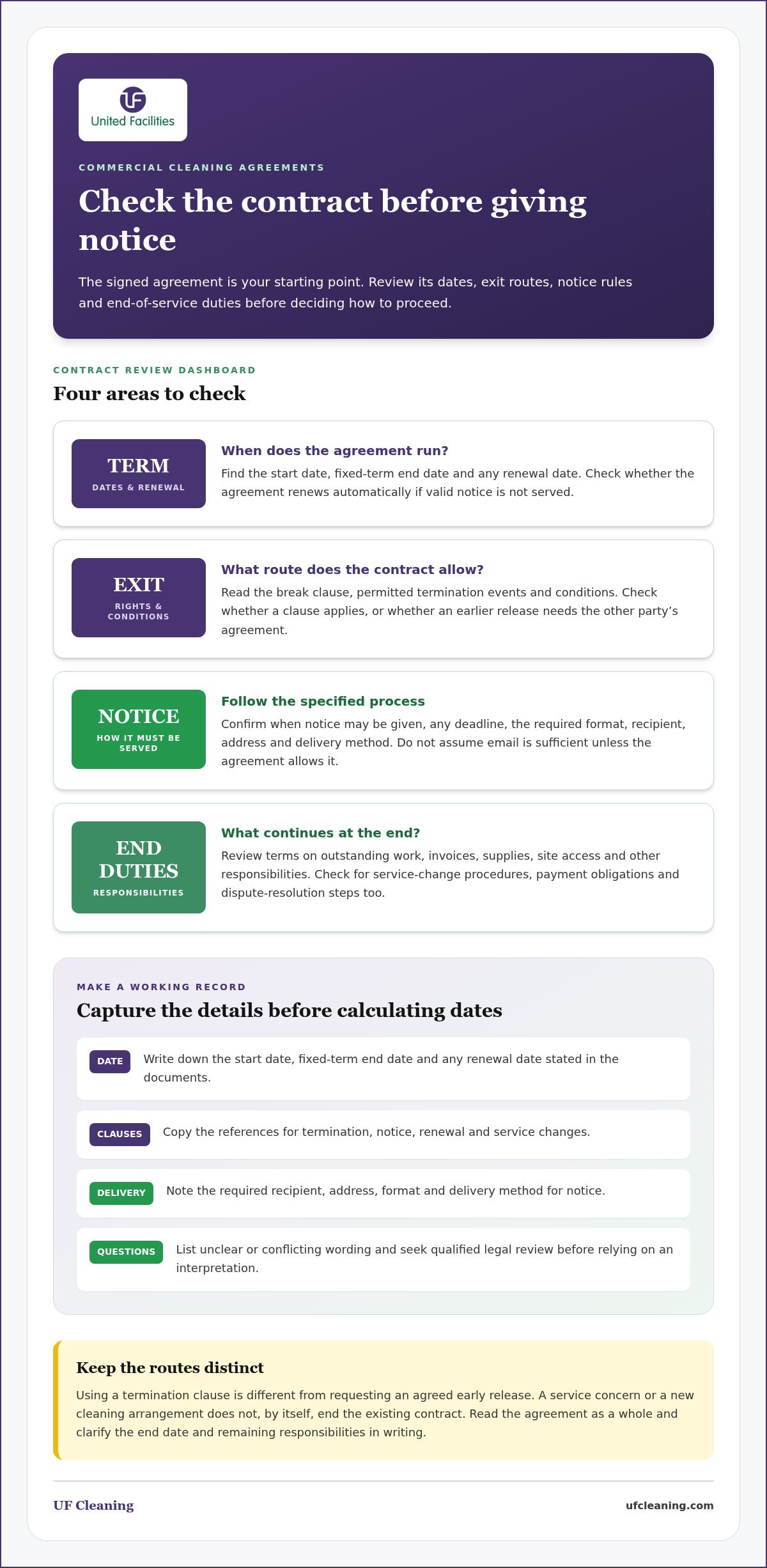
Begin with the fixed-term dates, any break clause, the events that permit termination and the conditions attached to using that right. Then check the required notice format, delivery method, recipient and address. Don’t assume an email is sufficient unless the agreement allows it. Finally, review provisions covering outstanding work, invoices, supplies, site access and other responsibilities at the end of the service.
Other terms may shape the process even if they don’t directly grant a right to end the agreement. Look for service-change procedures, payment obligations, dispute-resolution steps and post-termination duties. A clause may, for example, explain how to raise a disagreement about service before taking further action. Note how it relates to the termination wording, without treating any one provision in isolation.
How should you assess notice and renewal wording?
Compare the notice requirements with the contract’s term and renewal provisions. Check whether notice can be given only at a particular point, whether it must arrive by a stated deadline and whether the agreement renews automatically if no valid notice is served. Don’t assume a familiar notice period or renewal window applies to your agreement.
Once you’ve identified the relevant terms, make a working record:
- Write down the start date, fixed-term end date and any renewal date stated in the documents.
- Copy the clause references for termination, notice, renewal and service changes.
- Note the required recipient, address, format and delivery method for notice.
- List unclear or conflicting wording, and seek qualified legal review before relying on an interpretation.
Calculate a proposed notice or end date only after checking how the contract defines timing and delivery. Keep the calculation separate from assumptions, and flag any uncertainty rather than guessing. This review won’t decide whether a disputed interpretation is legally correct, but it gives you a precise basis for the next step.
For future cleaning requirements, clearly defined schedules and service expectations can support a more orderly arrangement. Explore commercial cleaning services to learn about UF Cleaning’s recurring commercial cleaning.
Compare early-exit routes, from notice to an agreed release
Once you’ve reviewed the agreement, compare possible routes by their basis, the steps involved, the evidence you’ll need and the effect on the cleaning schedule. Contractual notice relies on a right set out in the agreement. An agreed release depends on both parties accepting an earlier end date. An exit based on alleged service failure is more fact-sensitive and may need careful assessment of the contract and supporting records.
These routes aren’t interchangeable. Sending a request to leave early doesn’t make it valid contractual notice, and dissatisfaction alone may not establish an immediate right to end the agreement. How to terminate commercial cleaning contract early depends on the wording, the circumstances and whether the relevant process is followed.
- Contractual notice: A defined route if the clause applies and its timing and conditions are met. Keep a copy of the notice and evidence of delivery.
- Agreed release: A practical option to discuss, but it depends on agreement. Record the terms in writing before treating the earlier date as settled.
- Alleged service failure: May be relevant where the facts and contract support it, but requires evidence and careful review. Don’t present a concern as an established legal conclusion.
When might contractual notice or a break clause apply?
A termination or break provision may give you a defined route if it covers your circumstances and you meet its conditions. Check the permitted timing, any steps required before notice and how the clause defines the effective date. If the agreement specifies how notice must be sent, follow that method and retain proof of delivery, such as a copy of the correspondence and the relevant delivery record.
Even clear-looking wording can depend on dates or other clauses. If there’s uncertainty about whether the provision applies, don’t assume that giving notice alone will end the contract on your preferred date.
Can both parties agree to an earlier end date?
You can propose an earlier release for discussion, particularly if operational needs have changed. A proposal isn’t binding simply because it has been sent; wait until both parties have clearly agreed. Put the outcome in writing, including the end date, any remaining service or payment responsibilities, and practical arrangements for access, supplies or records.
A written record distinguishes an agreed change from a request that remains unresolved. It also gives both parties a shared reference for planning the final period of service.
If the concern is repeated poor performance, gather dated examples, relevant communications and any responses before relying on it as a reason to end the agreement. Whether a service issue supports termination depends on the contract and the facts. Dissatisfaction on its own doesn’t settle that question. If the other party disputes the basis for exit, obtain qualified legal advice before taking a step that could create further disagreement.
End the agreement methodically: notice, records and site continuity
A clear process helps keep the contractual decision, written record and cleaning arrangements aligned. If you’re working out how to terminate commercial cleaning contract early, follow the route you’ve identified in the agreement and keep your communication measured. A letter that combines formal notice with a request to negotiate can create confusion about what you intend to do.
Use this sequence to organise the next steps:
- Confirm the route. Check whether you’re exercising a contractual right, proposing an agreed release or raising a disputed concern that needs advice.
- Calculate the dates. Apply the contract’s wording to the relevant dates and delivery requirements before stating an intended end date.
- Prepare the communication. Identify the parties and agreement, refer to the relevant clause if applicable, and state your decision or proposal plainly.
- Deliver it as required. Use the method and recipient specified in the agreement, then retain the sent notice and delivery evidence.
- Keep a complete record and plan continuity. File related documents together and arrange essential cleaning through the confirmed end date.
What should a written termination notice include?
Name the contracting parties and identify the agreement, then cite the relevant clause if you’re giving formal notice under it. State the intended end date and include any information the clause requires. If you’re seeking an agreed release instead, make clear that the date is a proposal for discussion, not a notice you believe already ends the contract. Keep the tone professional, factual and free of unsupported allegations or threats.
Before sending, check the draft against the contract’s notice requirements. Retain the final version and proof of delivery in an accessible file. If the other party responds with a different interpretation, keep that reply with the original communication rather than relying on your recollection of the exchange.
What records help if the termination is disputed?
Keep the signed agreement and amendments alongside relevant invoices, service records, correspondence and meeting notes. Create a dated chronology of concerns, responses and decisions, and preserve original documents without editing them. If a dispute arises over whether the route was available or significant liabilities may follow, seek qualified legal advice before taking further steps.
Continuity needs its own plan. Separate the current provider’s contractual end date from any later supplier start date, and identify the areas and cleaning tasks that must remain covered in the interim. Confirm practical arrangements for site access, supplies and outstanding work with the relevant parties. This keeps essential hygiene needs visible without assuming a replacement arrangement changes the existing contract.
For future cleaning requirements, discuss a commercial cleaning schedule shaped around your site’s needs and service expectations.
Choose your next step after reviewing the cleaning contract
After reviewing the agreement and available exit routes, decide whether to give notice under a clause, seek a written agreement to end early or pause to get advice on a disputed position. The right next step depends on the contract’s wording and your circumstances. Don’t treat a preferred end date as settled until the other party has acknowledged it or the relevant contractual process has been followed.
Before considering the agreement concluded, make sure you have written clarity on:
- The effective end date and how it was established.
- Any service, payment or other responsibilities that continue up to that date.
- Practical arrangements for access, supplies and outstanding work.
- Any agreed changes or release terms, where the parties have negotiated an earlier end.
This final check separates the decision to leave from the work needed to close the existing arrangement properly. This guide provides general information, not a conclusion on an individual contract or legal advice about your particular position.
When should you seek specialist legal advice?
Consider qualified legal advice if the wording is unclear, the other party disputes your right to terminate or potential liability is significant. Prepare the signed agreement, schedules, amendments and dated correspondence so the discussion can focus on the relevant clauses and events. Don’t rely on an uncertain interpretation as though it were an agreed outcome.
How can you plan future cleaning requirements?
If your organisation’s needs have changed, use the transition to define a suitable future scope. Review how each area is used, the frequency required, hygiene priorities and what quality monitoring should cover. Clear expectations make service delivery easier to assess and help align schedules with operational needs.
UF Cleaning tailors commercial cleaning schedules to organisational requirements and uses Taskbe for real-time quality monitoring. These features can support a new arrangement where service frequency or oversight needs to reflect how your site operates. Before setting a scope, consider:
- Which areas need regular attention and how site use affects frequency.
- Which hygiene priorities are essential to daily operations.
- How service expectations and quality observations should be recorded.
- How a new schedule can begin without leaving essential cleaning uncovered.
These points can help shape a practical brief for future cleaning, without confusing the new service with termination of the current agreement. If you’re planning a change, discuss your commercial cleaning requirements with UF Cleaning.
Make your next cleaning arrangement work for your organisation
Ending an agreement early is also an opportunity to consider what your premises need from cleaning going forward. Once the current contract’s position is clear, use changes in site use, hygiene priorities and operational routines to shape a service arrangement that fits the way your organisation works.
A measured approach to how to terminate commercial cleaning contract early can help you move towards the next arrangement with greater clarity. Set out the outcomes you need, from suitable cleaning frequencies to clear expectations for reviewing service quality, so the new scope supports daily operations and a well-maintained environment.
UF Cleaning has served organisations since 2010, with flexible schedules, eco-friendly products and real-time quality monitoring through Taskbe. If you’re considering a future commercial cleaning arrangement, discuss your commercial cleaning requirements and take a considered step towards a service shaped around your organisation.
Frequently Asked Questions
Can I terminate a commercial cleaning contract without notice?
Possibly, but only if the agreement and applicable law allow it in your circumstances. A clause permitting immediate termination is different from asking the cleaning company to agree to an early release; a request alone doesn’t end the contract. Before stopping services or payments, establish which route applies and what the agreement requires. Don’t assume dissatisfaction or a change in business needs allows you to end the arrangement immediately.
How much notice do I need to give to end a commercial cleaning contract early?
There’s no universal notice period for every commercial cleaning agreement. Check the contract’s relevant notice clause, then compare it with the fixed term and any renewal dates. Pay attention to how notice must be delivered, who must receive it and when it takes effect. A deadline tied to a renewal date, for example, may affect your timing. Record the dates and confirm the wording before sending notice.
What happens if I stop using a cleaning company before the contract ends?
Stopping or reducing use of the service may not, by itself, end the contract or its obligations. The position depends on the agreement, the circumstances and whether both parties have accepted a change in writing. Closing part of a site might change your practical requirements, for example, but the existing scope may still apply. Keep written records of any agreed pause or change, and don’t treat non-use alone as confirmation that the contract has ended.
Can I end a cleaning contract if the service is poor?
Poor performance may justify raising concerns, but it doesn’t automatically give you a right to terminate immediately. Compare the service delivered with the agreed standards and follow any complaint or dispute process in the contract. Keep dated examples, such as missed tasks or unresolved reports, alongside relevant correspondence. If you’re considering how to terminate commercial cleaning contract early because of service concerns, assess the evidence and contract together. The outcome depends on the individual facts.
Is a commercial cleaning contract automatically renewed?
Only if the agreement’s wording provides for renewal, so don’t assume that a contract will either end or renew automatically. Look for the renewal mechanism, the date the current term expires and any deadline for giving notice to prevent renewal. Check how notice must be served, too. Record these dates well ahead of the deadline so you have time to review the terms and prepare the required communication.
Can both parties agree to end a cleaning contract before its expiry date?
Yes, the parties can discuss an earlier release, but the request doesn’t become an agreement until both sides accept it. If terms are agreed, record the effective end date and any responsibilities that continue, such as completing scheduled work or settling outstanding invoices. Include practical arrangements that matter to your site, and retain the written confirmation. Until agreement is clear, don’t treat a proposed date as the confirmed end of the contract.
Do I need legal advice to terminate a commercial cleaning contract?
Not every contract question requires specialist advice, particularly where the relevant wording is clear and uncontested. However, seek qualified legal advice if a clause is ambiguous, the other party disputes your interpretation or potential liabilities are significant. Prepare the signed agreement, amendments and dated correspondence, including any notices already sent, so the discussion can focus on the relevant details. This guide provides general information and can’t determine the legal effect of an individual contract.