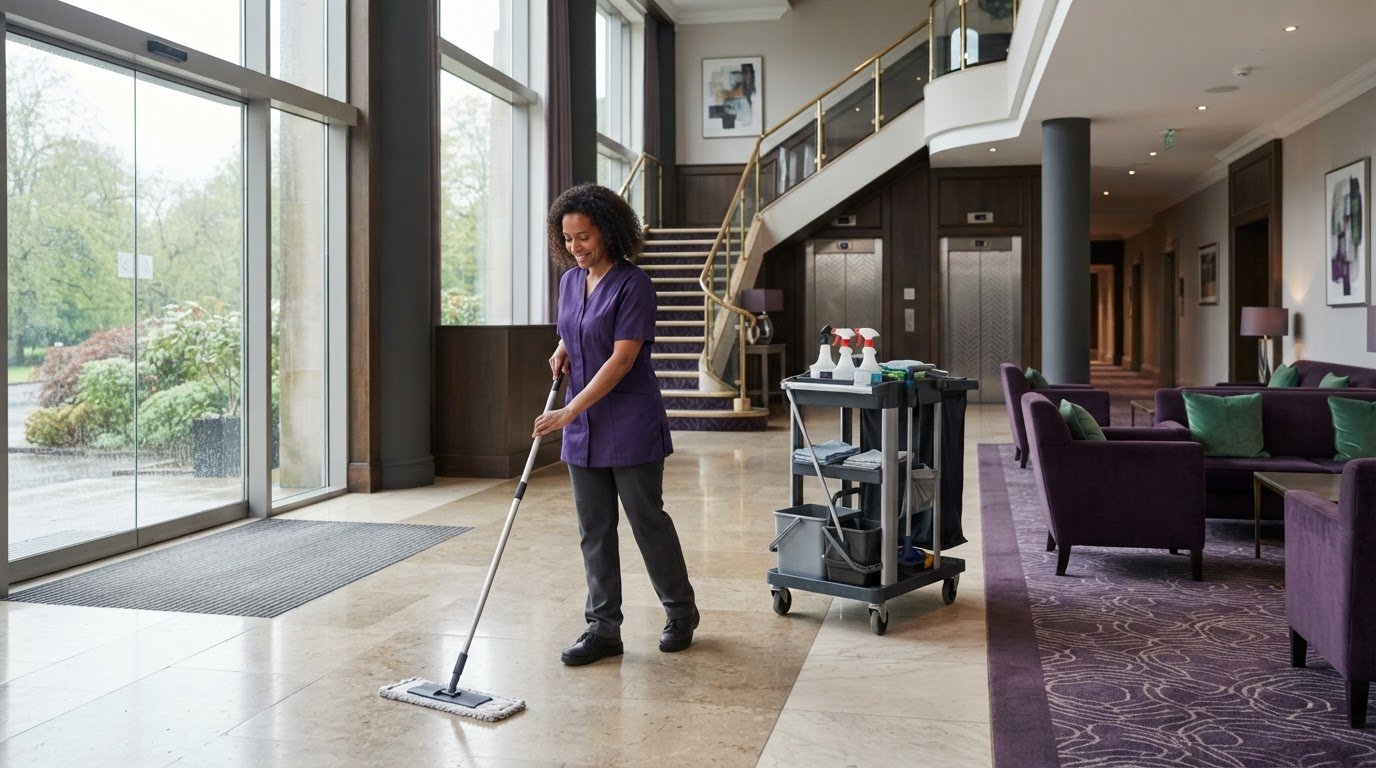
If you’re comparing office hard floor cleaning options, start with the floor itself. A floor can be cleaned regularly and still look dull, marked or uneven. More frequent routine cleaning is not always the answer: an effective plan begins with identifying the material, its condition and the demands placed on it each day.
Choosing a specialist calls for care. A method that suits one floor may not suit another, and unclear proposals make it difficult to judge what is included or how work may affect staff and operations. A useful plan sets out the floor-care requirements, service scope, schedule and checks used to review the work.
This guide explains how to assess your flooring, compare providers and arrange a service with minimal disruption. It also covers practical questions to ask about methods, products, scheduling and quality monitoring. UF Cleaning provides office hard floor cleaning as part of its wider commercial cleaning offer, with schedules discussed in relation to site requirements.
Key Takeaways
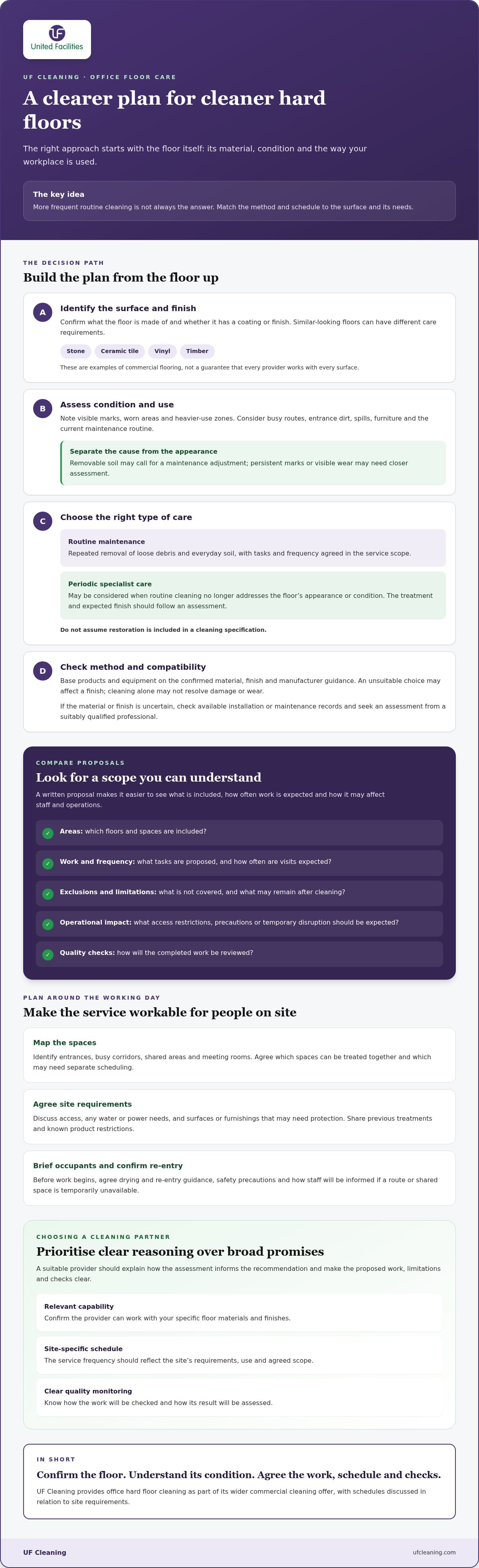
- Separate routine maintenance from periodic intensive care, and match the plan to the floor’s condition and use.
- Confirm the floor material and finish before choosing a method, then consider footfall, entrance dirt, spills and furniture.
- Compare proposals by their written scope, visit frequency, exclusions and explanation of likely operational impact.
- Plan the work from assessment and scheduling through to briefing occupants and reviewing the completed service.
- Choose a provider with relevant capability, clear quality checks and a schedule suited to your site’s needs.
Office Hard Floor Cleaning: What Does a Professional Service Cover?
Professional hard floor cleaning should be planned around the surface, its condition and how the workplace is used. It starts by establishing what the floor is made of and what the client needs, rather than applying one process throughout a building. The service scope should state which areas are included, what work is proposed and how often it is expected to take place.
Routine cleaning and periodic specialist care have different purposes. Regular maintenance removes everyday soil and debris in line with the agreed scope. More intensive work may be considered when routine cleaning no longer addresses the floor’s appearance or condition. The appropriate treatment and expected finish should be agreed after an assessment. Restoration should not be assumed to be part of a cleaning specification.
Which hard floor surfaces need a tailored cleaning plan?
Commercial premises may contain materials such as stone, ceramic tile, vinyl or timber. These are examples, not confirmation that every provider works with every surface. Floors that look alike may have different materials, coatings or finishes, so appearance alone is not a reliable guide to care requirements.
Check installation or maintenance records and available manufacturer guidance before treatment. If the material or finish is uncertain, ask a suitably qualified professional to assess it. This helps establish what the floor can tolerate and which methods may be appropriate. General overviews of floor cleaning methods can provide context, but they cannot replace advice based on the specific surface.
How does routine cleaning differ from specialist floor care?
Routine cleaning involves the repeated removal of loose debris and everyday soil, with tasks and frequency set out in the service agreement. It manages the effects of regular use, but may not address ingrained marks, changes in appearance or issues that need closer investigation.
Scope periodic specialist work separately. The proposed approach should reflect the identified floor type, condition and manufacturer guidance. Ask what the work includes, what its limitations are and how the result will be assessed. Be wary of vague promises to restore or polish a floor unless the outcome and required treatment are clearly specified.
For facilities teams considering office hard floor cleaning, a site assessment is a practical starting point. UF Cleaning offers office hard floor cleaning as part of its commercial services. Confirm the materials, treatments and equipment suitable for your site before including them in a proposal.
How Floor Type, Condition and Office Use Shape the Cleaning Method
A suitable floor-care plan is based on the confirmed material and finish, the floor’s condition and manufacturer guidance. Products and equipment also need to be checked for compatibility. An unsuitable choice may affect a finish, while cleaning alone may not resolve damage or wear.
An assessment helps distinguish removable soiling from changes that need a different response. Dirt concentrated along a busy route, for example, may call for a different maintenance plan from a persistent mark or visibly worn area. A provider should explain what the proposed cleaning may address and what may remain, rather than imply that every visible issue can be removed.
What should a site assessment examine before cleaning?
Ask the provider to record floor materials, finishes, visible marks and areas of heavier use. Share any available installation records, previous treatments, current maintenance routines and known product restrictions. This information can reduce guesswork and support a reasoned recommendation.
The assessment should also cover practical requirements, including access to work areas, any water or power needs, and surfaces or furnishings that may need protection. These details help turn an inspection into a clear, workable scope.
How can office activity affect floor-care planning?
Map entrances, busy corridors, shared areas and meeting rooms, then discuss which spaces can be treated together and which may need separate scheduling. Entrance dirt, recurring spills and furniture placement can affect how quickly areas become soiled and how often they need attention.
Before work begins, agree the provider’s drying and re-entry guidance, access restrictions and safety precautions. Decide how staff will be informed if a route or shared space will temporarily be unavailable. These arrangements help the cleaning plan fit the working day and reduce avoidable disruption.
When evaluating a provider, look for a clear explanation of how the assessment informs the recommended work. Forbes offers broader background on choosing a professional cleaning service, but your decision should also be based on site-specific details and a written scope. UF Cleaning can discuss office hard floor cleaning within a wider commercial cleaning plan. You can explore its office cleaning services when considering options for your site.
How to Compare Office Hard Floor Cleaning Proposals
Compare proposals against the same brief. Look beyond the headline description and check whether each written scope identifies the areas assessed, agreed tasks, visit frequency and exclusions. Without that detail, proposals may appear similar while covering different work.
A useful proposal should explain how the assessment informs the recommended approach, why it is considered suitable for the confirmed surface, and what access or operational arrangements are needed. It should distinguish included work from additional tasks and explain how changes to the scope will be discussed and agreed. Site-specific detail is more useful than unsupported credentials, guarantees or broad outcome claims.
What should a hard floor cleaning quote specify?
Check that the quote lists the areas inspected and tasks proposed, along with the planned frequency. Ask which equipment and products are included, and how surface compatibility and necessary precautions will be checked. For context on one type of equipment, the Building Service Contractors Association International discusses professional floor scrubbers. The right choice for your site still depends on the floor and the provider’s confirmed capabilities.
Clarify how extra work, variations and access requirements will be handled before the service starts. For example, establish who can approve a change if an area needs additional attention and how any effect on the schedule will be communicated. Clear terms reduce the risk of different expectations.
Which quality controls help demonstrate consistent service?
Ask how inspections are recorded, who receives feedback and what happens when an issue is reported. A clear process identifies responsibilities, documents the concern and explains how corrective action will be reviewed. This lets you compare reporting with your organisation’s facilities requirements rather than relying on general assurances.
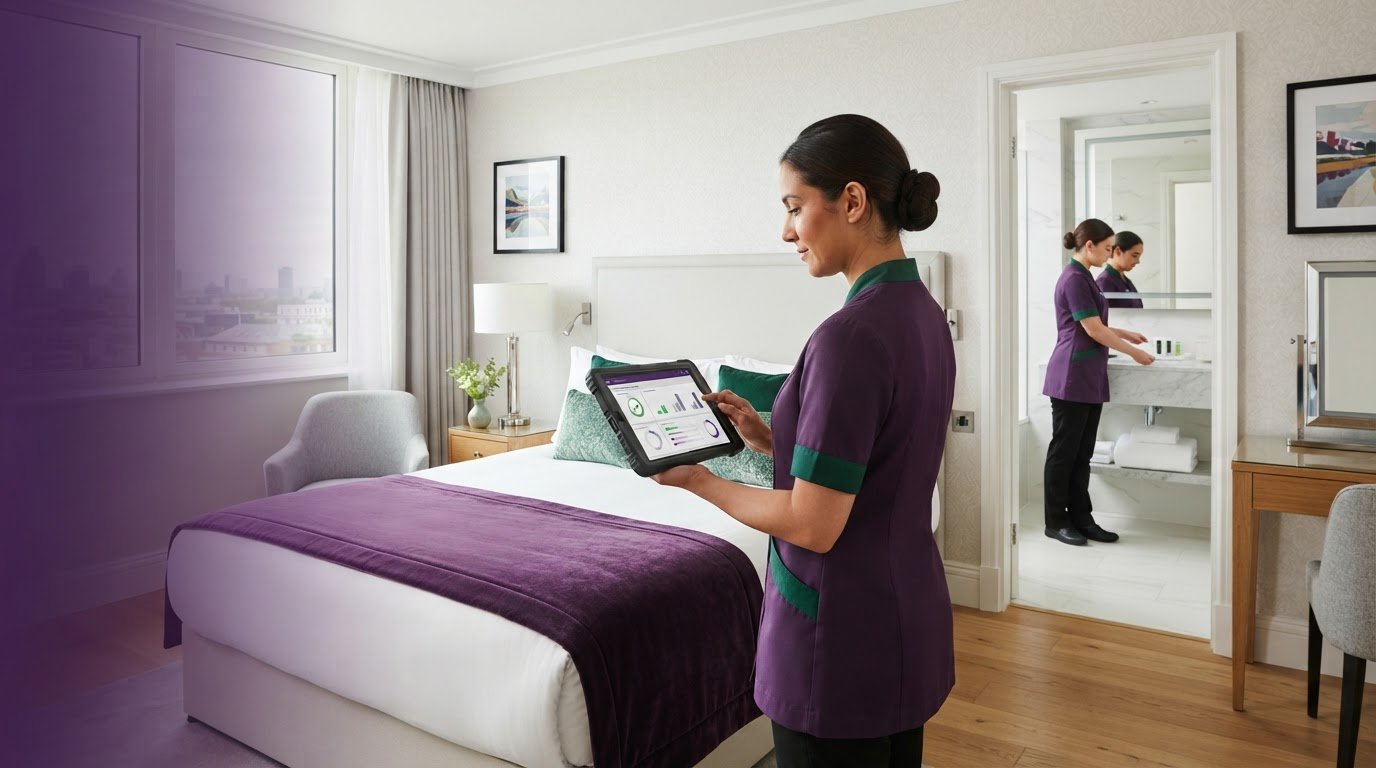
Digital monitoring may form part of a provider’s quality process. Ask what information is recorded, who can access it and whether it applies to the proposed hard floor work. UF Cleaning provides real-time quality controls through the Taskbe platform. Facilities teams should confirm how this monitoring applies to a specific hard floor cleaning contract. Assess the proposed scope, communication and oversight together before deciding which arrangement fits your site.
How to Arrange Hard Floor Cleaning Around a Working Office
Plan the work in stages: assess the site, agree the scope, schedule the service, brief occupants, complete the work and review the outcome. This sequence helps align the cleaning plan with staff presence, access arrangements and business-critical areas, rather than treating the office as an empty space.
Agree suitable work windows with the provider, taking account of busy periods and spaces that need to remain accessible. A reception area, shared corridor or meeting room may need a different plan from a low-traffic section of the office. Before work starts, confirm temporary restrictions, safety communications and guidance on drying and re-entry. Staff should know which routes or rooms may be unavailable and where to find updates.
What should facilities managers prepare before the first visit?
Share available floor plans, surface records, access procedures and known restrictions. Identify priority areas, periods of heavier use and the operational contact who will coordinate with the cleaning team. Agree who can approve a change if the floor’s condition or access differs from what was recorded during the assessment.
These preparations help the provider plan around the site and give staff a clear point of contact. UF Cleaning offers flexible schedules, which facilities managers can discuss in relation to operational requirements and the proposed hard floor cleaning scope.
How can a service be reviewed after work is completed?
Set a review date and check the completed work against the written scope. Confirm that the agreed areas and tasks were covered, then gather relevant staff feedback. General impressions can help, but a clear record makes it easier to identify whether a specific area or task needs attention.
If you find an issue, record it promptly, assign an owner and agree a follow-up timescale with the provider. Use the findings to adjust the scope, frequency or communication arrangements where justified. This creates a practical feedback loop and helps prevent small concerns becoming recurring misunderstandings.
To explore a suitable approach, prepare your site details and operational requirements. Find out more about office hard floor cleaning.
Choosing an Office Hard Floor Cleaning Partner for Ongoing Care
A suitable partner should be able to discuss the floor-care work your site needs, define it clearly and schedule it around workplace operations. Compare providers on relevant capability, a transparent scope, practical scheduling and clear oversight. Ask how they will check that agreed areas and tasks are complete, and how concerns can be raised and followed up.
The right arrangement depends on the site. A busy entrance or heavily used corridor may need attention more often than a quieter area. Floor condition and your expectations for appearance also matter. The proposed frequency should reflect these factors and the agreed tasks, rather than being chosen by habit.
When is recurring hard floor care worth considering?
Recurring maintenance may suit a workplace where regular use leads to continuing soil build-up between specialist visits. Discuss footfall, floor condition and desired appearance with the provider, then agree a frequency and scope that can be reviewed as needs change. Routine care can help manage everyday soiling, but should not be treated as a guarantee that the floor’s life will be extended or all wear prevented.
For some sites or specific needs, an occasional intensive project may be more appropriate. Ask the provider to assess which approach fits, based on the floor and the work that can be confirmed for the site.
What can a facilities manager discuss with UF Cleaning?
Share the floor areas you want assessed, relevant operational constraints and the service frequency you are considering. UF Cleaning has served organisations since 2010, offers flexible schedules and provides 24/7 operational support. Its real-time quality controls use the Taskbe platform. Ask how monitoring would apply to the proposed hard floor cleaning work and what information would be available to your team.
UF Cleaning can discuss hard floor care as part of its wider commercial cleaning offer. A clear conversation should establish which areas are in scope, what needs to be confirmed before the work is specified, and how the arrangement could be reviewed over time.
If you’re assessing options, share your site requirements to request a free quote. Request a free quote.
Set a Clear Plan for Your Office Floors
Well-maintained flooring starts with a plan based on the confirmed floor type, its condition and how your workplace is used. A clear written scope, suitable schedule and agreed quality checks make it easier to compare providers and manage the work with minimal disruption.
When comparing office hard floor cleaning services, focus on a provider who explains what is included, how the proposed care suits your site and how concerns will be reviewed. UF Cleaning has served organisations since 2010, offers eco-friendly products and 24/7 operational support, and provides real-time quality controls through the Taskbe platform. Ask how these arrangements would apply to your requirements and proposed floor-care scope.
To discuss your site, share the areas that need attention and your operational priorities. Request a free quote for your office floor-care requirements.
Frequently Asked Questions
What is included in professional office hard floor cleaning?
Professional office hard floor cleaning covers the tasks agreed for the assessed areas and surfaces. A proposal may distinguish regular removal of everyday soil and debris from periodic specialist work for needs routine maintenance does not address. The precise scope depends on the floor material, finish, condition and workplace use. Ask the provider to state which tasks are included, what is excluded and how the work will be checked.
How often should an office hard floor be professionally cleaned?
There is no single suitable frequency for every office. It should reflect footfall, entrance dirt, spills, floor condition and the appearance standard your organisation wants to maintain. Ask providers to explain how their suggested schedule relates to your site rather than relying on a standard interval. Review the frequency once service begins and adjust it if use patterns or floor-care needs change.
Can hard floor cleaning be carried out while an office is open?
It may be possible, depending on the work, access and areas involved. Discuss staff presence, business-critical routes and shared spaces with the provider before agreeing a schedule. Confirm how temporary restrictions will be communicated, what safety precautions occupants should follow and when treated areas can be re-entered. If busy spaces are affected, ask whether the work can be staged to reduce disruption while keeping access arrangements clear.
How do I know which cleaning method is suitable for my office floor?
Confirm the floor material and finish using site records or manufacturer guidance, then ask for an assessment of its condition and use. Appearance alone may not identify the surface or any coating, so avoid choosing products or equipment by guesswork. The provider should explain why the proposed approach is suitable and how compatibility will be checked. Share any known restrictions or previous treatments before the work is specified.
What should I compare when requesting office hard floor cleaning quotes?
Compare written proposals against the same site requirements. Check the assessed areas, included tasks, visit frequency, exclusions and how the provider will determine whether the method is suitable. Ask what equipment and products are proposed, subject to surface checks, and clarify access needs and likely operational impact. Compare how inspections, feedback and corrective actions are recorded, and how variations or additional work are agreed. Clear details make different scopes easier to assess fairly.
Does UF Cleaning provide ongoing office hard floor cleaning?
UF Cleaning provides office hard floor cleaning and can discuss your requirements as part of its commercial cleaning offer. The company has served organisations since 2010 and offers flexible schedules, but the suitable floor materials, scope and frequency should be confirmed for your site. UF Cleaning also provides real-time quality controls through the Taskbe platform. Ask how monitoring applies to a proposed hard floor arrangement, and share your requirements when requesting a quote.