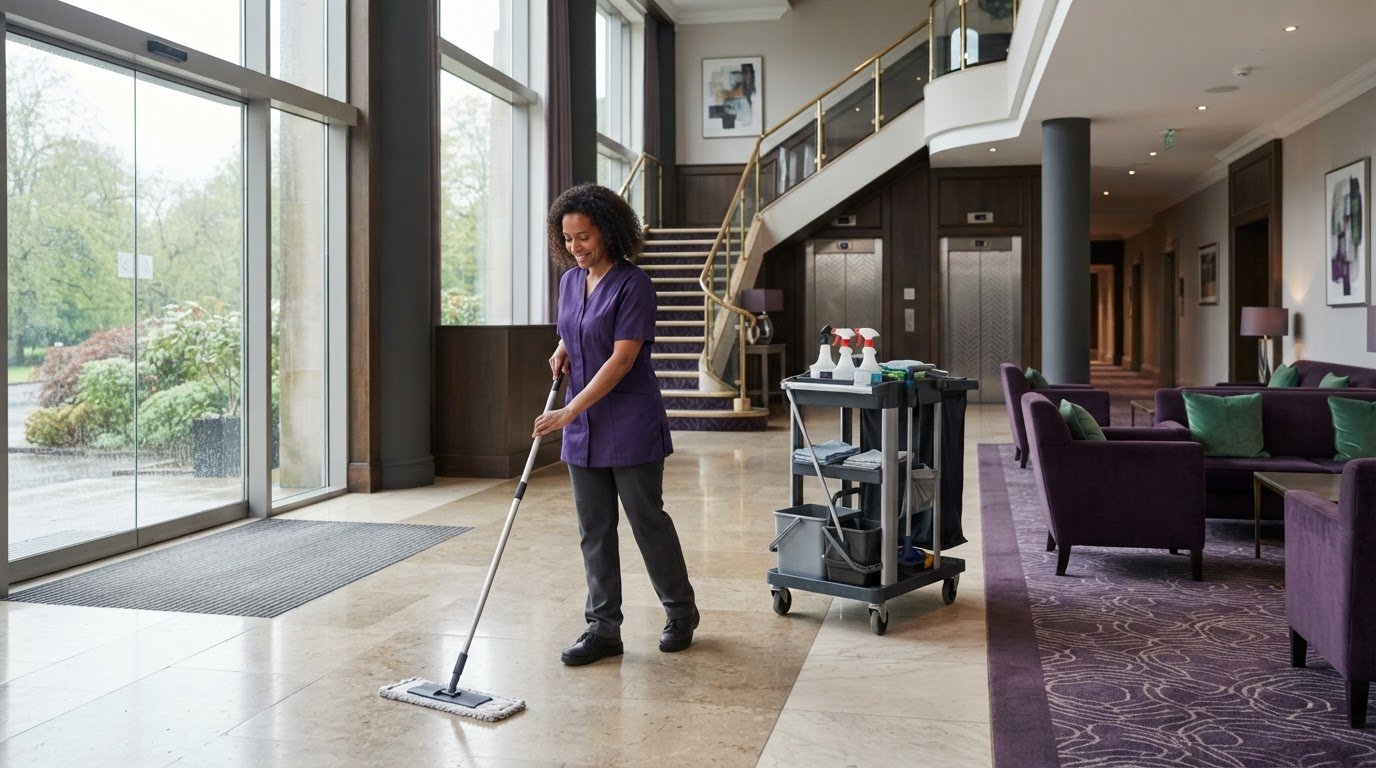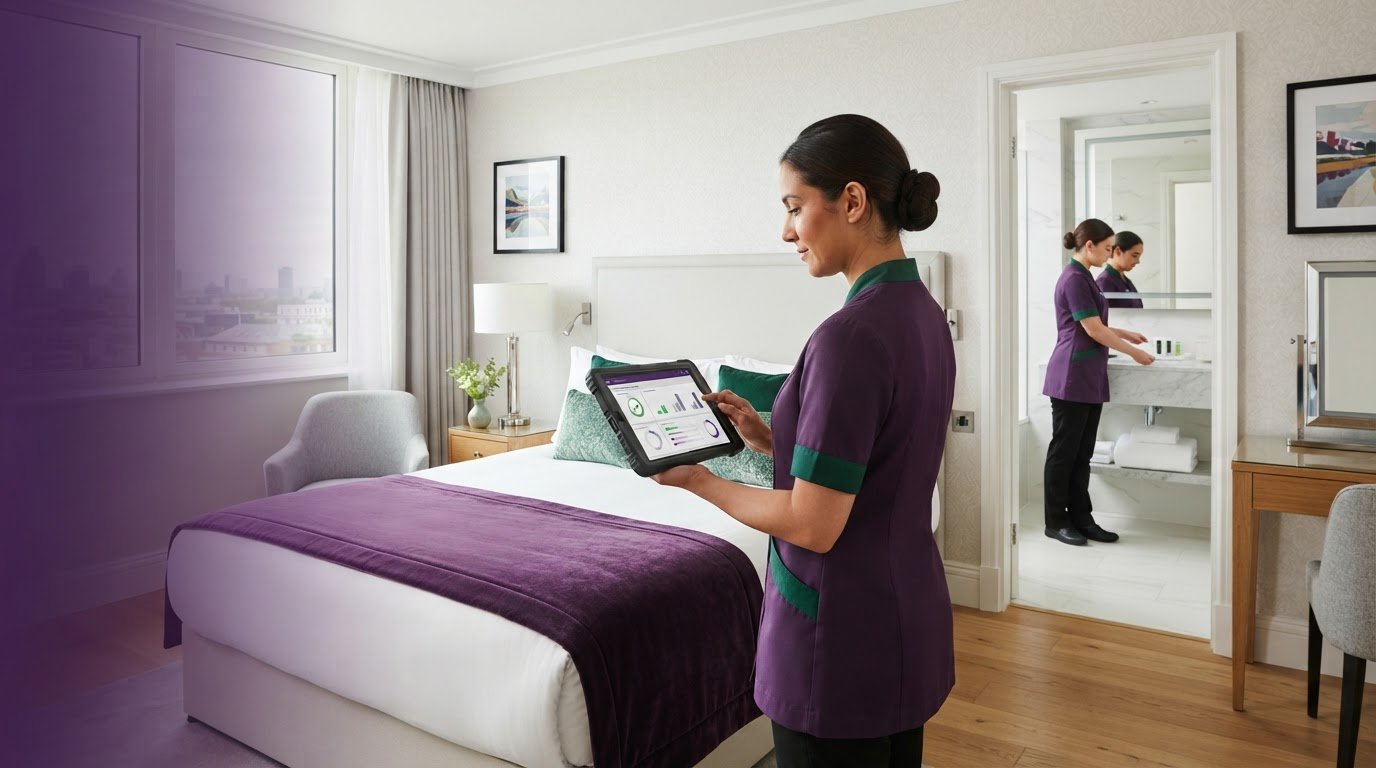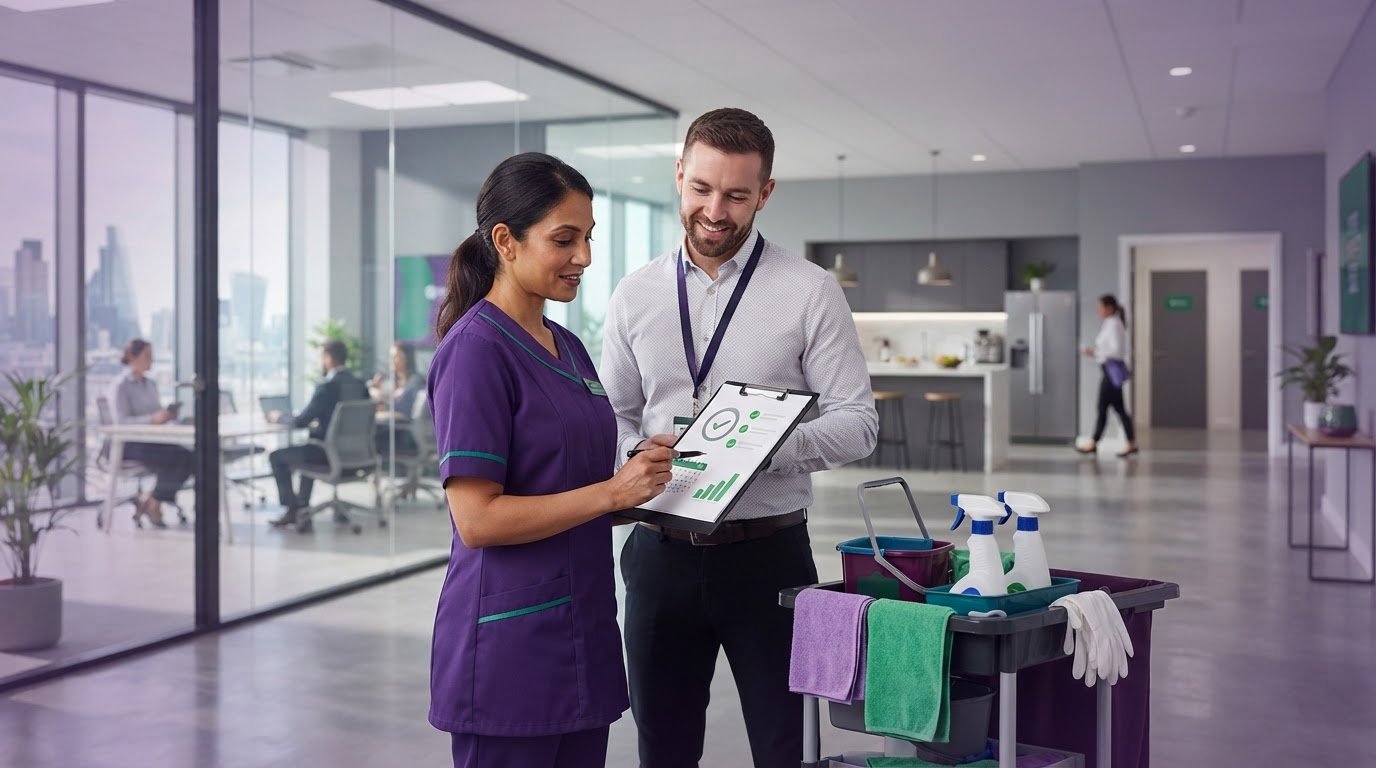
A good retail store cleaning plan isn’t the longest checklist. It’s the one that tackles the right tasks at the right time. Entrances, tills, fitting rooms and washrooms see different levels of use, while cleaning during trading hours needs to fit around customers and staff. A clear, risk-led approach helps you focus on where attention is needed and reduce disruption.
A clean, welcoming shop is easier to maintain when standards are clear between shifts and across premises. This guide explains how to prioritise areas according to their surfaces, use and condition, and how to organise tasks around the way your shop operates. You’ll also learn how professional cleaning and practical quality controls can support consistent standards. The aim is a workable plan that supports customer confidence and workplace safety, and can adapt as your premises and trading patterns change.
Key Takeaways
- Effective retail store cleaning is risk-led: prioritise areas according to their use, surfaces, observed condition and operational needs.
- Entrances, fitting rooms, washrooms and staff areas have different touchpoints and types of soiling, so tailor tasks to each zone.
- Routine, deep and specialist cleaning have distinct purposes. Knowing the difference helps you plan work without unnecessary disruption to trading.
- A clear programme maps zones, assigns responsibility, schedules tasks and reviews results to support consistent standards across shifts and premises.
- UF Cleaning tailors retail cleaning schedules to premises and operational requirements, with real-time quality controls through Taskbe to help monitor delivery.
Why retail store cleaning matters for customers, staff and daily operations
Retail store cleaning is the planned upkeep of customer-facing, staff and operational areas to keep them presentable, orderly and fit for everyday use. Unlike occasional tidying, it follows a routine that addresses different spaces and surfaces according to how they’re used. Straightening a display may improve its appearance, for example, but it doesn’t replace cleaning the surface or checking for a nearby spill.
A shop communicates its standards through its surroundings as well as its products. Clean, well-kept spaces can help customers feel comfortable browsing, while visible dirt or clutter may distract from the experience. The aim isn’t to promise a particular sales result. It’s to maintain an environment that feels cared for and supports a consistent impression of the brand.
How cleanliness shapes the in-store experience
Customers notice details as they move through a shop: the entrance mat, marks on display surfaces, fingerprints on glass and the condition of fitting areas. Each may seem minor on its own, but neglected details can make the whole space feel less orderly. A clear entrance and clean displays help create a more composed welcome.
Consider a fitting room with a clean mirror but garments left on the floor. The mirror alone doesn’t make the area feel ready to use. The overall condition shapes the impression. Attending to the room as a whole supports comfort and confidence without assuming every customer will respond in the same way. For a general account of the wider discipline, see this Commercial Cleaning Overview.
Why cleaning also matters behind the scenes
Customer areas are only part of a shop’s daily environment. Staff rooms, washrooms, stock areas and shared workspaces also need planned attention. Their condition affects how staff use these spaces and move through them. Clear work surfaces, accessible walkways and orderly shared areas can make routine tasks easier and help prevent avoidable interruptions.
Clean, dry and unobstructed floors support practical safety awareness. A spill, damp patch, trailing item or misplaced box can create a hazard, particularly on a busy route. Identifying and addressing these conditions promptly helps keep routes visibly clear, but cleaning alone can’t remove every workplace risk. Layout, storage and day-to-day working practices matter too.
It’s useful to distinguish general hygiene practice from legal compliance. A cleaning schedule can support a well-maintained workplace, but it isn’t proof by itself that every legal duty has been met. The appropriate approach depends on the premises, work activities and risks involved. A practical programme considers both hygiene needs and the condition of the environment, with clear responsibility for reporting issues that need attention beyond routine cleaning.
How retail store cleaning addresses different areas and surfaces
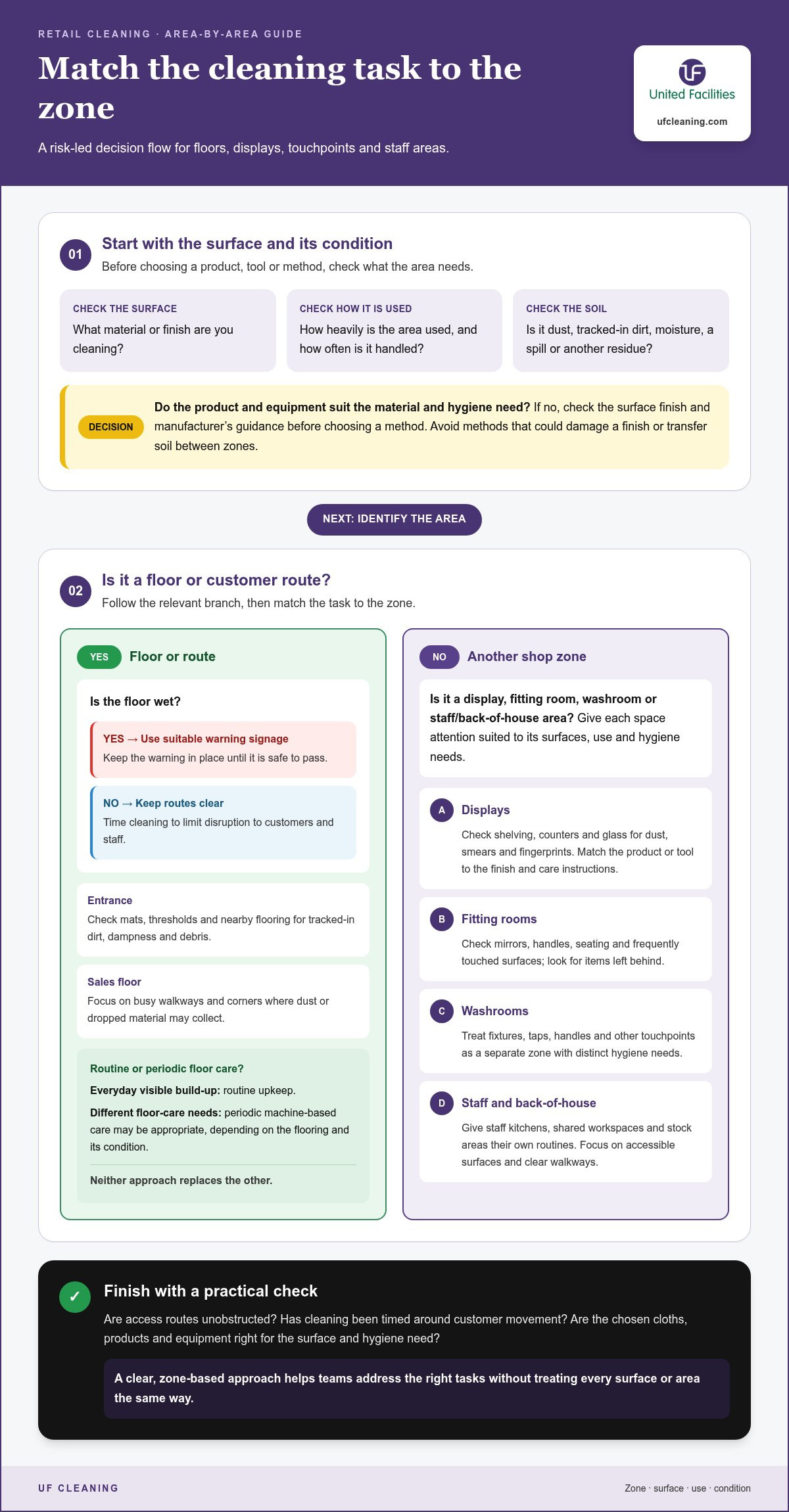
Retail store cleaning is planned upkeep tailored to the surfaces, use and hygiene needs of each area. A shop floor, glass display and staff kitchen have different cleaning considerations, so don’t apply one method or product indiscriminately. Take account of the material, its manufacturer’s guidance, how heavily it’s used and the type of soil or residue present.
Thinking in zones makes it easier to match tasks to practical needs instead of treating the whole premises as one uniform space. It also helps teams spot overlooked touchpoints and coordinate work around customer movement.
Floors, entrances and customer routes
Entrances commonly collect tracked-in soil and moisture, while sales floors may accumulate dry debris, dust or occasional spills. Routine upkeep tackles visible and everyday build-up. Periodic machine-based floor care can address different needs, depending on the flooring and its condition. Neither replaces the other. Keep routes clear and time cleaning to limit disruption. If a floor is wet, use suitable warning signage to alert people until it’s safe to pass.
- Entrance: Check mats, thresholds and nearby flooring for tracked-in dirt, dampness and debris that could spread further into the shop.
- Sales floor: Focus on busy walkways and corners where dust or dropped material may collect, while keeping access unobstructed.
- Displays: Shelving, counters and glass can show dust, smears and fingerprints. Check the finish and care instructions before choosing a product or tool.
- Fitting rooms: Mirrors, handles, seating and frequently touched surfaces may need attention between broader cleaning tasks. Check for items left behind too.
- Washrooms: Fixtures, taps, handles and other touchpoints have distinct hygiene needs. Treat these spaces as a separate zone in the cleaning plan.
- Staff and back-of-house areas: Staff kitchens, shared workspaces and stock areas have different surfaces and patterns of use. Clear walkways and accessible work surfaces support orderly use.
Displays, touchpoints and staff areas
Prioritise counters, shelving, handles and fitting-room touchpoints according to how frequently they’re handled and what they’re made from. Give washrooms and staff kitchens their own routines rather than treating them as extensions of the sales floor. In stock areas, focus on accessible surfaces and clear routes. Match cloths, products and equipment to surface instructions and hygiene needs. Avoid methods that could damage a finish or transfer soil between zones.
These decisions are part of a considered cleaning process, not simply a choice of equipment. Industry resources such as ISSA - The Worldwide Cleaning Industry Association provide further context on cleaning and facility solutions. For each shop, the schedule should reflect its surfaces, operating patterns and priorities.
UF Cleaning provides tailored retail cleaning support, with flexible schedules shaped around premises and operational requirements. A zone-based plan helps align tasks with the areas and surfaces that need attention, supporting a more consistent standard across the store.
Routine, deep and specialist retail store cleaning: what each approach does
A balanced retail store cleaning programme combines repeatable upkeep with more intensive or task-specific work. These categories describe different purposes, not fixed packages. The right scope depends on the premises, materials, observed condition and operational requirements. Deep cleaning doesn’t replace routine tasks, and specialist work may be needed when a surface or condition calls for a distinct approach.
The comparison below explains what each type of work is intended to achieve. Examples are illustrative. Set timing according to how the shop is used and the condition of its surfaces, rather than assuming the same schedule suits every premises.
| Approach | Purpose | Typical scope | Planning trigger | Example tasks |
|---|---|---|---|---|
| Routine | Maintain presentation and hygiene in spaces and on surfaces in regular use. | Accessible, frequently used areas and touchpoints. | Recurring schedule, adjusted for use and observed condition. | Cleaning counters, handles and floors; attending to visible soil and spills. |
| Deep | Address accumulated soil and areas that receive less attention during routine work. | Hard-to-reach or less-accessible areas, subject to the site plan. | Observed build-up, a change in use or a planned review of condition. | Detailed work around fixtures or edges, and cleaning behind accessible equipment. |
| Specialist | Meet a particular task or material requirement. | A defined surface or area requiring a specific process. | Surface condition, material guidance or operational need. | Carpet cleaning, window cleaning or hard-floor restoration. |
Routine cleaning and planned deep cleaning
Routine cleaning is repeatable upkeep of spaces and surfaces in regular use, helping maintain an agreed standard as the shop operates. Deep cleaning is more intensive. It targets accumulated soil or less-accessible areas that everyday tasks don’t fully address. For example, a routine plan may include accessible floor care, while a deeper task could focus on edges or areas behind movable fixtures. Set timing according to use and condition, not a universal frequency.
When specialist cleaning may be appropriate
Some tasks need a distinct scope rather than simply “more” routine cleaning. Carpet fibres, glazed windows and hard-floor finishes have different characteristics, so the work should reflect the material, its condition and relevant care guidance. Hard-floor restoration, for instance, isn’t interchangeable with regular floor upkeep. It may be appropriate when the floor’s condition or maintenance needs call for a more intensive intervention. Specialist work complements routine cleaning by addressing a particular need; it doesn’t replace ongoing care.
Clear distinctions make planning more practical. Identify the purpose of each task, define the areas included and set a review point based on the premises’ needs. Resources such as Cleaning and Maintenance Strategies for Facilities offer wider context on facilities planning. When the scope reflects the shop’s surfaces and condition, schedules can be adjusted as those needs change.
How to plan and review a retail store cleaning programme
A reliable programme turns cleaning priorities into clear tasks, responsibilities and review points. For retail store cleaning, the plan should reflect how the premises are used, rather than applying the same checklist to every area. A walk-through helps identify what needs attention, where access may be difficult and how work can fit around trading and customer movement.
Build a practical, site-specific cleaning plan
Start by recording each zone, its surfaces, access arrangements and recurring issues. Then use this five-step framework to turn your observations into an organised plan:
- Map the zones: List customer, staff and back-of-house areas, including the routes between them.
- Identify needs: Consider how often each space is used, the surface type, its observed condition and any operational risks. A frequently used entrance may need closer observation than a low-traffic storage corner.
- Assign ownership: Make clear who completes each task and who reports spills, damage or missed work. Keep staff responsibilities practical and make sure they’re understood across shifts.
- Schedule tasks: Fit work around trading patterns, access and customer movement. Consider whether a task could obstruct a busy route, and plan suitable controls if an area needs to be temporarily avoided.
- Review and adjust: Compare the plan with actual conditions. Revise task details or timing when use, access or recurring issues change.
Use concise checklists that state the area, task and expected outcome. A checklist should be easy to follow and update, not so broad that different people interpret the standard differently. Include relevant surface instructions and safe-use information for cleaning products and equipment. Where substances hazardous to health are involved, consult current UK HSE and COSHH guidance and verify what applies to the specific work and premises.
Check standards and respond to issues
A plan needs a review loop. Use documented inspections, observations and service records to see whether agreed tasks were completed and whether the results match the site’s needs. Keep checks relevant. For example, record whether a specified area was attended to or note a recurring issue that may need a change in timing or ownership.
When a gap appears, keep the response simple: record the issue and location, assign responsibility, resolve it and recheck the result. This creates a traceable process without treating every observation as a failure of the whole programme. It also helps managers distinguish a one-off spill from a recurring problem that may call for a revised schedule or clearer task instructions.
UF Cleaning tailors retail cleaning to premises and operational requirements, with real-time quality controls through Taskbe to help monitor service delivery. Discuss a tailored retail cleaning programme to support clear responsibilities and consistent standards.
How UF Cleaning supports consistent retail store cleaning
A carefully planned approach sets out which areas need attention, what standards are expected and how tasks fit around trading. UF Cleaning provides retail cleaning and wider commercial facilities support, with schedules tailored to each premises and its operational requirements. This means the service plan can reflect the store’s layout and use rather than relying on a uniform routine that may not suit every location.
Consistency also depends on monitoring delivery and responding when needs change. UF Cleaning combines flexible scheduling with real-time quality controls through Taskbe, helping clients monitor service delivery. Its 24/7 operational support provides an additional point of oversight, and eco-friendly products are part of its cleaning approach.
A tailored service supported by operational oversight
Scheduling can be shaped around how the store operates, including access, customer activity and agreed cleaning requirements. The aim is to organise cleaning with minimal operational friction, so service delivery supports the shop’s working pattern. Taskbe provides real-time quality controls to help clients monitor work, while operational support is available around the clock. The service plan is tailored to the premises.
What to expect when discussing retail cleaning support
A useful discussion starts with the practical details of the store and the standards you want to maintain. UF Cleaning has served organisations since 2010, bringing experience to the planning conversation. Store layout, cleaning priorities and operating requirements help shape a suitable service schedule. Clear expectations also make it easier to monitor consistency over time.
Before planning, consider:
- Layout and access: Which zones, routes and surfaces need regular attention?
- Cleaning needs: Which tasks are routine, and where might deeper or specialist work be appropriate?
- Timing: How can scheduled activity fit around trading and customer movement?
- Standards: What outcomes matter most, and how will service delivery be reviewed?
These details connect the cleaning plan to everyday operations, from customer areas to staff and back-of-house spaces. A tailored arrangement can support a consistent standard while accounting for the distinct requirements of each premises.
For a considered approach to your shop’s cleaning requirements, request a free quote for retail cleaning and discuss a plan suited to your premises.
Set your next retail cleaning priorities
Consistent standards are easier to maintain when the next step is clear. Consider which part of your shop would benefit most from a more defined cleaning approach, then note the outcome you want customers and staff to experience there. That priority can focus planning and provide a useful starting point for a tailored discussion.
Keep the plan responsive as your retail environment changes. New displays, changing customer flow or different patterns of use can alter which tasks need attention and when. A considered approach to retail store cleaning can adapt to those needs, helping your premises remain welcoming and orderly without relying on a fixed routine that no longer fits.
UF Cleaning can shape a service around your premises and operational requirements. Request a free quote for tailored retail cleaning to discuss a practical next step for your shop.
Frequently Asked Questions
How often should a retail store be cleaned?
There isn’t one cleaning frequency that suits every shop. Set task intervals according to customer footfall, seasonal changes, soil tracked inside and how quickly washrooms or touchpoints become soiled. Review the plan after a busy trading period or a layout change, and adjust it if inspections show build-up returning before the next scheduled visit. This keeps attention proportionate to actual use rather than an arbitrary calendar.
What is included in retail store cleaning?
The scope depends on the premises and agreed requirements, but retail store cleaning can cover floor care, accessible surfaces, customer touchpoints and staff facilities. Clarify which tasks are included, how often they’re expected and what condition counts as complete. For example, “clean the counter” is open to interpretation. Specifying that visible marks and dust should be removed gives staff a clearer standard to follow.
Can a shop be cleaned while it is open?
Yes. Tasks can be planned around an open shop, provided the approach accounts for customer movement and safe access. A team might work through a quieter section first, then move on as footfall shifts, rather than blocking a central route. Communicating with shop staff helps coordinate access and respond to changes. Plan tasks that require an area to be unavailable so customers can move around it safely.
What is the difference between routine and deep retail cleaning?
Routine cleaning maintains areas that are used regularly; deep cleaning gives more intensive attention to build-up or places that are harder to reach. A mark on an accessible surface may be handled as part of routine upkeep, while dirt collecting behind a fixture may call for planned deeper attention. Use the observed condition and access to decide what’s needed, rather than treating “deep” as a fixed set of tasks.
How should spills be managed in a retail store?
Make the area safe first: alert the responsible person, keep customers away from the spill and use appropriate warning signage. Follow the site’s procedures for identifying and dealing with the substance. Don’t handle an unknown spill without suitable instructions and equipment. Once it’s addressed, check that the surface is dry and safe before reopening the area, and record recurring spill locations so the team can watch for patterns.
Which cleaning products are suitable for retail surfaces?
Choose products according to the surface material, the type of soil and the manufacturer’s care instructions. Check the product label for directions, including dilution and any stated contact time, and don’t mix cleaning products. A solution suitable for one floor finish may damage another, so don’t assume the same product works across the shop. Eco-friendly options are available, but suitability still depends on the task and surface.
How can a retailer monitor cleaning quality?
Use a simple record that links each agreed task to its area, completion status and any issue found. Pair it with periodic visual checks for specific outcomes, such as a clear route or a surface free from visible marks. If the same shortfall appears repeatedly, record it, assign follow-up and check the result. A consistent method helps managers distinguish isolated oversights from tasks or standards that need revisiting.