A changeover is complete only when the line is ready for the next product, not merely when visible residue has gone. Factory production line cleaning protocols should account for the products being changed, the residues present, the equipment materials and the checks needed before restart. Yes, a line can be cleaned between different products, provided the cleaning method and release checks are suited to that changeover.
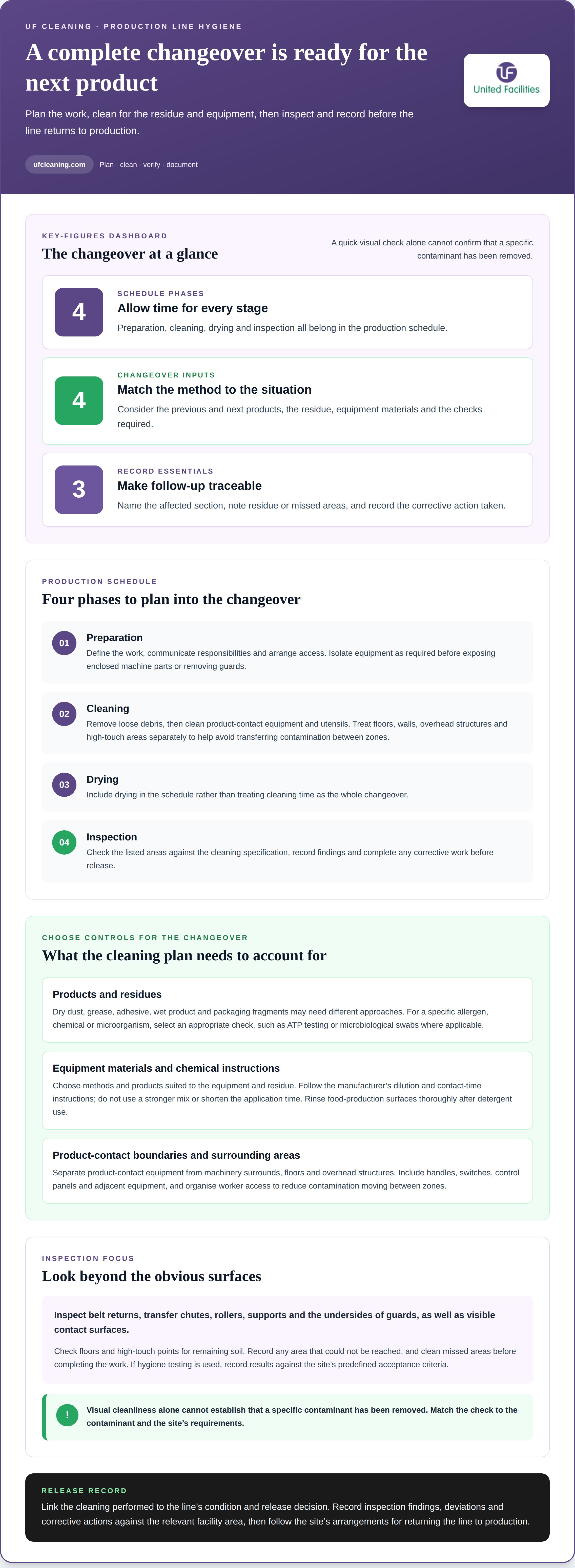
When production schedules are tight, it’s tempting to focus only on cleaning time. A reliable plan also allows for preparation, cleaning, drying and inspection, so teams can coordinate the work without treating a quick visual check as proof that every risk has been addressed.
This guide explains how professional cleaners plan product changeovers, schedule work around production, record completion and support a safe return to production. It also covers how inspection findings and site-specific requirements shape the cleaning schedule.
Key Takeaways
- Match each changeover cleaning plan to the previous and next products, the residue involved and the checks needed to assess specific contaminants.
- Plan cleaning methods around equipment materials and site maintenance requirements, giving attention to less visible areas as well as contact surfaces.
- Record completed areas, remaining residue and any corrective actions, then follow the site’s arrangements for releasing the line back to production.
- Build preparation, cleaning, drying and inspection into the production schedule, and refine the timing in response to inspection findings.
Cleaning equipment, floors, walls and high-touch areas
Organise each changeover by area, separating product-contact equipment from surrounding surfaces. Match every step to the equipment, cleaning chemical and hygiene checks required.
- Isolate equipment and manage stored energy. Before exposing enclosed machine parts, plan the work, communicate responsibilities and isolate equipment as required. Power down machinery where needed, and coordinate access before removing guards. Sensors, seals, bearings and electrical enclosures can have different tolerances to moisture and cleaning agents. Use manufacturer information and site maintenance knowledge to choose a suitable method.
How professionals disinfect equipment and utensils
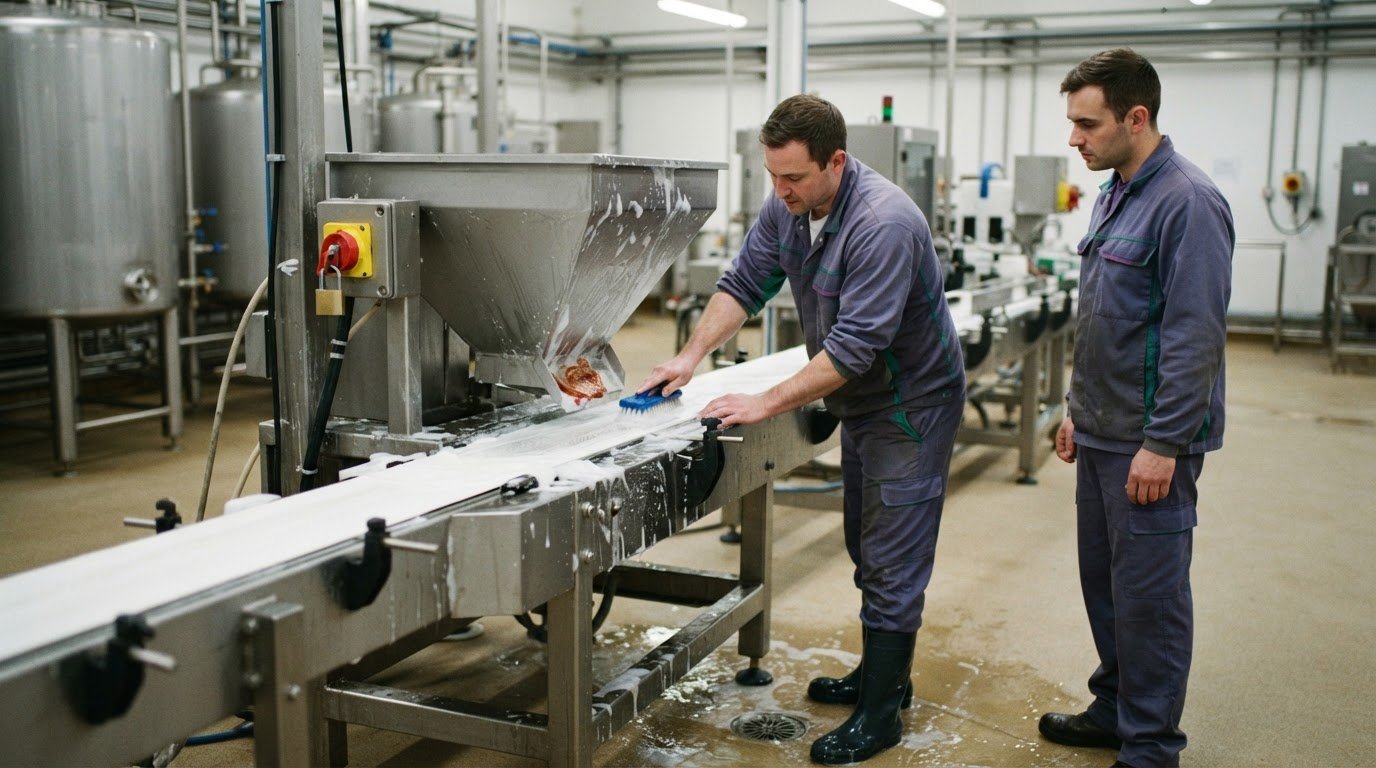
Remove loose debris, then clean product-contact equipment and utensils before disinfection. Choose a sanitising or disinfecting chemical suitable for the food or beverage process, and follow the manufacturer’s dilution and contact-time instructions. Rinse food-production surfaces thoroughly after detergent use to remove residue. Disinfect equipment and utensils before reuse, including parts reached through a clean-in-place (CIP) circuit, and confirm the planned circuit covers the relevant sections.
How professionals clean floors, walls and high-touch areas
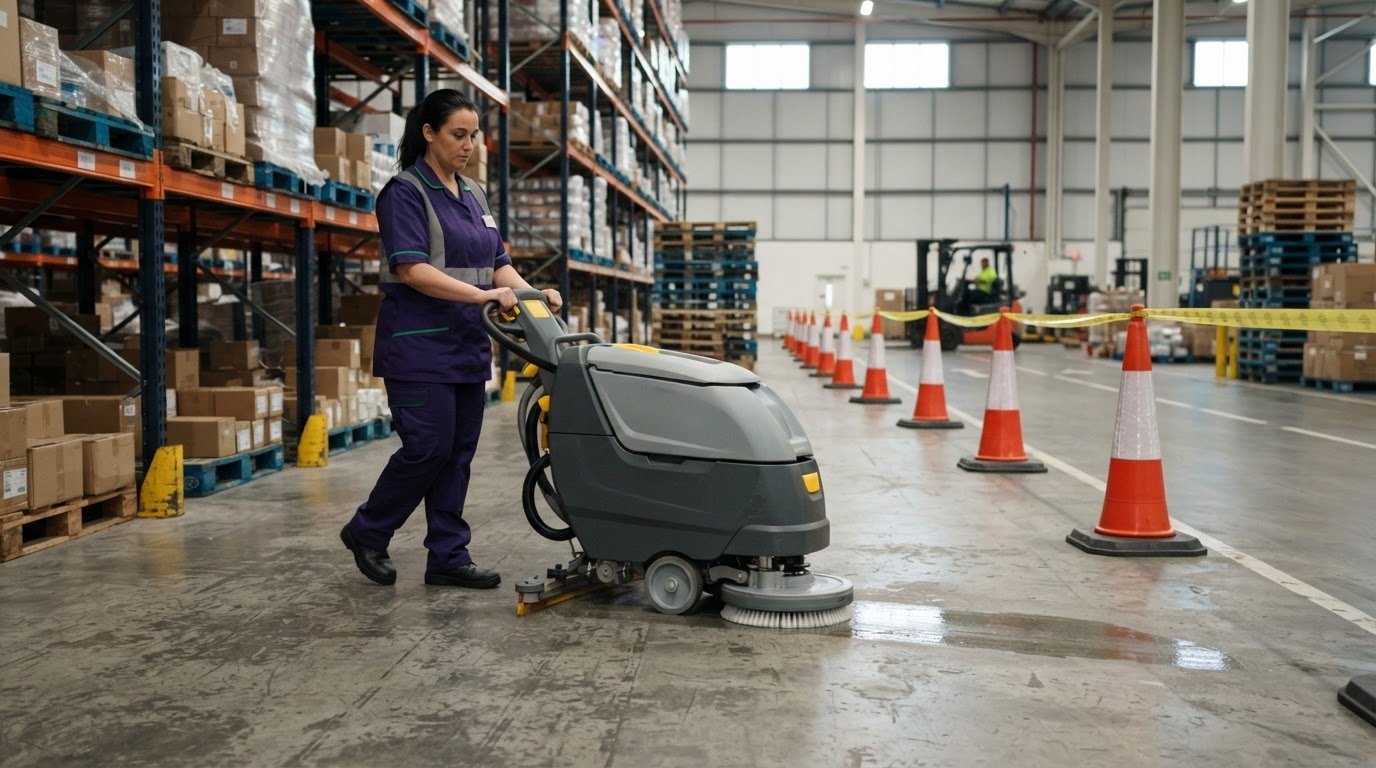
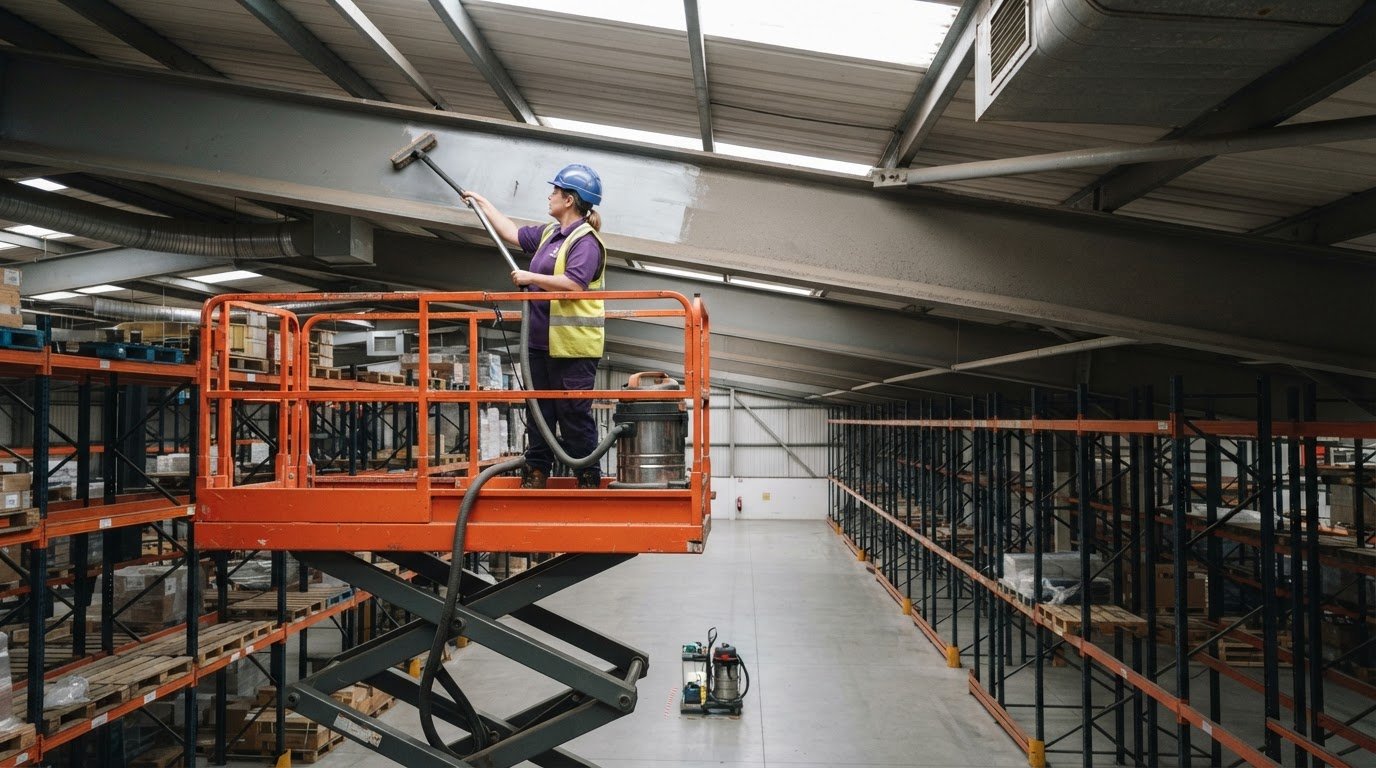
Clean floors, walls and overhead structures separately from product-contact surfaces, using wiping supplies suited to each task. Include handles, switches and control panels, where frequent contact can leave soils behind. Check areas around the line and adjacent equipment for residue, and choose methods that avoid transferring contamination between zones. ISO 14644 is identified by the International Organization for Standardization as the widely used standard for clean-room classification.
- Wear suitable protective equipment. Staff handling cleaning chemicals should wear gloves and safety goggles. Depending on the task, protective equipment may also include masks, aprons and footwear. Match protection to the work and chemical instructions, and keep supplies organised so the correct items are accessible.
- Inspect machinery and surrounding surfaces. Check belt returns, transfer chutes, rollers, supports and the undersides of guards, not just visible surfaces. Inspect floors and high-touch points for remaining soil, and clean any missed areas before completing the work.
Can a line be cleaned between different products?
Yes. Professionals adapt procedures to the previous and next products, residue, equipment materials and required checks. Food lines need suitable food-contact cleaning and disinfection; pharmaceutical procedures account for controlled processes, while general manufacturing focuses on its residues and contamination risks. In the UK, requirements depend on the sector. According to the Medicines and Healthcare products Regulatory Agency, GMP guidelines are requirements pharmaceutical companies follow.
-
Define product-contact and surrounding-area boundaries
Identify product-contact surfaces first, then distinguish them from machinery surrounds, floors and overhead structures. This boundary directs cleaning towards surfaces that could transfer residue into the next product. Include adjacent lines in the plan, especially if one remains in production or has different hygiene requirements. Set worker access and gowning arrangements to help prevent contamination moving between zones during changeover.
-
Clean between products and check contaminants
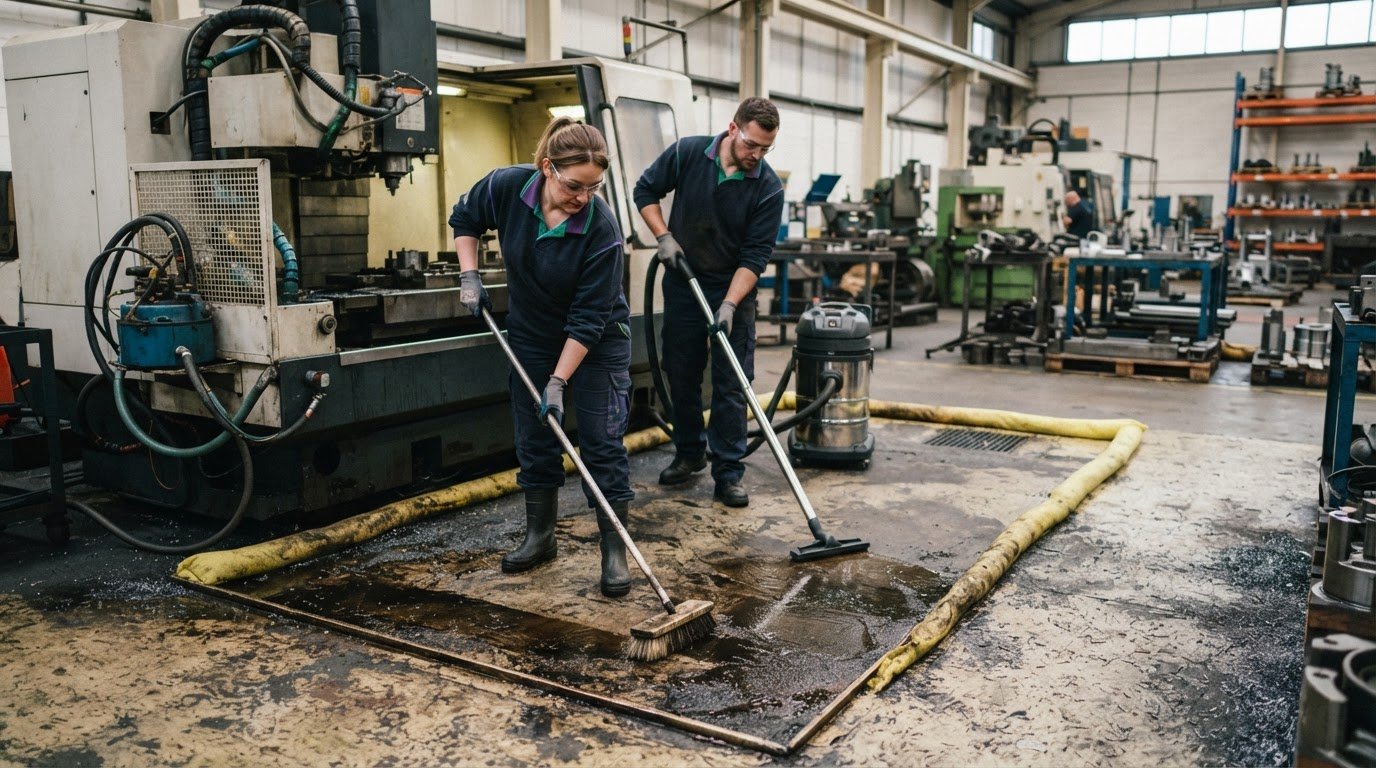
Match the method to the previous and next products, equipment materials and residue. Dry dust, grease, adhesive, wet product and packaging fragments may each need a different approach. Remove loose food debris before further cleaning, then rinse food-production surfaces thoroughly after detergent use. For a specific allergen, chemical or microorganism, select an appropriate check, such as ATP testing or microbiological swabs where applicable. Visual cleanliness alone cannot establish that a specific contaminant has been removed.
-
Follow detergent dilution and contact times
Use cleaning chemicals according to the manufacturer’s dilution and contact-time instructions. Don’t use a stronger mix or shorten the application time. Choose products suited to both the residue and equipment materials, and use sanitisers or disinfectants appropriate for food-contact surfaces. For fat- or protein-containing residues, choose detergents designed for those soils. A complete procedure assigns trained workers, controls contamination between zones and records the checks needed before the next product enters the line.
Recording completion and managing release back to production
A useful completion record links the cleaning performed to the line’s condition and release decision. Keep inspection findings, deviations and corrective actions traceable to the relevant facility area.
-
How professionals inspect and record cleaning completion
Inspect each listed line section against its cleaning specification, including contact points and areas beneath guards. Record whether surfaces are clean, any visible residue and any area that could not be reached. If hygiene testing is used, record results against the site’s predefined acceptance criteria. State the inspection outcome clearly instead of relying on a general tick that the whole facility is clean. Retain findings in the site’s audit trail for review.
-
How professional cleaners address corrective actions
Record each deviation when it occurs, naming the affected section, observed residue or missed area, and action taken. For example, if residue remains on a transfer chute, document the additional cleaning and follow-up inspection. Assign responsibility for follow-up and note unresolved findings for the site’s quality or maintenance process. Routine audits and staff training help identify recurring gaps in hygiene practice and cleaning technique.
-
How professionals manage a line’s release back to production
Use the site’s production, quality and maintenance procedures to determine release. A cleaning record does not establish process validation or mechanical fitness. Confirm that required inspections and applicable hygiene tests are complete, then record the decision and responsible role. If guards were removed, include confirmation that components were reinstated. This creates a clear handover while leaving calibration and equipment condition to the appropriate checks.
- Log cleaning-product dosing and use. Record the product used and the manufacturer’s dilution and contact-time instructions. Include actual dosing information in the site’s chosen format, alongside any deviations and corrective actions. Keeping these details together helps the facility review consistent application and investigate cleaning outcomes.
Cleaning frequency and production schedules
Factory production line cleaning protocols work best when their frequency reflects production plans, contamination risks and sector requirements. Costs and downtime depend on the cleaning scope, line access, residue, drying and required checks.
-
How professionals set cleaning frequency
Set cleaning intervals according to production schedules, contamination risks and applicable regulatory requirements. An allergen-sensitive food line may need different priorities from a general manufacturing line producing dry dust. Review residue patterns, inspection findings and previous deviations to refine the plan. Avoid applying one routine across every area: product-contact equipment, surrounding floors and sensitive process zones may need distinct cleaning tasks.
-
How professional cleaners coordinate with production schedules
Agree cleaning windows with production, quality and maintenance teams before assigning work. Include preparation, cleaning, drying and checks in the shutdown plan, alongside the intended restart conditions. Identify who controls access, removes guards where required and confirms components are reinstated. This coordination helps teams plan around adjacent lines that remain active, rather than assuming the whole facility can stop at once.
-
Assessing the costs and downtime of professional factory cleaning
Assess costs by considering the work’s scope: line layout, residue type, access, cleaning method, labour and required checks. Downtime depends on preparation, cleaning, drying, inspection and restart conditions. A complex line with difficult-to-reach areas needs a different plan from an accessible line with straightforward residues. Include these operational factors when setting the production window, rather than treating cleaning time as the only consideration.
-
How professional cleaning can reduce downtime
Use factory production line cleaning protocols tailored to the actual line and production sequence. Agree access, isolation, supplies, responsibilities and inspection criteria before shutdown begins. Arrange tasks in a logical order and allow time for drying and checks. After each changeover, review inspection findings and adjust the schedule if recurring residue or missed areas show that the plan needs refinement.
UF Cleaning
UF Cleaning can support organisations with commercial cleaning and facilities needs. For manufacturers, a clear cleaning plan helps coordinate tasks with production requirements, record completion and organise handovers.
UF Cleaning provides commercial cleaning and facilities support, with flexible schedules and quality controls. This can help organisations review how cleaning fits around daily operations and support their wider workplace environment. Cleaning plans should reflect occupancy, access arrangements, floor types and the spaces that need the most attention, rather than assuming every facility has the same needs.
Contact UF Cleaning to discuss your organisation’s cleaning requirements.
Plan the next changeover with confidence
As product ranges evolve, keep the cleaning plan aligned with the way the facility operates. New materials, residues or production sequences can change what teams need to clean and how the work fits into a shutdown. Treat factory production line cleaning protocols as a working part of operational planning, not a document that stays unchanged after approval.
A useful next step is to include cleaning scope in production planning. Sharing details about the facility, product changeovers and operational priorities helps shape a practical discussion about professional cleaning support. UF Cleaning offers a free, no-obligation quote based on a site-specific assessment.
Discuss your requirements with UF Cleaning and consider how professional support could fit your operations. A considered plan can make the next changeover easier to organise, giving your team a clear foundation to build on.
Frequently Asked Questions
Why Use a Factory Cleaning Checklist?
A checklist gives the cleaning team a consistent record of what each area requires, particularly when line layouts or products change. It can distinguish equipment surfaces from surrounding spaces, assign responsibilities and prompt checks of less visible points. For example, include a transfer chute and its adjoining supports. Reviewing completed records also helps site teams spot recurring missed areas and refine instructions.
How does a professional provider create and validate a production line cleaning schedule?
A professional provider builds the schedule around production plans, contamination risks, site requirements and previous inspection findings. The plan should allow for preparation, cleaning, drying and checks, then assess whether the work fits the actual shutdown window. If hygiene testing is used, set sampling locations, methods and acceptance criteria beforehand. Audit results and deviations can then inform regular schedule reviews and adjustments.
How does a professional provider determine the required contact times, concentrations and temperatures for industrial cleaning and sanitising?
A professional provider follows the chemical manufacturer’s dilution and contact-time instructions, then aligns the method with the residue and equipment materials. The site cleaning specification and equipment information guide suitable operating conditions, including temperature, rather than applying one value across every line. For example, a detergent chosen for greasy residue must still suit the surfaces being cleaned and the process requirements.
How can a professional provider verify and document cleaning effectiveness, including through swab testing and ATP testing?
A provider first identifies the contaminant of concern, then selects a suitable assessment method. ATP testing or microbiological swabs may be used where applicable, with sampling points and acceptance criteria agreed in advance. Records can capture the location, method, result and any follow-up action. Visual inspection remains useful for visible soil, but it does not establish removal of a specific allergen, chemical or microorganism.
What health and safety risks does a professional provider manage during production line cleaning, and what PPE is required?
A professional provider plans for chemical exposure and machinery that may contain stored energy or require access behind guards. Power down equipment where needed, and coordinate access and responsibilities before cleaning begins. Staff handling chemicals should wear gloves and safety goggles; task-appropriate protective equipment may also include masks, aprons and footwear. Equipment materials and manufacturer information help identify methods that avoid unsuitable moisture or cleaning agents.
How should a professional provider handle lockout/tagout, equipment disassembly and restart checks during line cleaning?
A provider follows the site’s equipment-isolation procedure before cleaning exposes enclosed parts, coordinating access and guard removal with responsible site staff. The work plan should state who controls access and who confirms removed components are reinstated. Before restart, follow the site’s production, quality and maintenance procedures. A cleaning record alone does not establish calibration, mechanical fitness or production-process validation.