Judge a cleaning contract by how clearly it sets expectations, not by how polished it sounds. The best commercial cleaning service level agreement examples specify the areas covered, tasks required, cleaning frequency and exclusions. They also explain how performance will be checked and what happens if work falls short.
That detail matters because a business premises is more than a list of rooms. Offices, washrooms, kitchens and shared areas may each need a different routine. Terms should reflect how the building is used, so they are practical for the cleaning team and straightforward to assess.
This article outlines the service terms to include, with examples of audit schedules, measurable quality checks, corrective actions and staff standards. It also explains how to clarify responsibilities, reporting and review arrangements, giving both parties a reliable basis for maintaining consistent cleaning and resolving issues.
Key Takeaways
- Define the premises, cleaning tasks, frequency and exclusions so both parties share a clear service scope.
- Make contract length, review dates and termination notice arrangements explicit to support orderly changes.
- Use scheduled audits, written reports and clear escalation steps to turn service issues into trackable corrective actions.
- Set measurable quality checks for areas such as washrooms and high-touch surfaces, with agreed thresholds for follow-up.
- Match cleaning routines and staff standards to the building’s use, layout and operational requirements.
What A Good Commercial Cleaning Contract Should Always Include?
A UK cleaning contract should identify the parties, premises, agreed tasks, frequency and exclusions. It should also set out how the service is measured, reviewed and brought to an end.
Contract scope and cleaning schedules
The scope defines which areas are cleaned, which tasks are included and how often each task is due. This detail gives the parties a shared reference when building use changes or a missed task is reported. For example, a schedule could assign washroom cleaning daily, carpet maintenance weekly and office cleaning Monday to Friday from 6:30pm. It should also identify excluded rooms, surfaces or specialist work, rather than leaving assumptions to govern delivery.
Name both parties by their full business names and include the cleaning address. Add the service start date, task schedule and a method for recording changes. Set daily or weekly routines around workplace needs, and list periodic tasks separately. This makes it easier to distinguish routine duties from additional work and assess whether each visit met the agreement.
Duration, reviews and notice periods
Duration states how long the contract runs, while review dates create planned opportunities to assess whether its terms still fit. These provisions matter when occupancy, opening patterns or the premises change. A cleaning contract may cover a six-month service period; another sample agreement has a term of one (1) years from the commencement date. Treat these as examples of different contract structures, not a single standard term.
State when each review takes place, who attends and how changes are recorded. A rolling agreement can require either party to give one month’s notice to end the contract. A separate sample agreement allows termination by written notice twenty (20) days before the termination date. Specify the required notice method and explain any exit-related financial implications, so neither party has to infer the process.
Service levels and contract terms
The cleaning contract sets out the full commercial arrangement; a service level agreement, or SLA, details measurable performance expectations within it or alongside it. The distinction matters because a task list alone cannot show how quality will be judged. Include inspection arrangements, issue response expectations, reporting routes and remedies, then state how these terms relate to the main contract.
UK commercial cleaning SLA examples can provide a useful starting point for site-specific terms. Adapt each one to the premises, schedule, tasks and reporting process instead of copying wording that does not fit.
Set out both parties’ responsibilities: the provider completes the agreed tasks and reports service issues, while the client identifies site requirements and provides agreed access. Include public liability insurance details, staff suitability and training expectations, and confidentiality provisions for information encountered on site. If site data is handled, address compliance with UK GDPR.
Prices and payment terms
How are commercial cleaning contract prices and payment terms structured in the UK? The agreement should explain how the price is calculated and what it covers. The amount depends on factors such as premises size, facility type, cleaning frequency, requirements and working hours. State the invoicing cycle, payment deadline and process for reviewing charges if the scope changes.
Example terms may provide for monthly invoicing in arrears, with invoices typically payable within 31 days of receipt. Record whether the invoice covers routine work only or includes agreed additional tasks, and describe how disputed items are handled. This makes the payment process easier to follow and connects each charge to the contracted service.
Audit schedules, reports and corrective actions
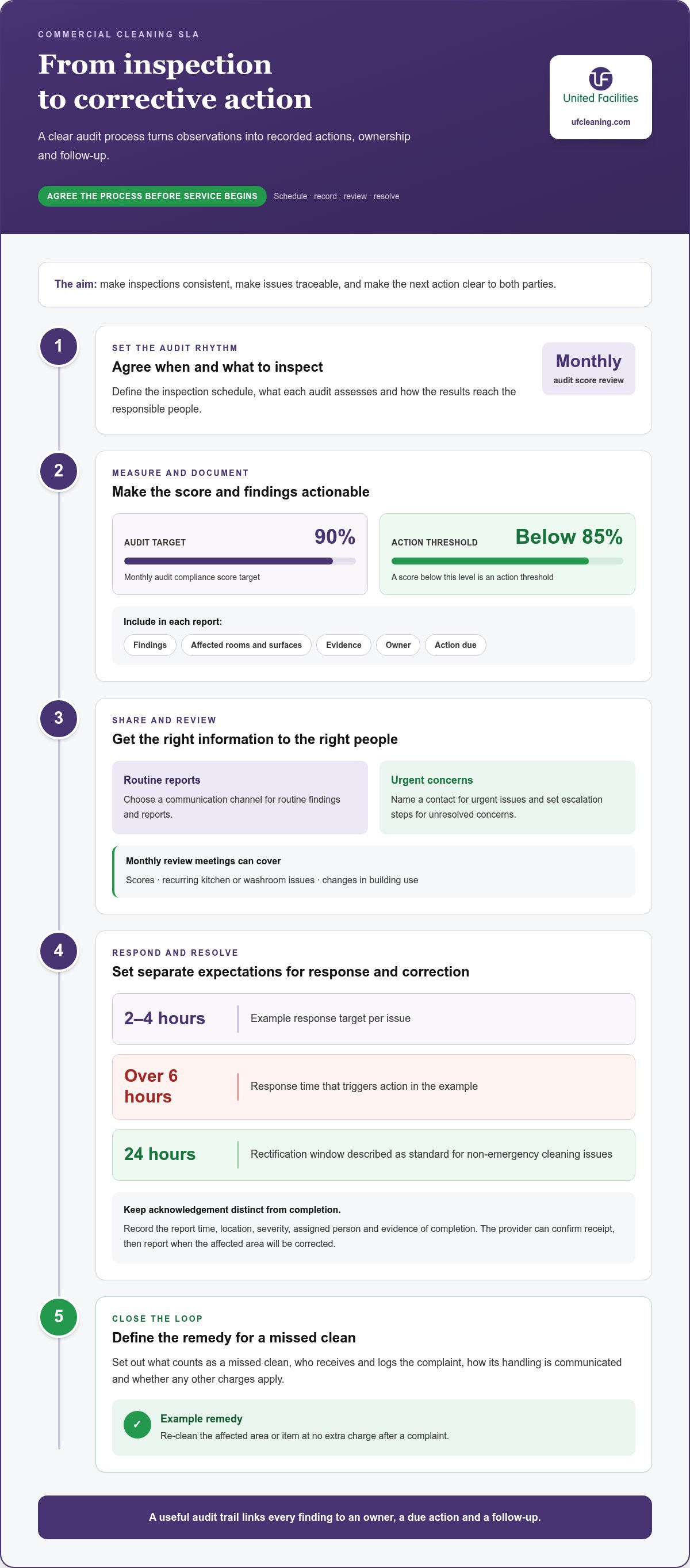
A useful audit process turns observations into recorded actions, clear ownership and follow-up. Agree the inspection schedule, reporting route and remedy before the service begins.
Audit timing and reporting
An audit schedule defines when inspections happen, what they assess and how results reach the responsible people. A monthly audit compliance score target of 90 percent gives the parties a regular measure; a score below 85 percent is an action threshold. Record the findings, affected rooms and surfaces, evidence, owner and due action in each report.
Choose a communication channel for routine reports and name a contact for urgent concerns. Monthly review meetings can cover scores, recurring kitchen or washroom issues, and changes in building use. Set escalation steps for unresolved issues, so reports lead to decisions rather than simply remaining on file.
Response and resolution times
Response and resolution times set expectations for acknowledging a reported issue and correcting it. A service-level example may set a response target of 2 to 4 hours per issue, with response over 6 hours triggering action. For non-emergency cleaning issues, a 24-hour rectification window is described as standard.
Distinguish acknowledgement from completion: the provider can confirm receipt promptly, then report when the affected area will be corrected. Record the report time, location, severity, assigned person and evidence of completion. This makes delays visible and helps the parties decide whether to escalate an issue.
Missed cleans and service remedies
The SLA should define a missed clean, the complaint route and the remedy for each type of failure. For example, the provider may agree to re-clean the affected area or item at no extra charge after a complaint. State who receives and logs the complaint, how its handling is communicated and whether any other charges apply.
Define any service credits or penalties expressly, including the trigger, calculation and review process. A deduction is not automatic unless the contract says so. For a missed washroom clean, for example, the record could note the missed task, corrective visit and inspection confirming completion.
What UK health and safety, COSHH and waste rules apply to cleaning SLAs? Agreements should assign responsibility for safe chemical handling, protective equipment, incident reporting and current COSHH data sheets for chemicals used on site. They can also clarify waste and recycling duties; mandatory digital waste tracking in the UK is due to arrive in October 2026.
For incidents, specify who must be notified, which communication channel to use and what details to record, such as the location, substance or equipment involved, and immediate action taken. Keep these procedures separate from routine cleaning complaints, since a safety incident may require prompt escalation.
For premises needing defined routines and accountable reporting, commercial cleaning support can be considered alongside the service requirements in the agreement.
Performance monitoring and quality checks
Effective monitoring turns cleaning expectations into observable results, with each measure tied to a task, location and record. A commercial SLA can track hygiene, scheduled task completion, consumables and corrective actions. Choose measures that reflect how the premises operates, so the client can assess delivery using evidence rather than general impressions. Strong commercial cleaning service level agreement examples link each indicator to a defined area and inspection method.
For washrooms, one example target is a hygiene score of 90 to 95 percent, checked weekly. High-touch surface checks can set a weekly target of 95 percent pass, with a score below 90 percent triggering action. These measures give supervisors a defined standard for inspecting door handles, taps and shared equipment.
A 98% benchmark is commonly used for commercial cleaning tasks completed on schedule. Daily consumables availability can have a 98 percent target, with below 95 percent as an action threshold. Record each result with its date, area and follow-up. ATP testing meters can provide evidence of surface cleanliness in high-hygiene areas.
Use consistent inspection criteria across visits, then compare results over time. A carpet inspection, for example, can record visible debris and marks, as well as whether scheduled maintenance was completed. Commercial measures should reflect the building’s use, rather than domestic cleaning routines. Comparing commercial cleaning service level agreement examples can help identify useful measures, provided each is adapted to the site.
Checks of supplier evidence should cover documented site risk assessments, safe systems of work, insurance, staff training and supervision. These records help the client understand how the provider manages site-specific tasks. A review can match each assessment to the relevant area, such as kitchen floors, reception surfaces or carpeted offices.
Agree how inspections will be sampled, who records findings and where the evidence can be accessed. A report should identify the failed measure, supporting observation, responsible person and completion status. If a result falls below its threshold, record the follow-up inspection as well. This creates an audit trail, not just a score without context.
If waste handling or recycling is included in the agreement, define the streams covered and the records required. A site log can note the area, material category, collection action and any missed task. Clear entries help distinguish cleaning performance from waste services outside the agreed scope.
Staff standards need evidence too. Include training records for safe chemical handling, equipment use and emergency procedures, alongside supervision arrangements. Address background checks, including DBS checks where applicable, for roles that require them. Record completion and responsibility so the client can see how access and role suitability are managed.
Service provider training and standards
A service agreement should define the provider’s training, supervision and conduct standards. These terms connect staff capability to the specific risks and routines of the workplace.
Training requirements and standards
Training requirements describe the knowledge and practical skills cleaners need for their assigned tasks. Documented site risk assessments and safe systems of work help align training with the building, equipment and cleaning methods. For example, a cleaner assigned to a kitchen needs instruction relevant to its surfaces and products, while someone using floor equipment needs safe operating guidance.
Set out how training records are maintained and refreshed when duties or equipment change. Training can cover safe chemical handling, correct equipment use, protective equipment and emergency procedures. Define who supervises training and how completion is recorded, giving both parties a clear evidence trail for site reviews.
Staffing and supervision
Staffing terms explain how the provider assigns suitable people to the agreed work and maintains supervision. A rota, handover or staff change can affect access, continuity and task completion. Identify the supervisory contact, explain how absences are covered and set out how changes to the assigned team are communicated.
Define the supervisor’s role in checking task records, addressing performance concerns and sharing site updates. For instance, a supervisor reviewing a completed washroom schedule can identify missed tasks and arrange follow-up. The provider should document staff training and supervision, along with relevant risk assessments and safe working procedures. Clear records show how operational standards are maintained.
Cleaner conduct
Conduct standards describe the behaviour expected of cleaners on the client’s premises. A contract can require staff to be suitable for the role, reliable, discreet and honest. It can also require cleaners to read product labels, follow safe handling instructions, and use protective equipment and machinery appropriately.
Make expectations practical by linking them to everyday situations. Cleaners should follow the agreed access process, treat workplace information confidentially and report spills or damaged equipment through the defined channel. Explain how concerns are raised with the supervisor and how follow-up is recorded, so staff and the client know who is responsible.
If the contract refers to insurance, identify the provider’s cover and explain how it relates to work performed on site. Pair this evidence with written standards for training, supervision and conduct. Together, these provisions clarify operational responsibilities and help the parties assess whether staffing arrangements remain appropriate as the workplace changes.
Commercial cleaning for business premises
Commercial cleaning should reflect how a business premises is used, not just its floor area. A site assessment considers size, layout and cleaning requirements, then turns those findings into a written outline of the work. This matters because offices, factories and retail premises can have different surfaces, shared spaces and operating routines.
For an office, an agreed task schedule might cover electronics, kitchens, toilets, lifts and stairwells. Daily tasks can include vacuuming, washroom sanitising and waste removal, while less frequent work can cover deeper kitchen cleaning or carpet maintenance. Naming each area and task makes inspections more useful: the reviewer can compare completed work with the actual schedule.
Set cleaning frequency according to how each space is used. Weekly or monthly tasks may include high-level dusting, kitchen deep cleans or carpet maintenance, alongside daily routines. For example, an education site may schedule cleaning of hard surfaces and ledges in teaching and learning spaces weekly. This shows how an agreement can assign a distinct frequency to a particular room, surface or task.
Requirements also differ by sector. Commercial premises include retail sites, factories, data centres, medical practices, nightclubs and bars, each with distinct operational demands. Identify the areas and tasks relevant to the setting instead of applying one generic checklist. An office schedule, for instance, can list server rooms separately from kitchens and reception areas.
Equipment and surface types affect how tasks should be described. Floor buffers or industrial cleaning tools may suit some premises, while carpet care can be listed separately from routine vacuuming. State which surfaces need specialist attention, how often the work is scheduled and what the inspection will assess. This keeps routine cleaning distinct from periodic maintenance.
Use the premises assessment to set practical boundaries. List included rooms, access arrangements, task frequencies and exclusions, then record how operational changes affect the schedule. If a business expands into new premises or enters a busier period, cleaning frequency may need to change. Written records of changes help keep the agreed service aligned with actual building use.
The key is to link every cleaning task to a named area, suitable frequency and observable result. A retail floor, teaching room and manufacturing space are not interchangeable. A clear outline helps the cleaning team understand what to do and gives the business a consistent basis for reviewing service delivery.
UF Cleaning: Office Cleaning London
UF Cleaning provides professional office cleaning services for organisations seeking a clearly defined approach to workplace hygiene. The service suits offices that need regular care aligned with their areas, task schedule and quality checks. For premises with specific floor requirements, Office Hard Floor Cleaning can complement the agreed cleaning scope.
Start by outlining the building’s priorities, from shared spaces and washrooms to floor surfaces, then shape the service requirements around them. This gives the cleaning arrangement a practical foundation and aligns day-to-day work with the standards set out in the agreement.
To discuss your office cleaning requirements, contact UF Cleaning or visit ufcleaning.com.
Put your cleaning standards to work
A well-designed agreement should remain useful as your workplace evolves. Treat it as a working reference and revisit its priorities when teams, spaces or daily routines change. This keeps the service aligned with how people use the building, rather than preserving a schedule that no longer fits. The commercial cleaning service level agreement examples in this article can help guide those discussions around your premises and priorities.
UF Cleaning offers Office Cleaning London, Housekeeping and Hotel Management. Each service can support a different operational setting, while a clearly defined scope aligns the work with the environment. Consider which areas need consistent attention, which standards matter most to your organisation and how you want service quality discussed over time.
For a considered next step, discuss your cleaning requirements with UF Cleaning. A clear conversation can help turn your priorities into a practical service arrangement, giving your team a confident foundation for the next stage.
Frequently Asked Questions
How do SLAs work in cleaning contracts?
An SLA turns agreed cleaning duties into standards the parties can assess during service delivery. For example, it can link a reception-area task to an inspection method, reporting route and remedy if the result falls short. The main contract provides the wider commercial framework, while the SLA gives operational teams a shared reference for monitoring work and addressing issues.
What To Look For At A Glance?
Look for a clear match between the premises, cleaning schedule and performance measures. A quick review should show who is responsible, which areas are covered, how exceptions are recorded and where unresolved issues are escalated. Check that changes have a written approval process, too. If either party could interpret a term differently, it needs clearer wording.
What do audits include?
Cleaning audits usually include inspection criteria, selected areas, recorded findings and follow-up actions. A practical audit might check whether desks, shared touchpoints and kitchen worktops meet the agreed standard, then record any failed item and its location. Reports are more useful when they distinguish a one-off oversight from a recurring pattern and show whether the required correction was completed.
What is a Cleaning Service Level Agreement (SLA)?
A Cleaning Service Level Agreement is a written set of operational expectations for a cleaning service. It explains how the parties will assess delivery, communicate concerns and handle performance issues. For instance, a site can define what “clean and ready” means for a meeting room before staff arrive. Specific descriptions reduce reliance on subjective impressions and support more consistent reviews.
What should a commercial cleaning service level agreement include?
A commercial cleaning SLA should link its measures to actual site conditions. Include access arrangements, areas with restricted entry, responsibility for supplies and the process for reporting damage or hazards. Identify how additional work is authorised, so a request outside the routine schedule is not mistaken for an included task. These details help operational contacts apply the agreement consistently across rooms and shifts.
What cleaning tasks and frequencies should an office cleaning SLA specify?
An office SLA should assign each task to a location and suitable frequency, then identify exceptions. For example, routine floor care may differ between a carpeted meeting room and a hard-surface entrance. The schedule can distinguish regular work from tasks completed as required, such as internal window cleaning. Clear task descriptions help staff understand what completion looks like in each area.
How should cleaning service levels and performance be measured in an SLA?
Measure performance with evidence that relates directly to the agreed task. A completion record can show whether a scheduled room was serviced, while an inspection can document the condition of a defined surface. Use consistent criteria and identify who records results, reviews exceptions and closes actions. This makes trends easier to interpret and helps distinguish incomplete work from a change in site requirements.
How can a commercial cleaning SLA be reviewed, changed or terminated?
Set a review process that allows the parties to consider changes in occupancy, room use or operating patterns. Record agreed amendments in writing, including the affected tasks, start date and related schedule changes. To end the contract, follow the notice method and timing stated in it. Recording the decision and effective date in writing helps prevent uncertainty about ongoing duties.