A cleaning contract can list every task and still leave uncertainty about what happens day to day. To understand how to run a commercial cleaning supplier review, assess product suitability, performance, support, compliance, contract scope and schedules together. For each area, record how often tasks are required and how completion will be reported.
A useful supplier review shows whether the service fits your premises and operational priorities, not just whether routine tasks are being completed. Clear responsibilities, reporting arrangements and performance standards help identify gaps before they become recurring issues.
This guide explains how to review cleaning products and supplier performance, define relevant compliance requirements, and assess communication and ongoing support. It also covers how to clarify contract scope and build a practical schedule, giving you a considered basis for deciding what the service should deliver.
Key Takeaways
- Review product suitability and supplier performance together, using recent records to identify recurring issues and areas for improvement.
- Assess how performance is reported and who is accountable, including the arrangements for site visits and ongoing support.
- Set out your premises, operational priorities and relevant compliance needs before defining the service requirements.
- Make the contract and cleaning schedule precise about tasks, frequency, responsibilities and performance standards.
Auditing current cleaning products and supplier performance
A practical way to understand how to run a commercial cleaning supplier review is to connect product choices with site needs and service evidence. Use the steps below to assess suitability, trial results and performance records.
-
Review the product range and sector suitability
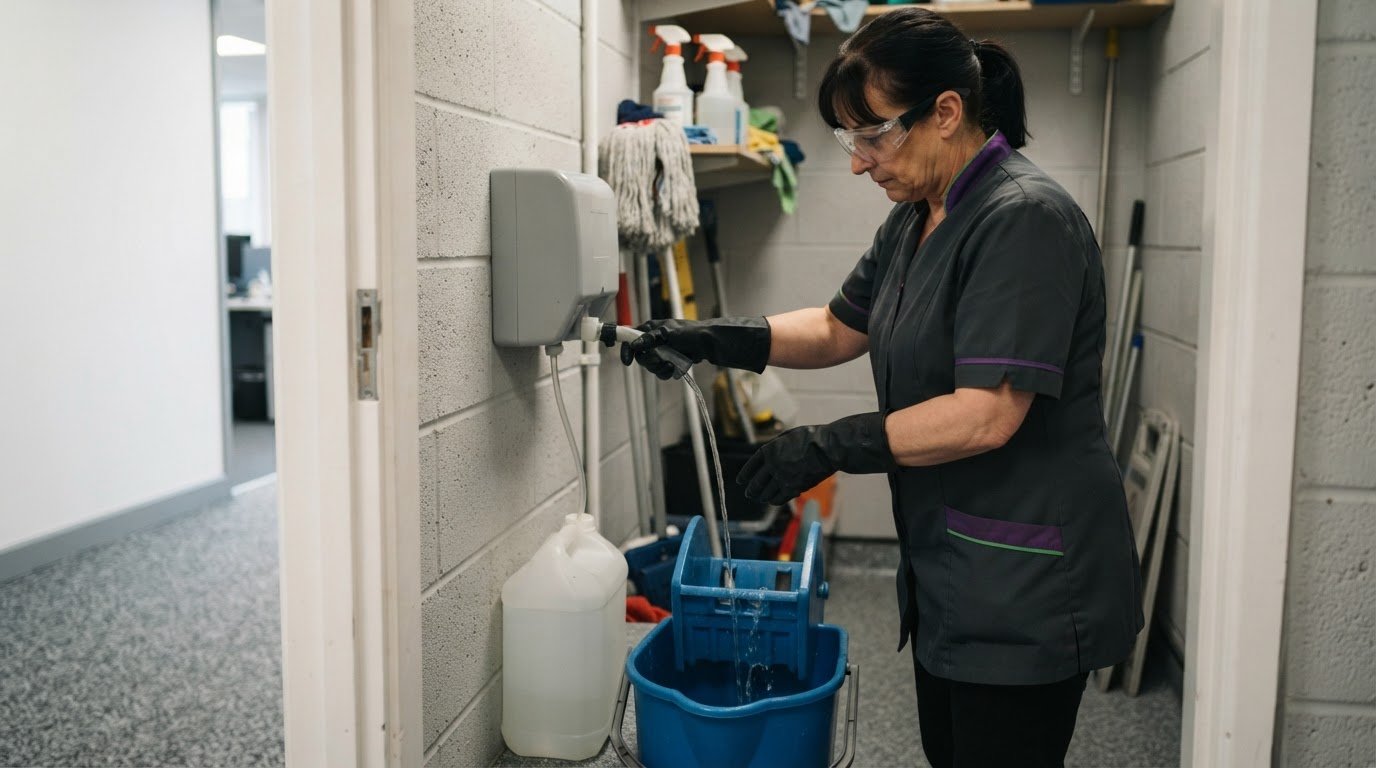
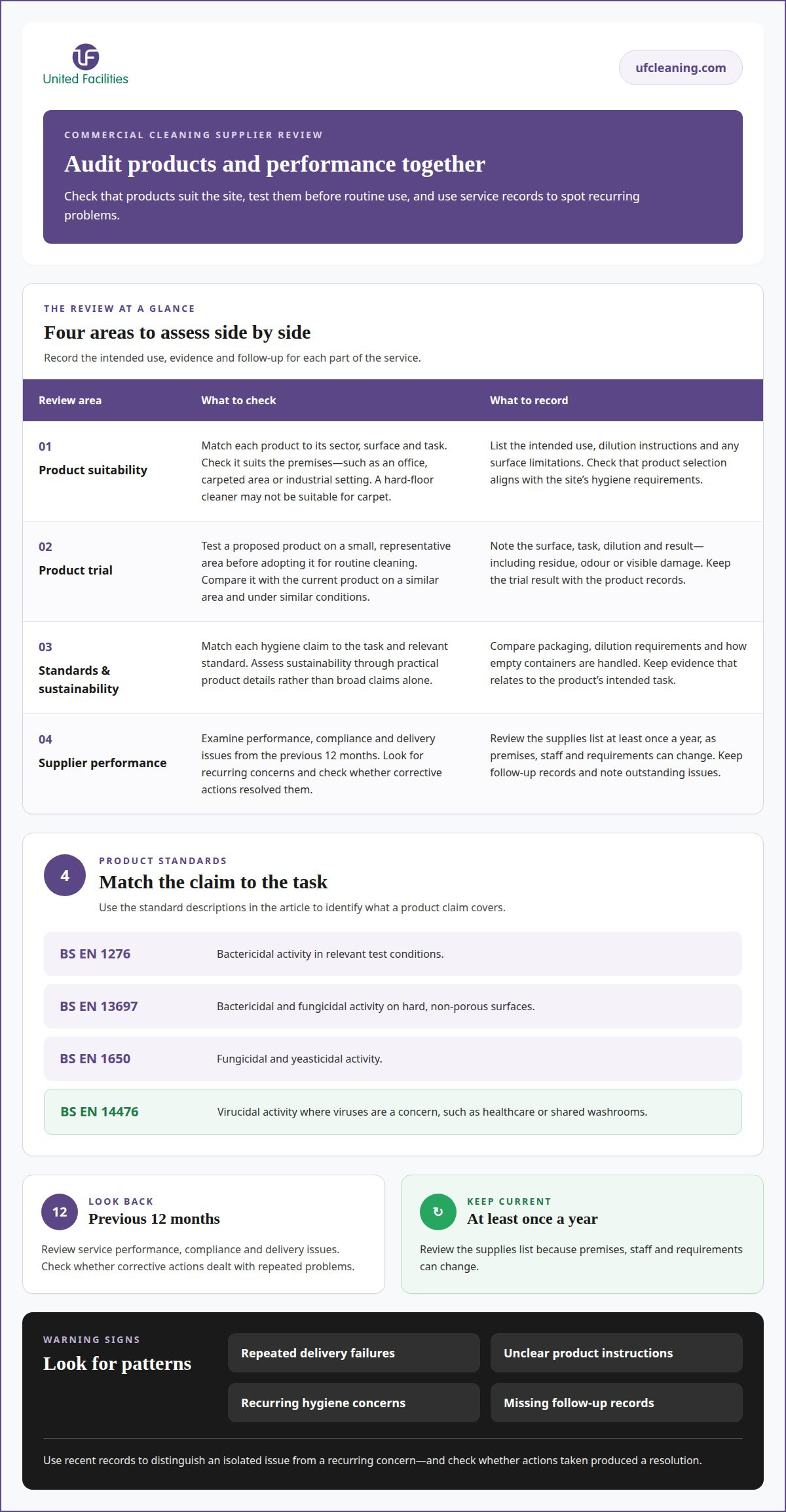
Match each product to the sector, surface and task it is intended for. Assess whether it suits the premises, whether that is an office, a carpeted area or an industrial setting. Record the intended use, dilution instructions and any surface limitations. A hard-floor cleaner may not be suitable for carpet, so distinguish these uses before approving products. This helps align product selection with hygiene requirements.
-
Trial products before committing
Test a proposed product on a small, representative area before adopting it for routine cleaning. Record the surface, task, dilution and result, including any residue, odour or visible damage. Compare it with the current product on a similar area and under similar conditions. For example, assess a floor cleaner on the same flooring type, then keep the result with the product records.
-
Check product standards and sustainability
Match each hygiene claim to the task and relevant standard. BS EN 1276 covers bactericidal activity in relevant test conditions, BS EN 13697 covers bactericidal and fungicidal activity on hard, non-porous surfaces, and BS EN 1650 covers fungicidal and yeasticidal activity. Assess sustainability through packaging, dilution requirements and empty-container handling. Comparing these practical details helps distinguish meaningful evidence from broad environmental claims.
-
Assess supplier performance and review risks
When deciding how to run a commercial cleaning supplier review, examine performance, compliance and delivery issues from the previous 12 months. Note recurring concerns and whether corrective actions resolved them. Review the supplies list at least once a year, since premises, staff and requirements can change. Warning signs include repeated delivery failures, unclear product instructions, recurring hygiene concerns or missing follow-up records.
Communication, accountability and ongoing support
Set clear expectations for communication, purchasing authority and service costs before assessing ongoing support. Compare the support and services included in each proposal, not just the headline price.
-
Check account support and purchasing controls
Assess how often performance is reviewed, whether a dedicated account manager is provided, and whether regular site visits take place. These arrangements clarify who receives concerns and how decisions are followed through. For purchasing controls, document who can order chemicals, which products are approved, and how stock requests are recorded. A clear process helps prevent duplicate orders and unsuitable substitutions.
Compare trade account terms, including payment deadlines, ordering procedures and delivery conditions, with your organisation’s purchasing process. Total cost depends on the agreed service scope, product requirements, delivery arrangements and level of support. Assess the full proposal rather than treating a low headline figure as the whole comparison. Domestic products may not suit a commercial site’s usage or task requirements.
For commercial cleaning support, connect account oversight with the operational requirements of the premises.
-
Agree corrective actions in the review meeting
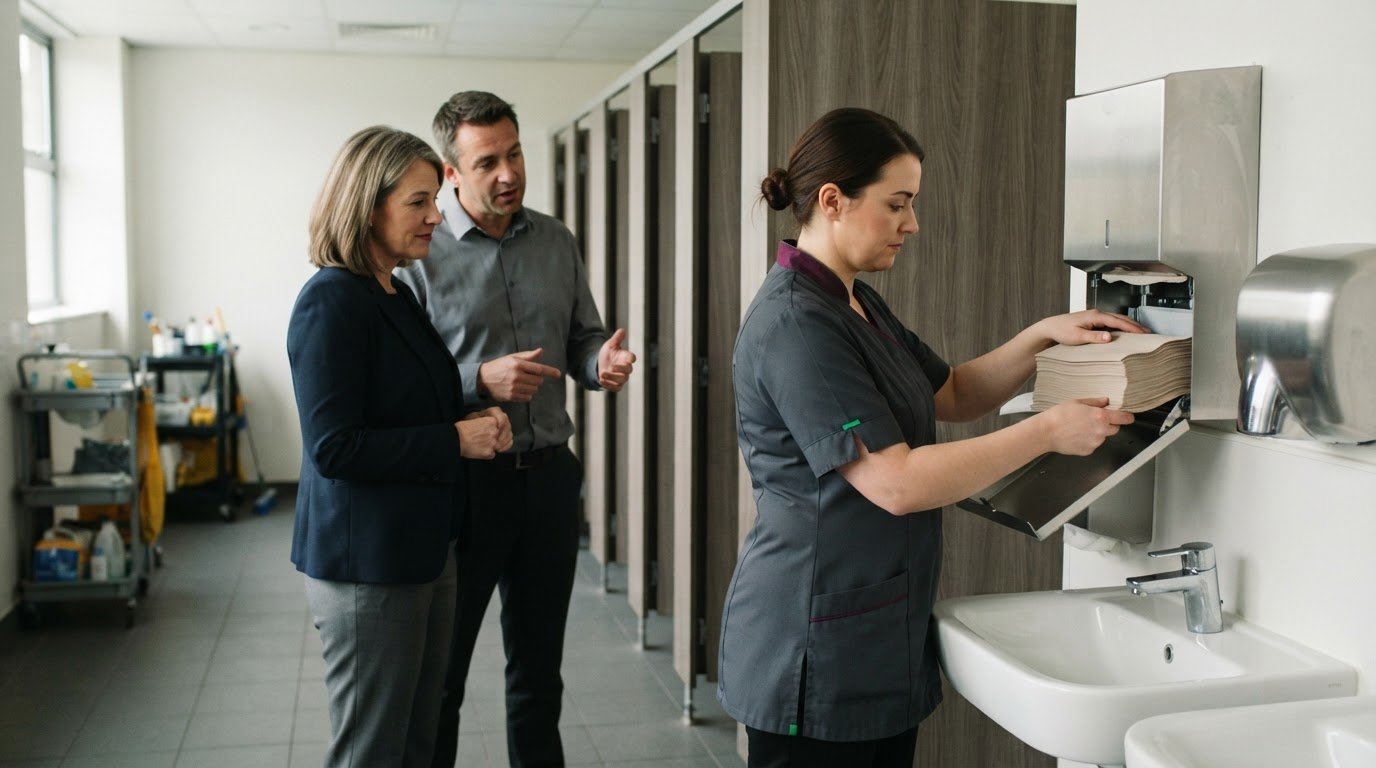
Prepare the meeting using records of performance, service queries, delivery issues and the agreed scope. Invite the people responsible for site operations, purchasing and supplier oversight, so each concern has an informed owner. Ask the supplier to explain recurring problems and propose a practical change. For example, a chemical risk assessment should make clear who communicates relevant product or process changes.
Close each discussion by recording the action, its owner, the expected outcome and the review date. Keep actions specific: replace an unsuitable product, clarify an ordering approval, or improve the reporting route for missed tasks. Circulate the record to attendees and use the next performance review to assess progress. This makes the meeting an accountability process, not a discussion without follow-through.
Defining operational and compliance requirements
Define the premises, tasks and health and safety requirements before comparing supplier evidence. Use these steps to connect each requirement with a practical control.
-
Check supplier compliance and safety data sheets
Map the supplier’s compliance documents to the products and tasks planned for each area. Keep an accessible safety data sheet for every cleaning chemical used, and check that product labels and instructions match the proposed method. For example, staff using a washroom chemical should be able to access its information as part of their operational procedures.
-
Review COSHH and infection control
Review the risk assessment and controls for each hazardous substance. According to UK Government legislation, the Control of Substances Hazardous to Health Regulations require employers to assess risks from hazardous substances at work and control them; the Regulations are dated 2002. Where viruses are a concern, such as healthcare or shared washrooms, BS EN 14476 covers virucidal activity, according to the British Standards Institution.
-
Check industry compliance and accreditations
Set out the compliance requirements relevant to the sector and premises, then assess evidence against the actual work. For specialist tasks, request examples of comparable experience, staff training and supervision arrangements. Treat accreditations as supporting evidence, not a substitute for checking that the supplier understands and can follow site-specific health and safety procedures.
-
Review staff checks and supplier stability
Review documented recruitment procedures, background checks, right-to-work checks and supervision processes, especially where cleaners need building access. Ask how relevant training is recorded and refreshed. Assess insurance evidence, including public liability insurance, and consider financial stability through available business records and the supplier’s ability to sustain the agreed service. Record any gaps that must be resolved before appointment.
The supplier describes enrolling its cleaners in training programmes including IPAF and Biohazard Response. UK chemical hazard pictograms and warnings follow GB CLP.
Clarifying contract scope and cleaning schedules
Translate operational needs into a written schedule, task list and measurable service standard. The contract should also identify responsibilities, reporting, supplies, insurance and access arrangements.
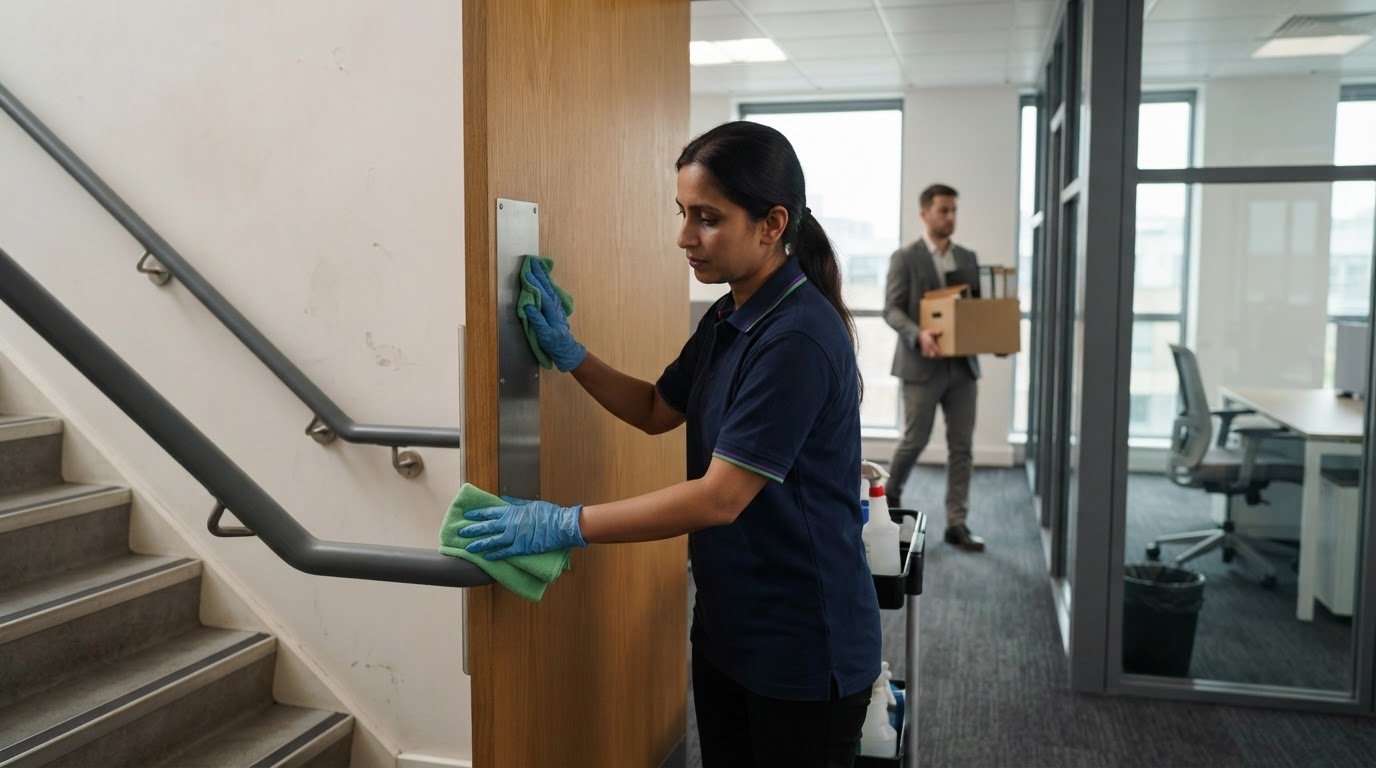
- Divide the premises into areas and list the tasks required in each. Set a daily, weekly or monthly frequency according to use, footfall and hygiene priorities. For example, a shared washroom may need a different routine from a rarely used meeting room. List specialist tasks separately so they are not mistaken for routine cleaning.
- Define the scope precisely, including what each task covers and what the agreed price includes. Specify who provides products and equipment, how access is arranged, and how completed work is reported. If a deep clean is needed before regular service begins, list its tasks separately from the ongoing schedule. This makes later changes easier to assess.
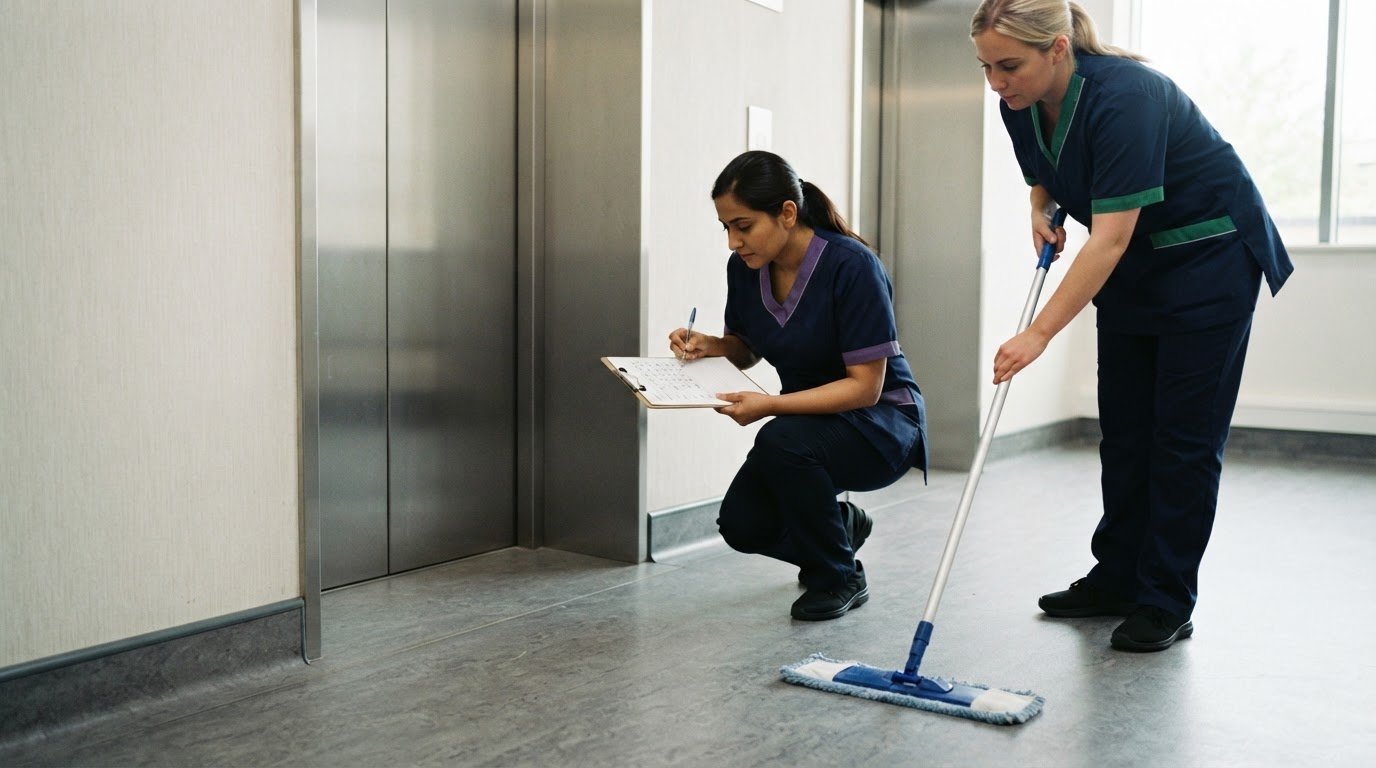
- Include KPIs and service-level agreements that measure delivery against the agreed standard. Useful measures include scheduled tasks completed, inspection results, missed tasks reported and corrective actions closed. Specify how results are recorded, who reviews them, and the agreed response and resolution times for problems. These terms make performance assessable without relying on broad claims such as “high quality”.
- Test the draft schedule against a typical working week, including changes in occupancy or access. Check that task frequency supports consistent hygiene and that every area has a named task and reporting route. Define how schedule changes are approved, documented and reflected in the contract. This helps prevent informal requests from silently expanding or reducing the agreed scope.
For a cleaning schedule shaped around your premises, discuss your cleaning requirements.
A clear commercial cleaning contract brings these details together so the provider and client can refer to the same agreed arrangement. Set out cleaning frequency for each area, scope of work, reporting, supply responsibilities, insurance and access arrangements. Keep task lists and performance standards aligned with the agreed price, so the schedule and contract remain consistent.
UF Cleaning
UF Cleaning can help when your review identifies a need to refine commercial cleaning arrangements. Its services include Housekeeping, Hotel Management and Office Hard Floor Cleaning. Flexible schedules and real-time quality controls support a service shaped around your premises and agreed priorities.
Consider UF Cleaning when you need cleaning support aligned with clearer tasks, schedules and performance oversight. The next step is to discuss the requirements identified in your review and the service that fits them.
Contact UF Cleaning to discuss your cleaning requirements.
Make your next cleaning decision with clarity
A supplier review can align cleaning arrangements with how your premises operate and what they need next. Understanding how to run a commercial cleaning supplier review gives you a structured basis for discussing priorities and deciding what should change.
UF Cleaning offers Housekeeping and Hotel Management for organisations with different operational requirements. If your review points to changes in your cleaning arrangements, use its findings to guide a practical conversation about the right scope and approach.
Contact UF Cleaning to discuss your requirements, and take the next step towards a service that fits your organisation.
Frequently Asked Questions
What should a commercial cleaning supplier review cover?
Examine whether the service fits the building’s actual use, from busy entrances to quieter work areas. Include product suitability, service records, communication arrangements, compliance evidence, contract responsibilities and task frequency. For example, a change in occupancy may make an existing routine unsuitable. Record the operational reason for each proposed adjustment so decisions reflect site needs rather than habit.
How to assess a cleaning supplier’s service quality and performance?
Assess quality by comparing agreed standards with dated inspection records, reported issues and evidence of follow-up. Look for patterns by area or task: repeated marks in one entrance, for instance, may point to a problem with the method or timing. Include feedback from people who use the premises, then distinguish isolated concerns from recurring service gaps before deciding what action to take.
How to compare commercial cleaning supplier quotes and prices in the UK?
Compare proposals against the same task list, frequency and site conditions, rather than ranking headline totals alone. Commercial cleaning quotes can vary with premises size, cleaning frequency, service type, UK location, and the level of supervision and management. Check whether each proposal accounts for products, equipment, reporting and specialist tasks. Differences in scope may explain different totals more clearly than price alone.
What UK health and safety, COSHH and employment rules apply to commercial cleaning suppliers?
For hazardous substances, the Control of Substances Hazardous to Health Regulations require employers to assess workplace risks and control them; according to UK Government legislation, the Regulations are dated 2002. In supplier reviews, consider how chemical risks are assessed and controlled. Also record evidence of recruitment procedures, background checks, right-to-work checks and supervision, without treating those records as a substitute for site-specific safety arrangements.
What documents and data should be collected before a cleaning supplier review?
Gather the current contract, task schedule, site instructions, product safety data sheets, risk assessments and available insurance details. Add inspection records, service reports, complaints, delivery issues and corrective action records. For a useful comparison, organise these by site area and task, then note relevant changes in use or access. This gives attendees a clear evidence base for discussing decisions and outstanding actions.