
A professional office clean is about more than emptying bins. Bespoke office cleaning plans define the tasks, timetable and visit frequency for your workplace. The scope may cover shared touchpoints, kitchens, washrooms, floors, carpets and glass, with deeper cleaning scheduled for areas that need it. The right combination depends on how each space is used and what matters most to your staff.
A clean workplace matters, but the routine must also fit around staff, visitors and daily operations. A tailored schedule focuses cleaning where it is needed and can reduce disruption to meetings and other work.
This guide explains what professional office cleaning can include and how to shape a plan around your building’s layout, working patterns and priorities. It also covers how needs differ across industries, from offices focused on client presentation to workplaces with distinct operational requirements, and what to review as your cleaning needs change.
Key Takeaways
- Set cleaning tasks and timings around working hours, so routine care fits the workplace rather than interrupting it.
- Use the office layout and high-traffic areas to decide where cleaning effort is most needed.
- Review the plan against workplace priorities and feedback, then adjust it as the space or its use changes.
- Account for industry-specific needs when planning cleaning, and match specialist floor care to the surfaces in your office.
What is a Bespoke Cleaning Service?
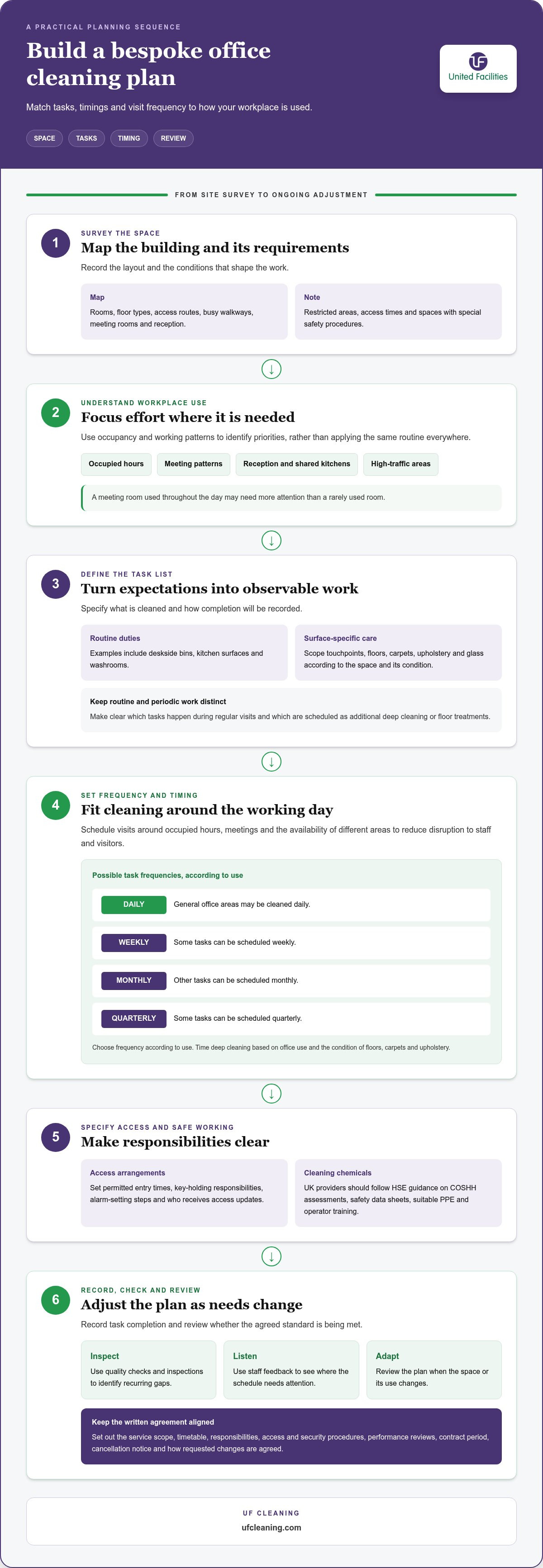
A tailored plan defines which office cleaning tasks are carried out, when they happen and how completion is assessed. It can account for working hours, office layout, reception use and relevant safety procedures.
Cleaning schedules and service frequency
Set the schedule by mapping occupied hours, meeting patterns and busy areas such as reception and shared kitchens. General office areas may be cleaned daily, while other tasks can be scheduled weekly, monthly or quarterly according to use. For cleaning chemicals, UK providers should follow HSE guidance on COSHH assessments, safety data sheets, suitable PPE and operator training.
Include access arrangements in the schedule. Specify permitted entry times, key-holding responsibilities, alarm-setting steps and who receives access updates. Clear procedures help cleaning teams reach the right areas without disrupting staff or compromising security.
Cleanliness goals and deep-cleaning schedules
Turn broad expectations into observable tasks, such as emptying deskside bins, cleaning kitchen surfaces and maintaining washrooms. Set a frequency and a way to record completion for each task, so managers can review whether the agreed standard is being met. Add deep cleaning to the calendar, with timing based on office use and the condition of floors, carpets and upholstery.
Review the schedule when inspections or staff feedback reveal recurring gaps. For example, a heavily used meeting room may need more frequent attention than a rarely occupied storage area.
Bespoke plans versus standard contracts
A standard contract generally sets out a defined package and routine. A bespoke plan adapts tasks, frequency and access arrangements to the workplace, focusing effort on high-use areas rather than applying the same routine everywhere. Compare the written scope, including exclusions, quality checks and how requested changes are agreed.
A UK office cleaning contract should define the service scope, timetable, responsibilities, access and security procedures, and how performance is reviewed. It should also state the contract period, cancellation notice and process for ending the agreement. Read these terms alongside the cleaning schedule so everyone understands how changes in workplace needs will be handled.
Cleaning plans tailored to office size and layout
A site survey connects the cleaning schedule to the space, its use and access requirements. It also gives a clear basis for defining the work and allocating the budget.
Findings from a site survey
A survey should map rooms, floor types, access routes and areas with different cleaning needs. It can identify busy walkways, meeting rooms, reception areas and spaces where special safety procedures apply. These findings help create a practical task list instead of imposing the same routine on every room.
Building size matters, but so do layout and occupancy. A compact agency with shared desks may need a different approach from a large office with separate departments. Record restricted areas and access times so the duties fit the way the building is used.
Information for a bespoke quote
To request a quote, provide the office location, approximate floor area, layout, operating hours and preferred cleaning frequency. List the required tasks, floor and carpet types, busy areas, access arrangements and any site-specific priorities. These details help define the scope and resources needed.
The quote depends on the area to be cleaned, the tasks involved, visit frequency, site access and building layout. A meeting room used throughout the day, for example, may need more attention than a rarely used room. UF Cleaning provides a free, no-obligation quote based on your requirements.
Business size and type also shape the plan. A growing workplace may need adjustments when it adds desks or rooms, while a smaller office may focus on shared spaces. To maintain a hygienic workspace, prioritise high-traffic routes and facilities that staff use regularly. A clear scope helps maintain standards without assigning equal effort to every area.
When reviewing a cleaning provider, assess relevant insurance and training records, and ask for references describing comparable workplaces. Check that insurance covers the proposed work and that training relates to the required cleaning tasks. These steps help you judge whether the proposed plan suits your site and supports staff confidence.
Cleaning services adapted to workplace culture and priorities
A suitable plan reflects how staff use the workplace, not just the room list. Identify shared kitchens, washrooms, client-facing spaces and surfaces that need regular attention. A design studio, for example, may prioritise clear meeting areas, while a busy shared office may focus on communal touchpoints.
Separate routine duties from additional tasks in the agreed scope. Daily upkeep might cover bins and shared surfaces, while scheduled deep cleaning can address carpets, upholstery or floor treatments. This distinction makes it clear what happens during each visit and what is planned as periodic work. A task schedule also supports consistent standards across reception, meeting rooms and staff facilities.
Set cleaning times around the organisation’s operating pattern. Account for meetings, public access and when different areas are occupied to reduce disruption to staff and visitors. Map which rooms are available at each time, then prioritise areas that cannot be cleaned during normal activity. This is useful when client appointments or internal meetings make certain spaces unavailable.
Specialist tasks can address specific surfaces and presentation needs. Scope carpet care, internal window cleaning and hard-floor maintenance according to the materials and their condition. A polished entrance floor, for example, may need different care from carpeted workstations. Defining the method and frequency for each surface helps prevent a generic routine from overlooking essential upkeep.
Workplace priorities can change, so include a review step. Compare observed cleanliness with the agreed goals, then consider staff and visitor feedback alongside notes from cleaning teams. If concerns focus on kitchen surfaces or a meeting room, adjust the relevant task or timing. Sustainability aims can also inform cleaning methods. Regular reviews keep the plan aligned with the organisation’s culture and practical needs.
Adapting cleaning plans to different industries
An effective cleaning plan reflects the work carried out in each industry. Consider how people, equipment and visitors use different spaces, then set tasks around those patterns. A welcoming reception, production floor and school corridor each need different attention. Match the routine to the setting rather than treating every workplace as a standard office.
In logistics, cleaning times should fit around deliveries and daily operations. Map busy routes and restricted work areas, then schedule tasks to reduce disruption. In healthcare and clinical settings, plans should account for rigorous daily cleaning, disinfection protocols and specialist compliance needs. Clearly defined responsibilities help teams understand which areas need attention and what the routine involves.
Education spaces have varied uses throughout the day. A plan can distinguish classrooms, shared facilities and entrances, with tasks scheduled around room access. In retail, customer-facing areas and busy entrances can take priority because their condition shapes first impressions. Set out duties for each zone in the contract to keep the expected standard clear.
Industrial and manufacturing cleaning duties should be organised around production activity, access and surfaces. Identify which areas can be cleaned during operations and which need planned access. For events and venues, the routine can reflect changing use before, during and after an event. Assign duties to specific areas, such as seating, circulation routes and public facilities, rather than relying on a general site-wide task.
To adapt a plan, group the site by function and use. Identify high-traffic areas, access constraints and surfaces requiring specialist treatment. Then assign tasks, timing and responsibilities to each group. Review the arrangement when operations, room use or visitor patterns change. This creates a practical basis for consistent cleaning while directing attention where it matters most.
UF Cleaning: Office Cleaning London
UF Cleaning provides bespoke office cleaning plans for workplaces across the capital that need cleaning tasks aligned with their layout, priorities and working patterns. Tailored schedules and real-time quality controls help keep agreed duties visible and consistent, while specialist floor care can address hard surfaces that need dedicated maintenance.
Turn to UF Cleaning when your office needs a clearly planned cleaning routine or focused floor care. The service can support a practical approach to maintaining your workspace, with tasks shaped around the areas and surfaces requiring attention. Request a free, no-obligation quote to discuss your needs.
Contact UF Cleaning to discuss your office cleaning requirements.
Shape the next stage of your workplace cleaning
Start by deciding what a successful cleaning arrangement should make easier for your organisation. Consider which areas need consistent attention, what changes are expected in the workspace, and how staff or visitors experience those spaces. A bespoke office cleaning plan can then support the way your workplace operates, rather than simply repeating a fixed routine.
As your organisation evolves, revisit the priorities behind the cleaning schedule. New rooms, changing visitor patterns or different uses for shared areas may call for adjustments. UF Cleaning also provides Professional Housekeeping and Hotel Management Support for organisations with related facilities needs. Clear priorities make it easier to define a scope that fits your setting and the work you need carried out.
When you’re ready to discuss your office requirements, contact UF Cleaning to discuss your office. A considered conversation can help you take the next step towards a workplace cleaning arrangement that feels practical, well organised and suited to your plans.
Frequently Asked Questions
What’s Included in Professional Office Cleaning?
Professional office cleaning commonly covers shared work areas, kitchens, washrooms and floors. Tasks may include vacuuming carpets, mopping hard floors, wiping high-contact points such as door handles, and cleaning kitchen appliances. A schedule might provide daily care for busy communal areas, with glass partitions handled separately. The written task list clarifies which surfaces and facilities are covered at each visit.
How Much Does Commercial Cleaning Cost per m² in the UK (2025)?
There isn’t one fixed UK cost per square metre that applies to every commercial cleaning job in 2025. A comparable area can require different work depending on its layout, cleaning tasks, visit frequency and access arrangements. For a useful comparison, define the same scope and schedule for each space. That way, the quoted service can be assessed against the work it actually covers.
What is included in a bespoke office cleaning plan?
A bespoke plan sets out the agreed tasks, visit pattern and site arrangements. It can distinguish routine duties from periodic work, such as carpet care or floor polishing. For clarity, identify the rooms in scope, how completed tasks are recorded and how requested changes are handled. This gives office managers a practical reference for reviewing delivery.
How are office cleaning plans tailored to a business’s size and needs?
Plans are shaped by the premises, how staff use each area and the work required. A small office, for example, may focus on its shared kitchen and meeting room, while a multi-floor workplace may need separate schedules for each zone. Visitor activity, operating hours, access limits and surface types also influence the plan. Revisit these details after layout changes to keep the scope relevant.
How much does bespoke office cleaning cost in the UK?
UF Cleaning provides prices through a free, no-obligation quotation rather than a fixed published rate. The quote is based on the building, required tasks, cleaning frequency, access arrangements and operating hours. Materials, equipment and consumables may be included or charged separately as agreed in the quotation. Describing the premises and requested work clearly helps establish the right scope.
What factors affect office cleaning prices and quotes?
The quote depends on the building’s size and layout, the requested tasks, visit frequency and the hours available for cleaning. Access arrangements can also affect how duties are organised. Specialist requirements, such as carpet care or hard-floor restoration, may change the work involved. Review the quotation’s scope to see how materials, equipment and consumables are treated.