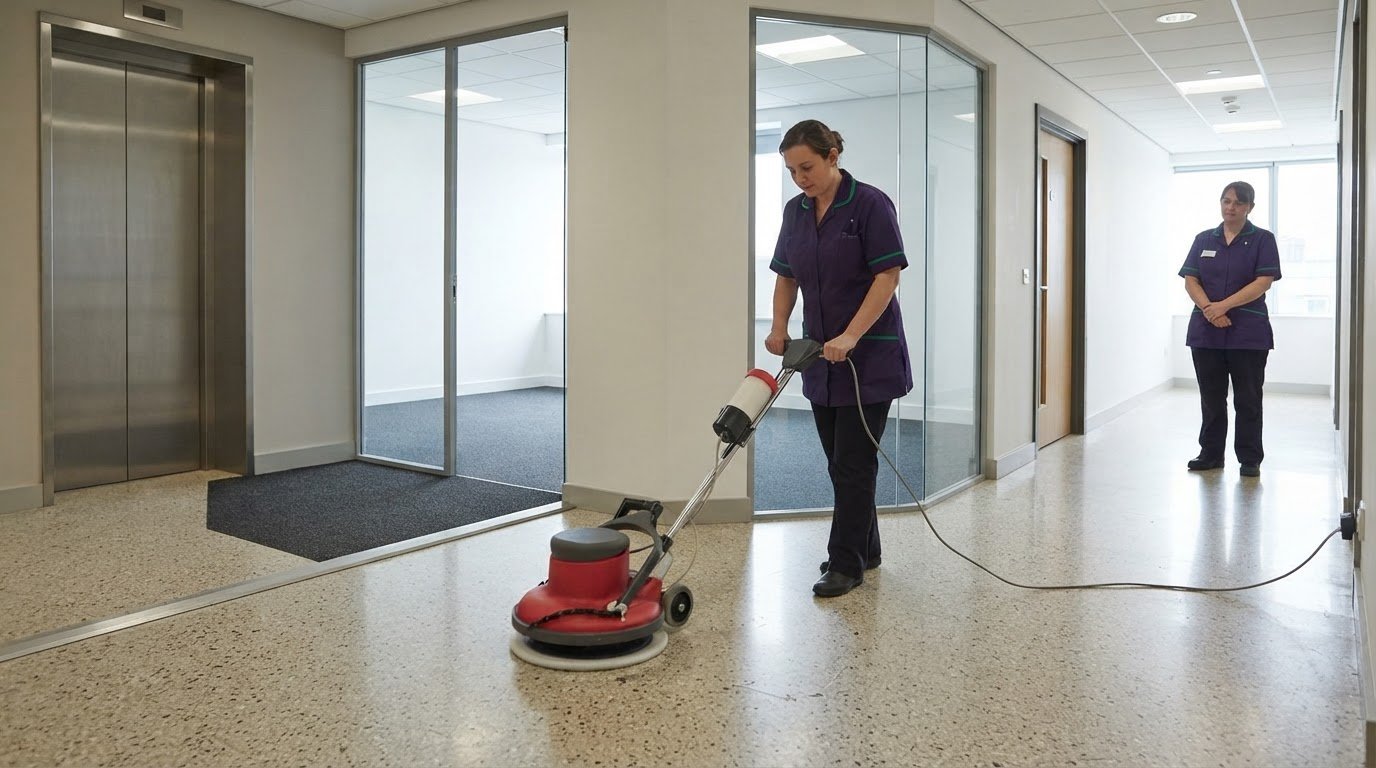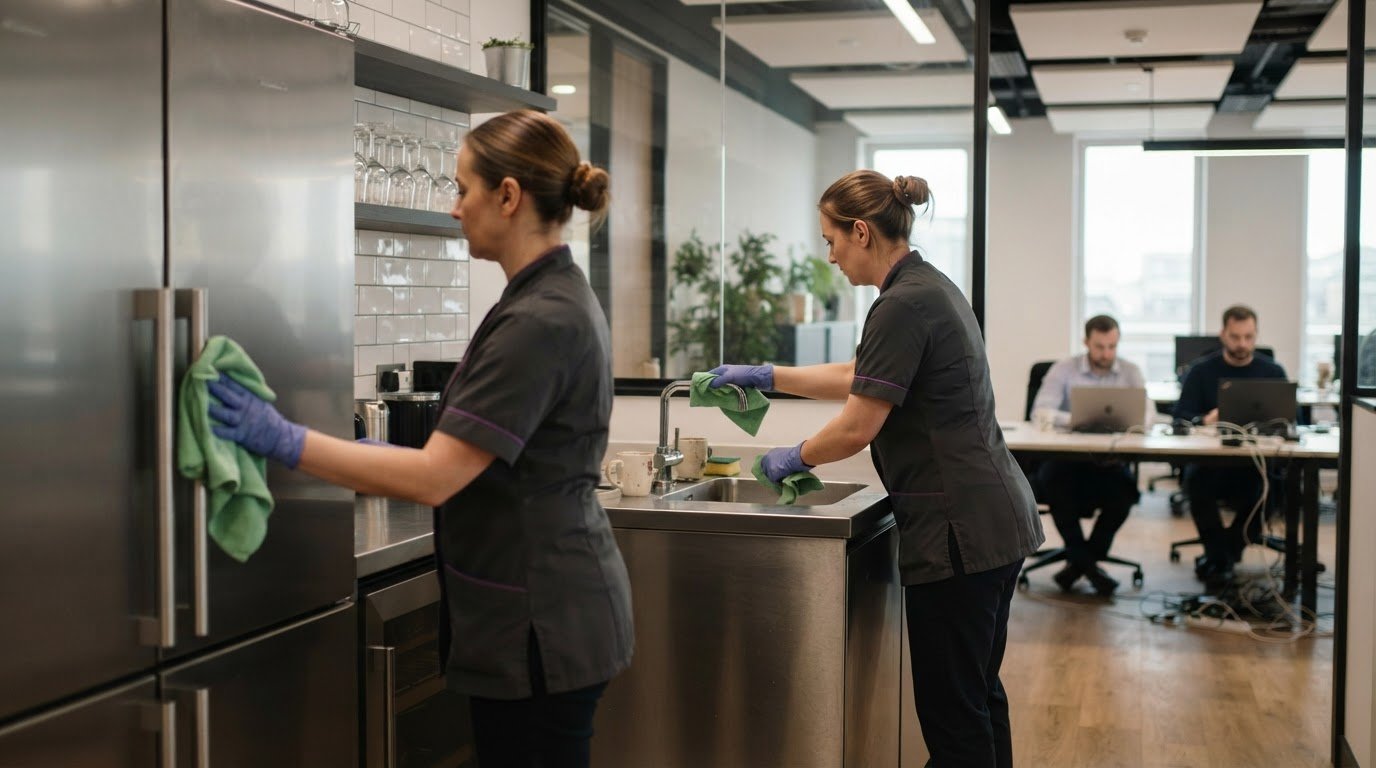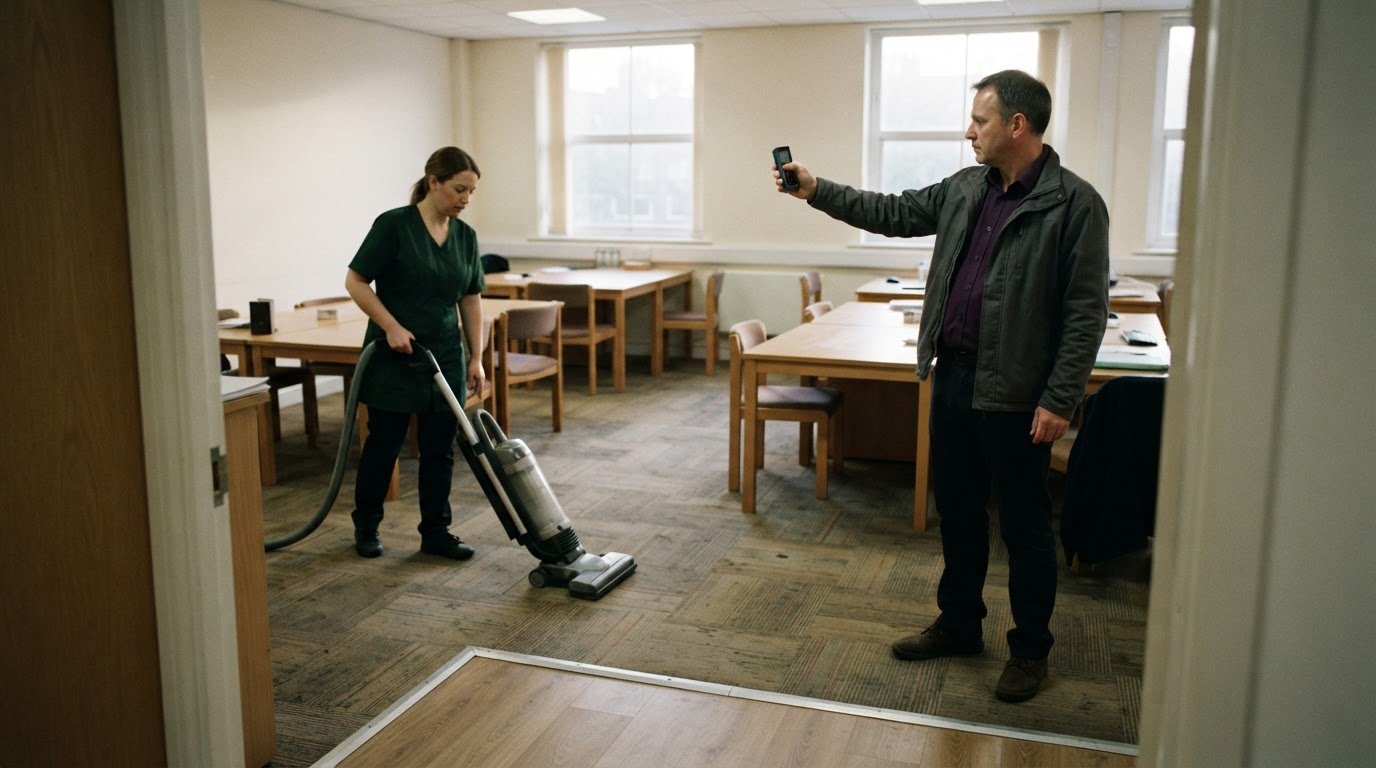
A larger office doesn’t automatically mean a higher commercial cleaning cost per square metre in the UK. Cleaning may be priced by the area, the time required or a fixed recurring contract. The right basis depends on the premises, schedule and tasks included.
It’s understandable to want a clear figure for your facilities budget, but a per-square-metre rate alone may not show how often each space is cleaned or which tasks are included. Area-based, hourly and monthly pricing each describe a different arrangement. Layout, floor type, access and occupancy can also affect the work required. When comparing quotes, check that they cover the same spaces, visit frequency and tasks, so you can assess costs in context.
Key Takeaways
- See when area-based, hourly and monthly pricing can be useful, and what each method includes.
- Identify how layout, cleaning frequency, access and specialist requirements can change an estimate.
- Understand how office size and site type shape indicative monthly budgets across the UK.
- Learn what to look for in a per-square-metre quote, including the scope of work and VAT treatment.
Is commercial cleaning priced by the hour or per month?
Commercial cleaning quotes may be based on labour hours, measured floor area or a recurring monthly contract. The right approach depends on the premises, visit schedule and agreed tasks.
Rates per Square Metre and Square Foot
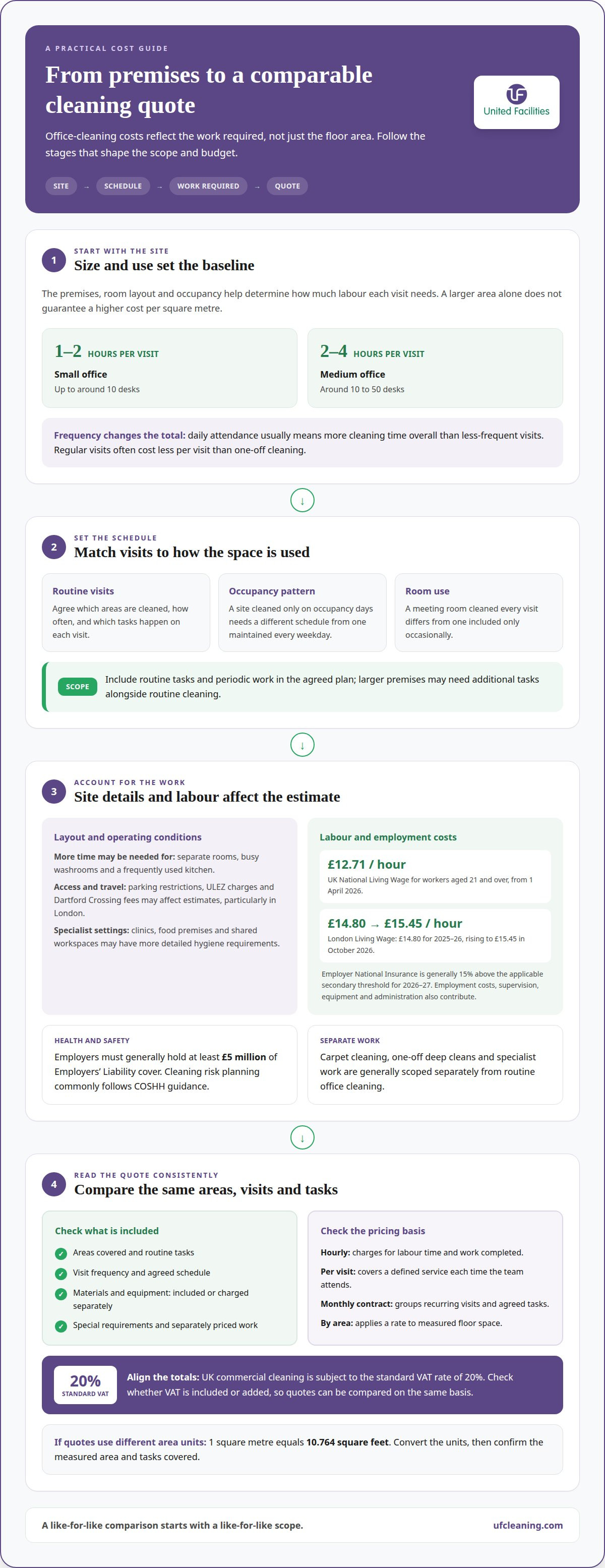
An area-based rate applies a cleaning charge to each square metre or square foot included in the agreed scope. One square metre equals 10.764 square feet, so quotes using different units need conversion before comparison. This helps align estimates for offices measured in either unit. The cost per square metre in the UK also depends on which rooms and tasks the measurement covers.
Routine Office Cleaning Rates
Routine office cleaning may be priced by visit, area or an agreed recurring schedule. A per-square-metre figure can help compare spaces of different sizes, but only when considered alongside frequency and task coverage. Cleaning a meeting room on every visit differs from including it occasionally. Materials and equipment may also be included or charged separately, as agreed in the quote.
Hourly costs reflect labour as well as the work completed. From 1 April 2026, the UK National Living Wage for workers aged 21 and over is £12.71 per hour, according to the UK Government. The independently calculated London Living Wage for 2025-26 is £14.80 per hour. The London Living Wage rose to £15.45 an hour in October 2026.
Indicative London office-cleaning hourly rates are generally higher than in smaller towns, reflecting local operating conditions. Carpet cleaning is usually quoted separately from routine office cleaning, with the carpeted area, condition and preparation affecting the estimate. Larger carpeted spaces may be assessed by area, while access and travel can also affect London quotes.
VAT affects the payable total: commercial cleaning in the UK is subject to the standard VAT rate of 20%, according to HM Revenue & Customs. Quotes should make clear whether this is included or added, so hourly, area-based and monthly figures can be compared on the same basis.
Factors affecting cleaning costs
Office cleaning costs reflect the work required, not just the floor area. Premises size, visit frequency, room use and the agreed task list all shape the overall scope and budget.
Office Size and Cleaning Frequency
Office size and cleaning frequency determine how much labour each visit requires, affecting the total cost across a week or month. A small office with up to around 10 desks may need one to two hours per visit; a medium office with around 10 to 50 desks may need two to four hours. Larger premises take longer and can require more staff. Daily visits usually mean more cleaning time overall than less-frequent routine visits, although regular visits often cost less per visit than one-off cleaning.
Wages and Operating Costs
Labour is a major cost component, alongside employment costs, supervision, equipment and administration. Employer National Insurance is generally charged at 15% above the applicable secondary threshold for 2026-27, according to HM Revenue & Customs. Site layout also matters: separate rooms, busy washrooms and a frequently used kitchen can increase the time needed. Cleaning requirements in clinics, food premises and shared workspaces may be more detailed because of their hygiene standards.
For health and safety, businesses should consider Employers’ Liability cover and relevant cleaning risk controls. The Health and Safety Executive says employers must generally hold at least £5 million of Employers’ Liability cover; cleaning risk planning commonly follows COSHH guidance.
Quote Inclusions and Extra Costs
A commercial cleaning quote should set out routine tasks, visit frequency, areas covered and whether materials and equipment are included. It should also identify special requirements and work priced separately, such as carpet care or a one-off deep clean. This makes it easier to distinguish recurring services from additional tasks.
Travel and access can affect estimates, particularly in London, where parking restrictions, ULEZ charges and Dartford Crossing fees may apply. A site’s floor types, occupancy pattern and preparation needs also influence the scope. For example, an office cleaned only on occupancy days needs a different schedule from one maintained every weekday.
How Much Does Office Cleaning Cost In 2026?
In 2026, office cleaning costs differ by site type, size, frequency and agreed tasks. Monthly contracts, hourly work and per-visit arrangements each suit different operating patterns.
Monthly Prices by Site Type
A monthly contract should reflect how the site is used and the schedule it requires. A small, low-footfall office has a different scope from a large, multi-floor workplace cleaned every weekday. Retail and industrial premises also have distinct requirements, such as customer-facing areas or heavier-duty cleaning. Compare the tasks and schedule with your premises’ actual needs.
Office size and visit frequency both affect the total scope. A medium-sized office cleaned on weekdays requires more regular attendance than the same site cleaned only on occupancy days. Larger premises may also need periodic tasks alongside routine cleaning, so make sure these are identified in the agreed scope.
Hourly, Per-Visit and Contract Pricing
An hourly rate charges for time worked, while a per-visit rate covers a defined service each time the team attends. A monthly contract groups recurring visits and agreed tasks into a planned arrangement. The right format depends on whether your needs are regular or occasional, and how consistently different areas need attention.
One-off deep cleans and specialist work are generally scoped separately from routine office cleaning. The estimate depends on the tasks, the premises’ condition and any preparation required. For example, carpet care has a different scope from maintaining desks and washrooms during regular visits.
Square-Metre Rates and Room Prices
Area-based pricing applies a rate to measured floor space, while room-based pricing assigns a charge to a defined space or task. A square-metre measure can help assess a larger office; room-based pricing may suit a small site with clearly separated areas. Either way, check that the measured area and listed tasks match the proposed schedule.
Deep cleaning and specialist work are scoped according to the premises, condition, access and tasks required. UF Cleaning provides a site-specific, no-obligation quote based on these details.
Commercial cleaning cost per square metre
A per-square-metre quote spreads the charge for defined cleaning work across the measured floor area. The commercial cleaning cost per square metre in the UK is meaningful only alongside visit frequency, task scope and the spaces included. Without that detail, two quotes for the same area may describe different services.
Productivity provides a useful way to understand the calculation. Planning rates range from 150 to 250 square metres per cleaner per hour, depending on office layout and use. An open-plan office with cleared hot desks can require less time per square metre than a workplace with separate rooms, busy meeting areas and hard floors needing mopping. More labour time across the same area affects the overall cost.
For example, compare two 600-square-metre offices: one is open-plan, whilst the other has many separate offices and heavier use. Although their floor area matches, their cleaning time and quote may differ. A clear estimate should identify the measured area, the tasks covered and how often each space is cleaned. It should also distinguish routine cleaning from deep cleaning or periodic work.
Floor type matters too. Carpet cleaning is a separate task from routine floor care, and carpeted area, condition, fibre type and preparation requirements can affect the estimate. Quotes for larger spaces may also account for travel or access conditions, particularly in London. Comparing quotes means matching these details, rather than judging the headline figure alone.
For a more useful comparison, assess whether each quote covers the same floors, rooms, visit schedule and specialist tasks. A site survey can define scope, frequency and access before a final figure is set. For tailored commercial office cleaning, include the floor area and the cleaning requirements for each space.
UF Cleaning
UF Cleaning can turn your floor area, schedule and required tasks into a clearly scoped commercial cleaning plan. This is useful when an hourly rate or per-square-metre estimate doesn’t explain how the work will fit your premises and operating hours.
UF Cleaning provides office and commercial cleaning, including hard-floor care, with flexible schedules and real-time quality monitoring through Taskbe. Plans reflect occupancy, access arrangements, floor types and the spaces that need the most attention. This helps define what routine visits cover and which tasks fall outside that scope.
Contact UF Cleaning to discuss your premises and request a free, no-obligation quote tailored to the work required.
Plan a cleaning service around your workplace
A useful commercial cleaning cost per square metre in the UK starts with a clear picture of how your workplace operates. Identify which spaces need attention, how the schedule should support daily use and whether the scope may need to change over time. This gives you a practical basis for discussing a service instead of relying on an area figure alone.
UF Cleaning provides office and commercial cleaning, housekeeping and hotel management support for organisations with cleaning and facilities needs. If you’re planning a new arrangement or reviewing an existing one, discuss your premises, priorities and schedule to define an appropriate scope. Multi-site organisations can also discuss wider UK coverage.
Contact UF Cleaning about your cleaning needs and take the next step towards a well-planned service for your workplace.
Frequently Asked Questions
Do you pay VAT on commercial cleaning, and how do you get an accurate quote?
Commercial cleaning in the UK is subject to the standard VAT rate of 20%, according to HM Revenue & Customs. Whether VAT is added to a quote depends on the cleaning company’s VAT status and how the quotation presents its total. For a more accurate estimate, provide the premises’ measured area, access arrangements, occupancy pattern and a clear schedule of required tasks, including periodic work.
Hourly rates or fixed monthly pricing: which is better?
Hourly pricing can suit occasional work or requirements that change between visits, because the charge follows the time worked. A fixed monthly arrangement can make recurring cleaning easier to plan when the schedule and scope are consistent. Compare what each option covers, including attendance, agreed tasks and any separately arranged work.
Should you employ cleaners in-house or contract out?
Employing cleaners directly gives your organisation control over recruitment, rotas, training and daily supervision, while also making those responsibilities part of your internal operations. Contracting out places the cleaning service within an external agreement, with scope and service arrangements set out between the parties. The more practical option depends on available management capacity, staffing needs and how your organisation wants cleaning delivered.
Can you use square feet instead of square metres?
Yes. The units can be converted, but quotes need to use the same measurement before you compare them. One square metre equals 10.764 square feet. If a premises plan gives area in square feet and a quotation uses square metres, divide the square-foot figure by 10.764 to convert it. Keep the original unit alongside the converted figure to avoid confusion.
What affects commercial cleaning rates UK businesses pay?
The work required at a site shapes the scope, not just its size. A workplace with varied opening hours may need a different staffing arrangement from one with predictable access. Separate rooms, floor condition and periodic tasks also matter. A clear task schedule helps you understand what a quotation covers.
What is the average commercial cleaning cost per square metre in the UK?
There is no single average rate that applies to every type of commercial cleaning. The commercial cleaning cost per square metre in the UK depends on whether the quote covers routine maintenance, deep cleaning or specialist work, as well as the premises and agreed schedule. Compare quotes for the same areas and tasks, rather than relying on a per-square-metre figure without its scope.