An annual office-cleaning budget depends on the work required, how often it is carried out and the staffing costs behind the contract. Budgeting for annual office-cleaning contracts means looking beyond the monthly charge: the UK National Living Wage for workers aged 21 and over is £12.71 an hour from April 2026, according to the UK Government. Wage changes can therefore affect what a contract costs over time.
A predictable budget matters when you need to plan beyond the next invoice. For budgeting for office cleaning annual contracts, transparent pricing makes it easier to understand what the agreed service covers and which costs may vary with your building’s needs.
This guide explains the factors that shape office-cleaning costs, what a clear contract can include and how to account for wage-rate changes over the year. It also shows how a defined schedule can support steadier budgeting and help avoid surprises.
Key Takeaways
- Use a clear cleaning specification to understand what a quote covers and identify costs that may vary with usage.
- Consider how contract length and bundled periodic tasks can affect the overall value of a cleaning arrangement.
- Match the planned service to your site type, occupancy and cleaning requirements to build a more realistic budget.
- Allow for wage-rate changes when forecasting contract costs, as staffing costs can shift the budget over time.
What does transparent pricing in office cleaning mean?
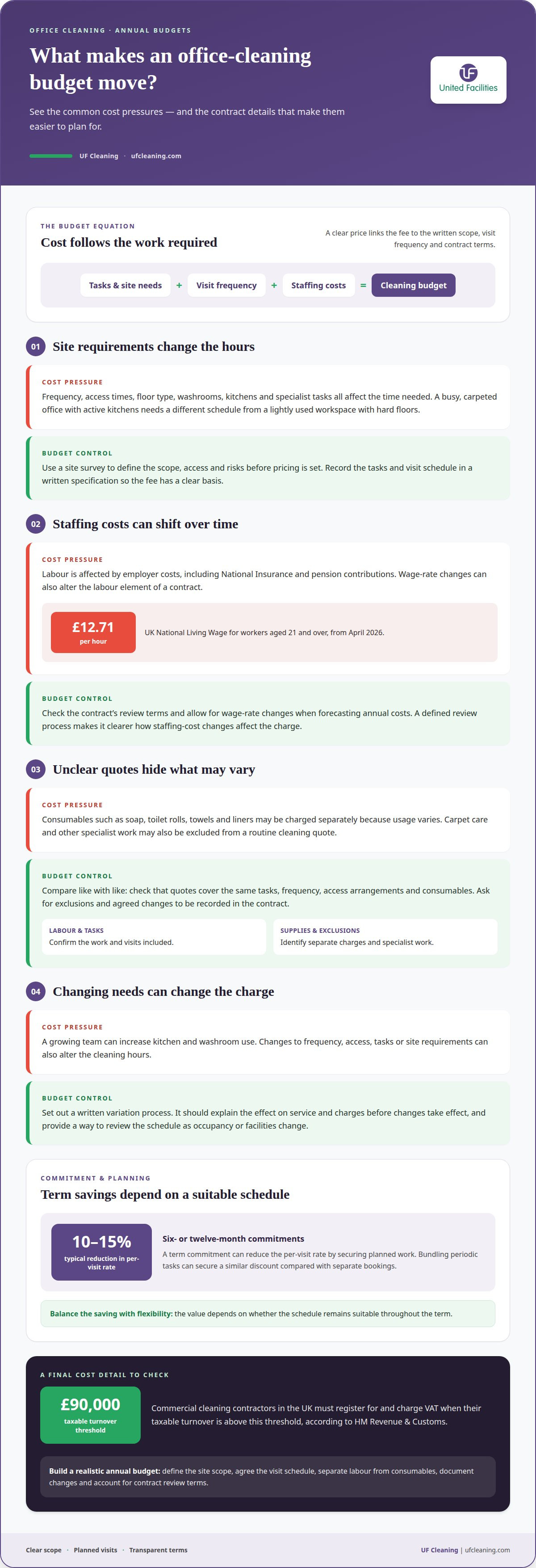
Transparent pricing connects the cleaning cost to a written scope, visit frequency and clear terms. This helps managers see what the fee covers and identify costs that could change.
Drivers of cleaning costs
Cleaning costs reflect the time and tasks required across each site. Frequency, access times, floor type, washrooms, kitchens and specialist work all affect the hours needed. For example, a carpeted office with busy kitchens needs a different schedule from a lightly used workspace with hard floors. A site survey can define scope, access and risks before pricing is set.
Office size and cleaning frequency also shape monthly budgets: more visits mean more scheduled work. Employer costs, including National Insurance and pension contributions, can influence the labour element. Consumables such as soap, toilet rolls and liners may be charged separately, because usage varies between businesses.
Cost changes during a contract
Costs can change when the agreed scope, staffing costs or site requirements change. A growing team may increase kitchen and washroom use, while a revised schedule can alter cleaning hours. Wage-rate changes may also affect labour costs, so budgeting for office cleaning annual contracts means understanding the contract’s review terms.
Check how the contract handles changes to frequency, access, tasks and consumables. A written variation process helps managers understand the effect on service and charges before changes take effect. Commercial cleaning contractors in the UK must register for and charge VAT when their taxable turnover is above £90,000, according to HM Revenue & Customs.
Comparing cleaning quotes and requirements
When comparing quotes, check that each covers the same tasks, frequency, access arrangements and consumables. Pay attention to exclusions, particularly for carpet care and other specialist work. Ask for the cleaning specification and any agreed changes to be recorded in the contract, so it is clear what each quoted service includes.
Health and safety requirements depend on the work and products used. The Control of Substances Hazardous to Health (COSHH) is relevant when cleaning involves chemicals or specialist tasks. Contract requirements can also record insurance cover, including public liability, employers’ liability and treatment risk insurance. For staff with unsupervised access, specify right-to-work checks, references, training records and any relevant Disclosure and Barring Service checks.
How much does office cleaning cost in London?
In 2026, office cleaning costs per hour across the UK, including major hubs like London, depend on the site and agreed service. The price varies by location and is provided after a quote request, with factors including frequency, access, occupancy and specialist tasks.
Savings from term commitments
A term commitment can reduce the per-visit rate by securing planned work over an agreed period. Six- or twelve-month commitments typically reduce that rate by 10-15%, while bundling periodic tasks can secure a similar discount against separate bookings. For managers, the value depends on whether the schedule remains suitable throughout the term.
Contract flexibility matters as teams, occupancy and facilities change. A written review process can explain how adjustments to visits or tasks affect the service and charge. This gives businesses a clearer way to manage changing needs without treating every additional requirement as a separate booking.
Combining regular and periodic services
A combined cleaning service can pair routine visits with planned, less frequent tasks. Regular cleaning maintains shared areas, while periodic carpet extraction, hard-floor care or high-level dusting addresses work requiring different equipment or timing. Putting these tasks into one schedule helps managers plan access and allocate the cleaning budget across the year.
Consumables such as toilet rolls, soap, towels and liners may be included or charged separately, as agreed in the quotation. A clear specification should distinguish these supplies from labour and cleaning tasks. This makes the overall charge easier to understand and helps facilities teams forecast changes in usage.
Set out professional expectations clearly: agreed tasks, visit frequency, access arrangements and the required hygiene standard. Periodic work can be scheduled alongside regular visits, while window or specialist floor cleaning addresses particular surfaces. A defined scope helps align the service with the building’s day-to-day requirements when budgeting for office cleaning annual contracts.
What else can your cleaning contract include?
A cleaning contract can cover routine work, periodic tasks and different charging structures. The right scope depends on the site, floor types, daily cleaning needs and any specialist requirements.
Contract pricing structures
Fixed monthly pricing sets an agreed charge for a defined scope, while frequency-based pricing reflects the visits scheduled. Variable-scope arrangements account for changing tasks or site requirements. UK commercial cleaning is commonly priced per site because premises and workloads differ. A fixed fee can help larger premises plan spending; hourly pricing may suit smaller offices or irregular work.
Indicative UK monthly budgets vary by site type: a small, low-footfall office differs from a medium office, a multi-floor building, a warehouse or a retail space. These ranges are guidance for routine commercial cleaning, not a site-specific quote. One-off deep cleans and specialist services, such as window cleaning, are priced separately.
Commitment discounts
A six- or twelve-month commitment can reduce the per-visit rate by securing planned work over an agreed term. This may suit an office with stable occupancy and predictable cleaning requirements, since managers can plan a consistent schedule rather than arranging isolated visits.
Consider flexibility alongside any reduced rate. A growing office may need more frequent cleaning, while quieter periods could change demand. The contract should explain how amendments to the scope, visit frequency or access arrangements affect the charge, so a commitment remains aligned with the premises.
Monthly cleaning budgets also vary with building size and use. A small office, medium workplace and large multi-floor site require different labour and schedules; warehouses and customer-facing retail spaces have distinct requirements too. UK indicative ranges describe routine cleaning and vary with building type, usage and service scope.
For larger premises, a fixed monthly fee can make spending more predictable by setting out the agreed tasks and visits. Carpet work, floor treatments or window cleaning can be listed separately if they fall outside routine duties. Clarifying liability, exclusions and any variable-scope charges helps facilities teams understand which work the regular fee covers and which tasks require separate budgeting.
Annual wage-rate changes and contract budgeting
Labour is a significant part of cleaning costs, so wage changes can affect contract budgets. According to UK Government, the National Living Wage for workers aged 21 and over is £12.71 an hour from April 2026. That rate provides a reference point when managers forecast staffing costs and review how wage changes may affect a contract.
Hourly pay is not the same as an employer’s full labour cost. These estimates apply to an adult employee working 15 to 25 hours a week. They exclude pension contributions, insurance, equipment, supervision, sickness cover and profit.
That distinction matters when comparing contract budgets. A schedule covering kitchens, washrooms and windows may require different labour hours from routine cleaning alone. Review the contract’s wage-change provisions and how any resulting charge is calculated. Clear terms help managers understand whether an adjustment reflects pay rates, changed hours, additional tasks or a revised scope.
When budgeting for office cleaning annual contracts, consider the full staffing model, not just an hourly wage. Forecast the agreed cleaning frequency and hours, then account separately for periodic work and consumables. A cost review should also note planned changes to occupancy or access, as these may alter the hours required.
Record the review timing and method in the contract, then align forecasts with applicable wage rates. This gives facilities teams a consistent basis for planning and makes changes visible in the total. A defined scope also helps distinguish wage-related adjustments from extra cleaning in kitchens, washrooms or window areas.
Discuss your office cleaning requirements to develop a schedule that reflects your premises and budget priorities.
UF Cleaning
UF Cleaning helps organisations turn their cleaning requirements into a clear office cleaning plan. Its Office Cleaning London service can be tailored to your premises, priorities and preferred schedule, helping you assess how routine tasks and periodic work fit your budget.
Where floors need particular attention, Office Hard Floor Cleaning can form part of the wider plan; Carpet & Window Cleaning can address other surfaces. These services can be useful when setting an annual scope or reviewing a contract as workplace needs change. Flexible schedules and real-time quality controls support organised service delivery.
Contact UF Cleaning to discuss your office cleaning requirements and budget priorities.
Plan a cleaning contract around what comes next
A useful cleaning plan should support the way your workplace operates as it changes. Consider how team patterns, space use and operational priorities may develop, then include those expectations in your contract discussions. Planning ahead can help keep the service relevant rather than treating the agreed schedule as fixed despite changing needs.
Thoughtful budgeting for office cleaning annual contracts also means considering how cleaning fits alongside wider workplace operations. UF Cleaning provides Office Cleaning London, as well as Housekeeping and Hotel Management, giving organisations a starting point for discussing their facilities requirements in context.
When you’re ready to consider a tailored approach for your premises, contact UF Cleaning about your contract. A clear discussion of your priorities is a practical next step towards a cleaning arrangement that supports your workplace.
Frequently Asked Questions
What affects the price of office cleaning?
Price reflects the labour and tasks needed to maintain a particular workplace. An office with busy kitchens, heavily used washrooms and several floor types, for example, may require a different schedule from a quieter workspace. Cleaning frequency, access times and specialist tasks also shape the specification. Consumables may be included or charged separately as agreed, affecting the total contract figure.
Are fixed-price contracts better than hourly rates?
Neither option is universally better; the right structure depends on how regular the work is. A fixed fee can make a stable routine easier to forecast, while hourly pricing may suit occasional visits or changing requirements. For example, a business needing periodic cleaning around refurbishments may value flexibility. Consider how the agreement handles extra tasks, reduced visits and changes to occupied areas.
Do cleaning companies need to visit before quoting?
A site assessment helps establish the work required before pricing is set. It can account for access arrangements, building use, floor surfaces and the spaces that need the most attention. For example, a reception, shared kitchen and meeting rooms may have different cleaning priorities. Defining these details helps ensure the proposed hours and tasks reflect the premises rather than a generic schedule.
Should I get a site survey before hiring a cleaner?
Yes. A site assessment helps establish whether the proposed cleaning plan fits the building and its operating conditions. It can identify access arrangements, relevant requirements and tasks that need specialist methods. This is useful when agreeing responsibilities, particularly where several teams share kitchens or washrooms. The assessment also provides a practical reference for the scope and service expectations.
Should You Employ In-House Or Contract Out?
The choice depends on whether your organisation wants to manage cleaning employment directly or arrange an agreed service. In-house arrangements place recruitment, pay administration, equipment and cover within your own operations. Contracting a cleaning service sets out the tasks and service arrangements with a provider. For example, a business with changing occupancy may value a schedule that can adapt as requirements shift.
The £16 check: is your cleaning quote too cheap?
A quote around or below £16 per cleaner hour should prompt scrutiny of how the service is delivered and how cleaners are paid. The hourly figure alone does not explain the scope, staffing time or included supplies. For example, a low quoted rate may cover fewer tasks or less time than another proposal. Compare what each figure represents before treating the rates as equivalent.