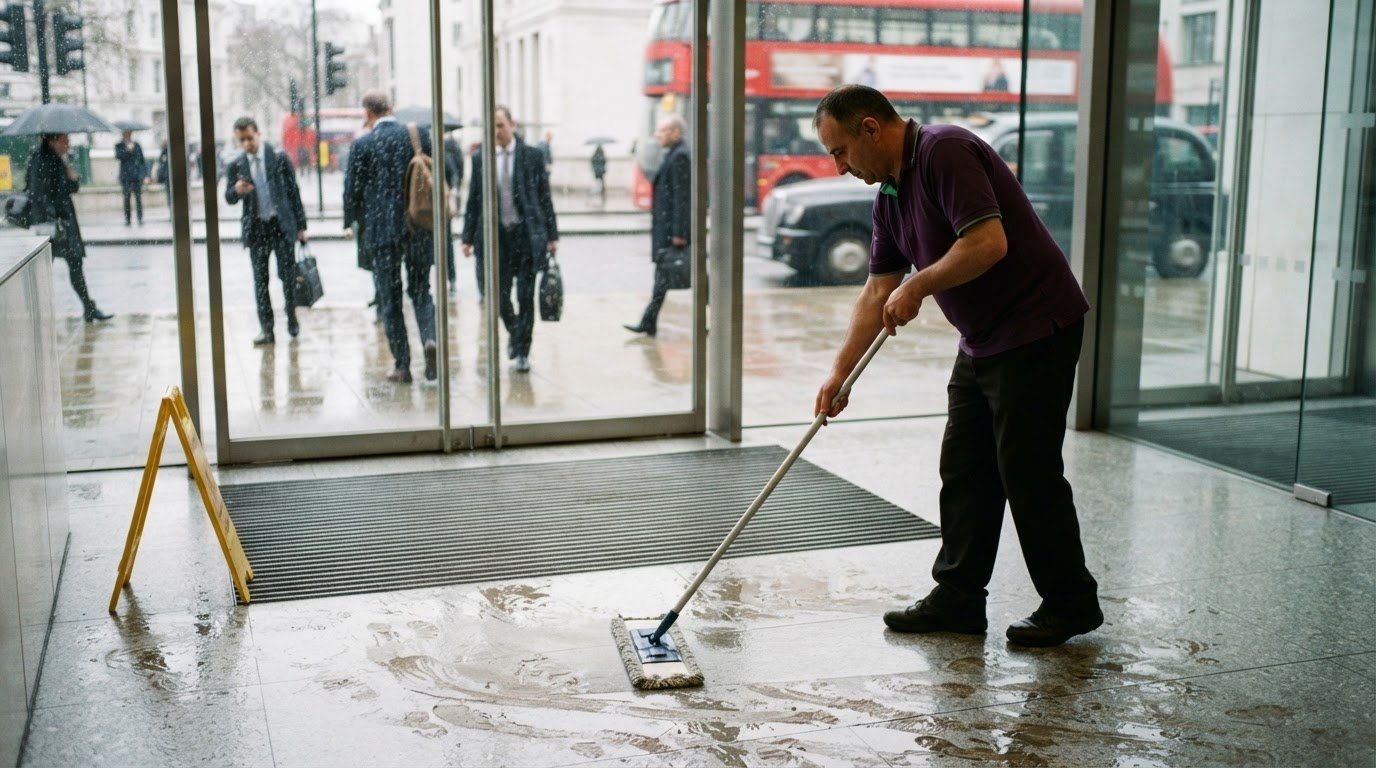
A larger office doesn’t automatically need more frequent cleaning than a smaller one. Useful hybrid office cleaning frequency recommendations are based on attendance and shared-space use. A schedule might range from daily professional cleaning to several visits a week or a weekly service, while busy kitchens and washrooms need daily attention.
It’s reasonable to expect a larger workplace to need more care, but occupancy patterns can matter as much as floor space. A compact office with busy attendance days and heavily used communal areas may need more frequent attention than a larger space that’s only occasionally occupied.
This guide explains how office size, attendance and shared facilities shape a suitable schedule. It also shows how to align cleaning with peak days, identify tasks that need regular attention and decide when a tailored office cleaning plan can help keep the workplace consistently presentable.
Key Takeaways
- Set cleaning frequency by attendance patterns, desk use and shared-space footfall, not office size alone.
- Prioritise daily attention for bins, washrooms, kitchens and frequently touched surfaces where use is concentrated.
- Align professional cleaning visits with busier office days and client-facing activity to keep shared areas presentable.
- Review the schedule when attendance rises or shared spaces show more visible build-up, so the cleaning plan continues to match workplace use.
1. Does Office Size Affect Cleaning Frequency?
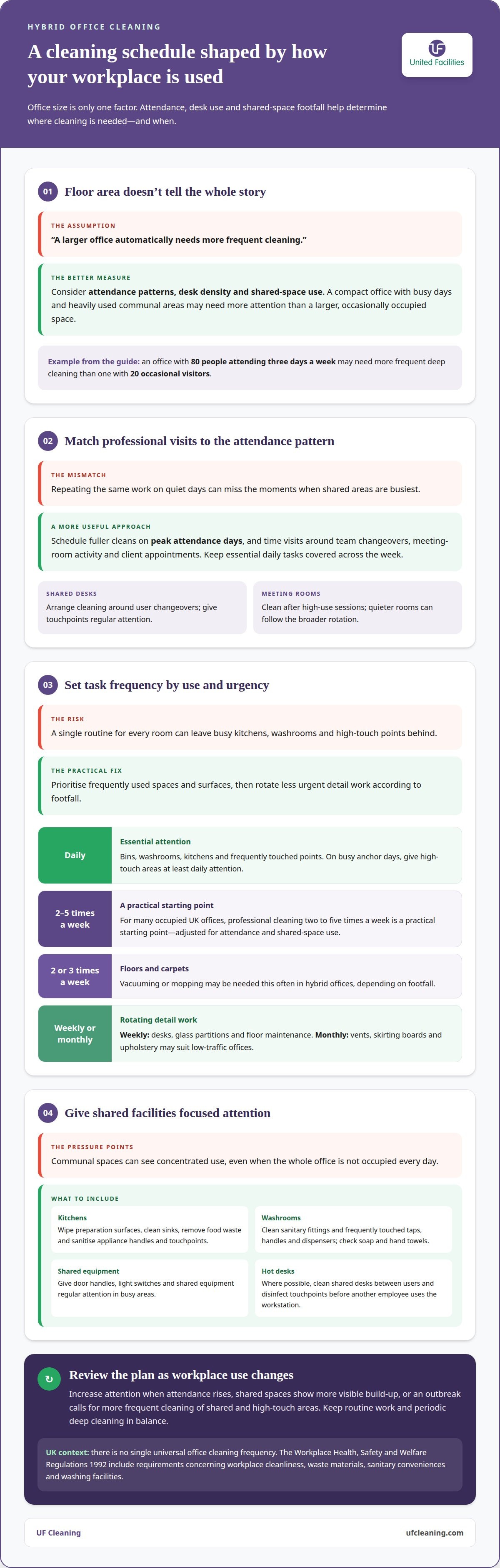
Office size matters, but attendance, desk density and shared-space use matter too. An office with 80 people attending three days a week may need more frequent deep cleaning than one with 20 occasional visitors. These hybrid office cleaning frequency recommendations work best when they reflect busy days, quieter periods and team changeovers.
UK workplace health and safety rules do not set one universal office cleaning frequency. A weekly service may suit a low-occupancy workplace with limited public access, while offices with frequent visitors may need more regular attention to reception areas and meeting rooms. Schedule shared facilities according to actual use, not floor area alone.
Daily tasks can include bins, washrooms, kitchens and high-touch points. Weekly visits can cover desks, glass partitions and floor maintenance; monthly work may address vents, skirting boards and upholstery in low-traffic offices. Two or three professional visits a week may suit a moderately occupied workplace, provided essential areas stay tidy between visits.
For shared desks, arrange cleaning around user changeovers and give touchpoints regular attention. On busy anchor days, clean high-touch areas at least daily. A professional team can use attendance patterns and meeting-room activity to time visits effectively, including before client appointments. Use hybrid office cleaning frequency recommendations as a starting point, then tailor the schedule to these patterns.
In the UK, cleaning prices depend on floor area, occupancy, visit frequency, task scope and access. A site-specific quote sets the price. A flexible schedule can focus visits on peak attendance and shared facilities instead of repeating the same tasks on quiet days. Review the plan as attendance changes to keep the agreed work aligned with workplace needs.
2. How Often Do I Need Office Cleaning for a Hybrid Workplace?
For many occupied UK offices, professional cleaning two to five times a week is a practical starting point. Daily cleaning may suit workplaces with long operating hours, multiple shifts, or heavily used kitchens and washrooms. Hybrid attendance changes footfall, but concentrated employee days can still leave shared facilities busy.
Daily cleaning can cover bins, washrooms, kitchens, main circulation routes and frequently touched points. Tasks may include emptying food bins, wiping kitchen surfaces, sanitising washroom touchpoints and cleaning shared equipment. On anchor days, prioritise hot desks and meeting-room surfaces before less urgent floor tasks.
Cleaning teams can combine essential daily work with periodic deep cleaning. The routine service covers immediate hygiene needs, while scheduled deeper tasks reach areas that receive less regular attention. Meeting rooms may need cleaning between high-use sessions, while quieter rooms can follow the broader rotation. This balances routine standards with actual use.
Daily professional cleaning is especially useful where kitchens or washrooms see heavy use, or employees work across shifts. Reactive cleaning can address spills or unexpected waste during the day. Preventative cleaning gives shared touchpoints and surfaces regular attention, helping limit build-up after busy periods.
During flu or norovirus outbreaks, increase cleaning frequency in shared and high-touch areas, including washrooms, kitchens and meeting rooms. Prioritise frequently touched surfaces, follow the site’s hygiene arrangements and adjust the schedule as workplace use changes.
Attendance patterns help determine where each visit has most value. A professional schedule can place fuller cleans on peak days and retain essential daily tasks across the week. For a workplace requiring professional office cleaning, this approach keeps the service aligned with occupancy, shared-space use and operational priorities.
3. Cleaning shared kitchens, washrooms and high-touch surfaces
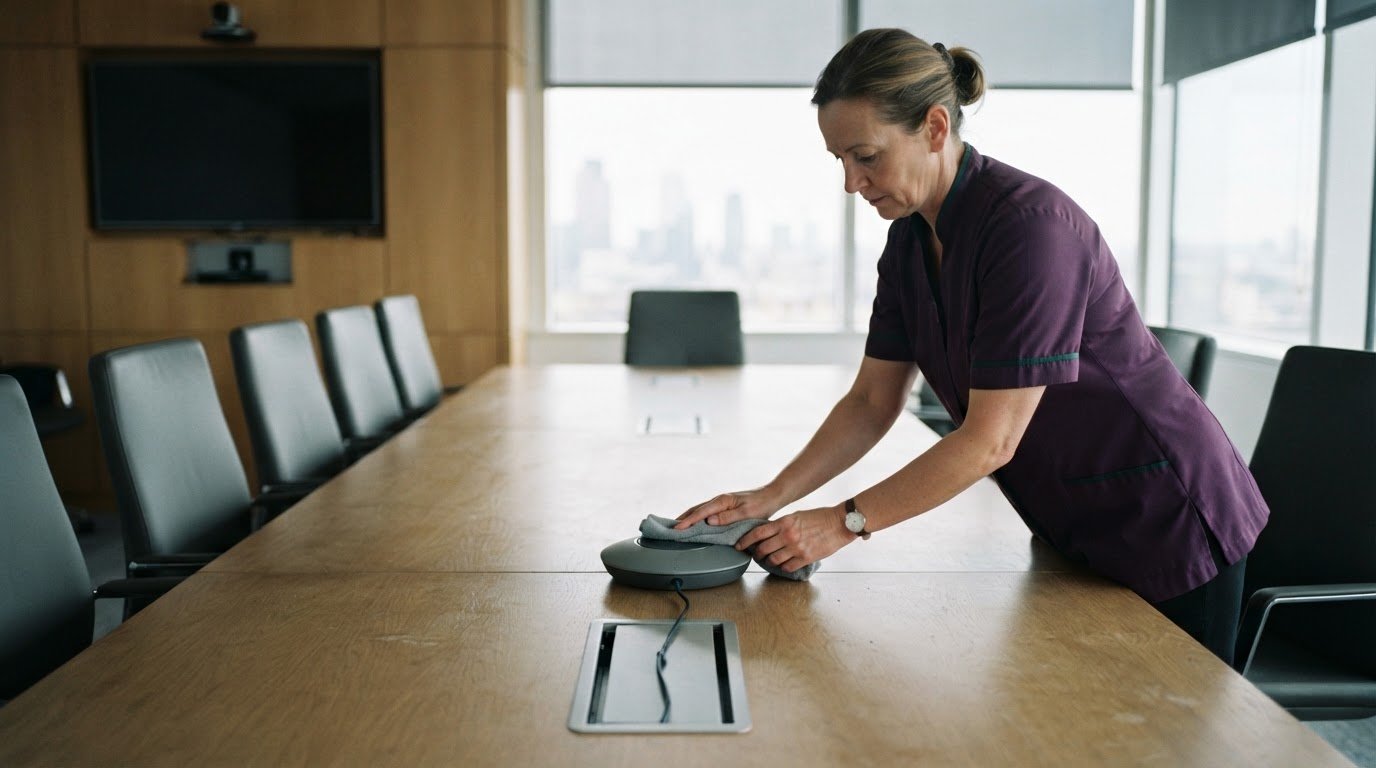
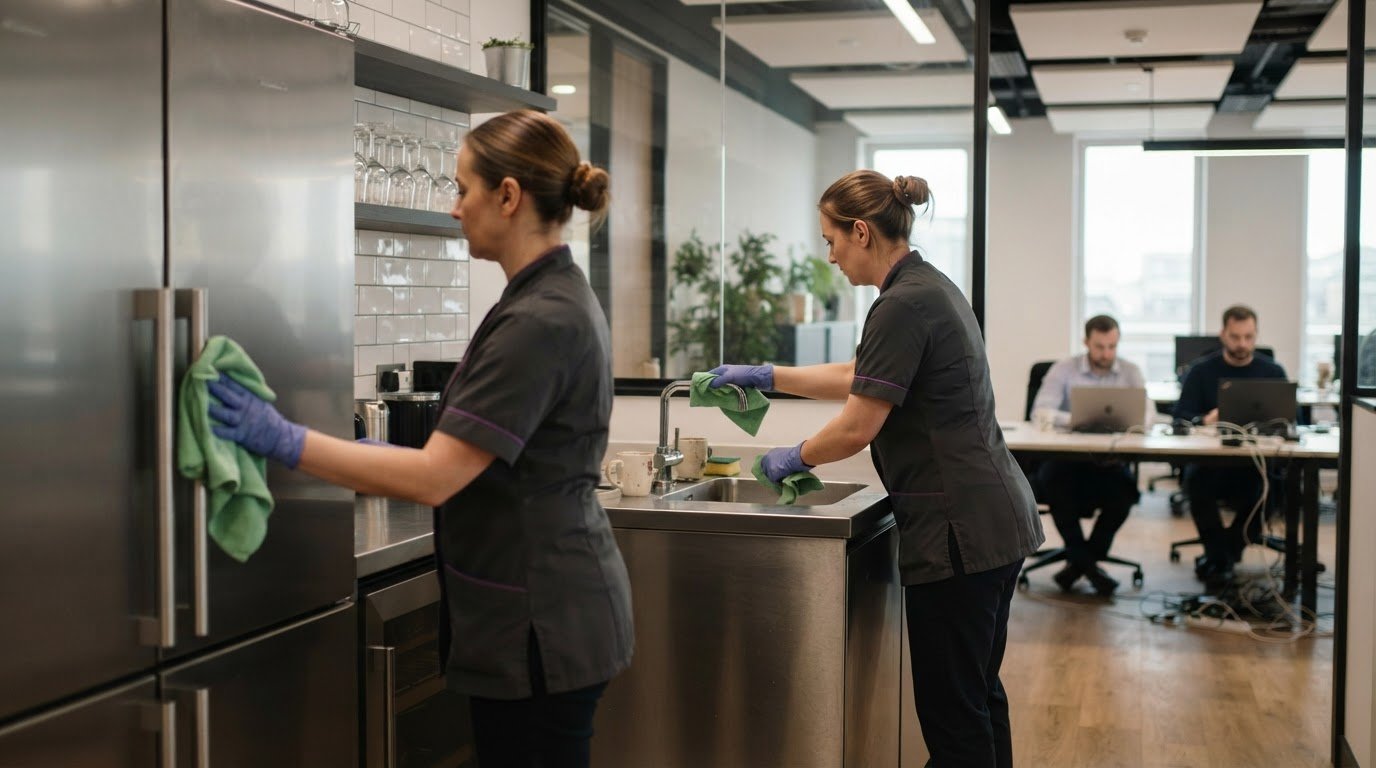
Give shared kitchens and breakout areas attention according to how they’re used. Cleaning teams can wipe preparation surfaces, clean sinks, remove food waste and sanitise appliance handles. In washrooms, they clean sanitary fittings and frequently touched taps, handles and dispensers. Meeting rooms also need attention after busy sessions, particularly when different teams share tables and equipment.
The Workplace Health, Safety and Welfare Regulations 1992 include requirements concerning workplace cleanliness, waste materials, sanitary conveniences and washing facilities, according to UK Government. A planned cleaning schedule helps address these areas alongside the everyday demands of a communal workplace.
In hybrid offices, floors and carpets may need vacuuming or mopping two or three times a week, depending on footfall. Give high-touch surfaces, including door handles, light switches and shared equipment, daily attention in busy areas. Set cleaning frequency according to how often each space is used, rather than applying one routine throughout the building.
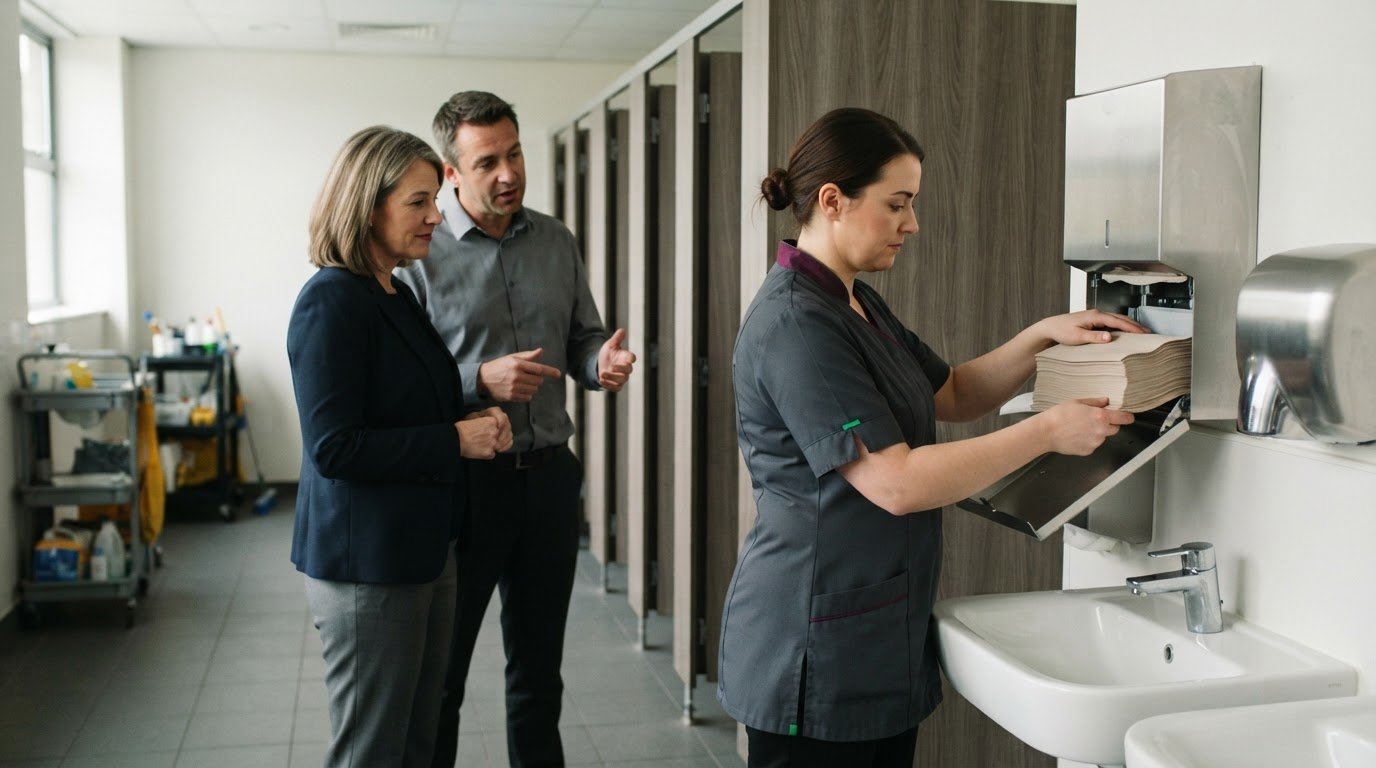
Kitchen and communal-area cleaning should cover details that a quick surface wipe can miss. Teams can clean food-contact surfaces appropriately, remove visible spills, empty bins and sanitise touchpoints around kettles and coffee machines. Washrooms need regular cleaning, as well as checks that soap and hand towels remain sufficiently stocked.
When cleaning does not keep pace with workplace use, contamination can build up faster in shared spaces, complaints may increase and illness may spread more readily. Where possible, clean shared desks between users and disinfect touchpoints before another employee uses the workstation. This matters particularly when desk bookings bring different colleagues into the same area.
Professional cleaning services can schedule deeper tasks alongside routine kitchen, washroom and communal-area work. For example, weekly detail cleaning can cover meeting-room touchpoints, while periodic work addresses less frequently used surfaces. This creates a schedule shaped around occupancy and shared-space use, rather than a uniform routine for every room.
4. Cleaning frequency for hybrid offices
Hybrid office cleaning frequency recommendations should reflect occupancy across the week, rather than repeat identical work every day. Tuesday, Wednesday and Thursday are often anchor days, while Monday or Friday may be quieter. Regular attendance patterns help cleaning teams match staffing and priorities to the spaces employees actually use.
Use a flexible rhythm: maintain essential daily attention, add fuller cleaning on peak days and rotate periodic tasks. For example, a professional team might prioritise shared workstations and meeting rooms before a busy midweek, then schedule detailed work in less-used areas during a quieter period. Reception needs more frequent attention when visitors arrive regularly.
Imagine a workplace where most teams attend on Tuesday and Wednesday. Cleaning on Wednesday evening or Thursday morning can refresh shared spaces before the next group arrives. If Friday has light occupancy, focus the visit on essential tasks and schedule less urgent floor or detail work elsewhere in the week. Base the office cleaning schedule on actual patterns.
Weekly tasks can include detailed attention to meeting-room touchpoints, skirting boards and windowsills. Monthly work may cover hard-to-reach surfaces, vents and light fittings, while quarterly cleaning can address carpets, windows and technology. These rotations complement routine cleaning rather than replace it, keeping less-used spaces in the plan.
Review the schedule when attendance rises, reception footfall increases or employees report more visible build-up. Desk-booking patterns, meeting-room calendars and workplace feedback can show which days and spaces need adjustment. Use these signals to apply hybrid office cleaning frequency recommendations where regular cleaning is most useful, without treating every day as equally busy.
For a schedule shaped around changing occupancy and shared spaces, discuss a flexible office cleaning plan.
UF Cleaning
UF Cleaning can turn changing attendance into a practical office cleaning schedule. Flexible schedules and real-time quality controls support a plan shaped around occupancy, access arrangements, floor types and the spaces that need the most attention. This is useful when busy office days shift, meeting rooms see concentrated use, or the existing routine no longer reflects how the workplace operates.
UF Cleaning tailors professional office cleaning to your workplace priorities, from essential shared spaces to scheduled tasks across the office. Clear information about attendance patterns and areas of focus helps shape a suitable service plan.
Contact UF Cleaning to discuss a cleaning schedule for your hybrid workplace.
Make your cleaning plan work as attendance evolves
A hybrid workplace is rarely static. New team arrangements, project periods and changes in visitor activity can alter how people use the office, so review the cleaning plan regularly. Treat the hybrid office cleaning frequency recommendations in this guide as a framework, then refine the schedule around your workplace’s current routines and priorities.
Start by identifying what has changed since the schedule was set: which spaces now see heavier use, where presentation matters most, and whether cleaning tasks still fit the working day. A professional plan can then be adjusted without assuming every area needs the same level of attention.
UF Cleaning can help shape a suitable arrangement through comprehensive office cleaning services, offering flexible schedules and robust quality controls. For a considered discussion about a cleaning plan that reflects your workplace, contact UF Cleaning. A clear, well-matched schedule can support a more consistently prepared office as your working patterns continue to develop.
Frequently Asked Questions
Does Office Size Affect Cleaning Frequency?
Office size is one factor, but it cannot determine the schedule by itself. A large, lightly occupied space may need less frequent routine cleaning than a compact workplace with dense desk use and regular visitors. Compare usable workstations, shared facilities and visitor activity alongside floor area. These details show which spaces need routine attention and which need only periodic tasks.
How Often Do I Need Office Cleaning for a Hybrid Workplace?
Start with how often people use the workplace and which facilities they share. A small office with low footfall may suit weekly professional cleaning, while a moderately occupied workplace may need two or three visits a week. Daily service may suit heavier use. Review the arrangement when attendance patterns change instead of keeping visits fixed to an outdated working week.
Can professional cleaning cover the tasks employees manage between visits?
Yes. A cleaning plan can include agreed routine tasks that would otherwise be handled between professional visits, such as wiping shared surfaces, cleaning kitchen areas and managing office bins. The scope depends on workplace requirements and access arrangements. A clear task specification distinguishes scheduled cleaning from staff responsibilities, helping ensure kitchens, meeting rooms and other shared spaces receive consistent attention.
What cleaning schedule suits offices with different daily occupancy levels?
Match service intensity to attendance. If Tuesday and Wednesday bring the largest teams, schedule fuller attention around those days and maintain essential care on quieter days. Meeting-room bookings, visitor appointments and desk reservations can reveal where demand is concentrated. When attendance varies from week to week, a flexible rota can prioritise key areas and rotate lower-use spaces through the schedule.
Daily versus weekly office cleaning: what tasks belong on each schedule?
Daily work usually focuses on hygiene and immediate presentation: bins, washrooms, kitchen surfaces and frequently touched points. Weekly cleaning can cover details that need less frequent attention, such as glass partitions, desk surfaces, skirting boards or more thorough floor maintenance. Match the split to traffic and surface use: a busy reception may need more frequent care than a quiet office corner.