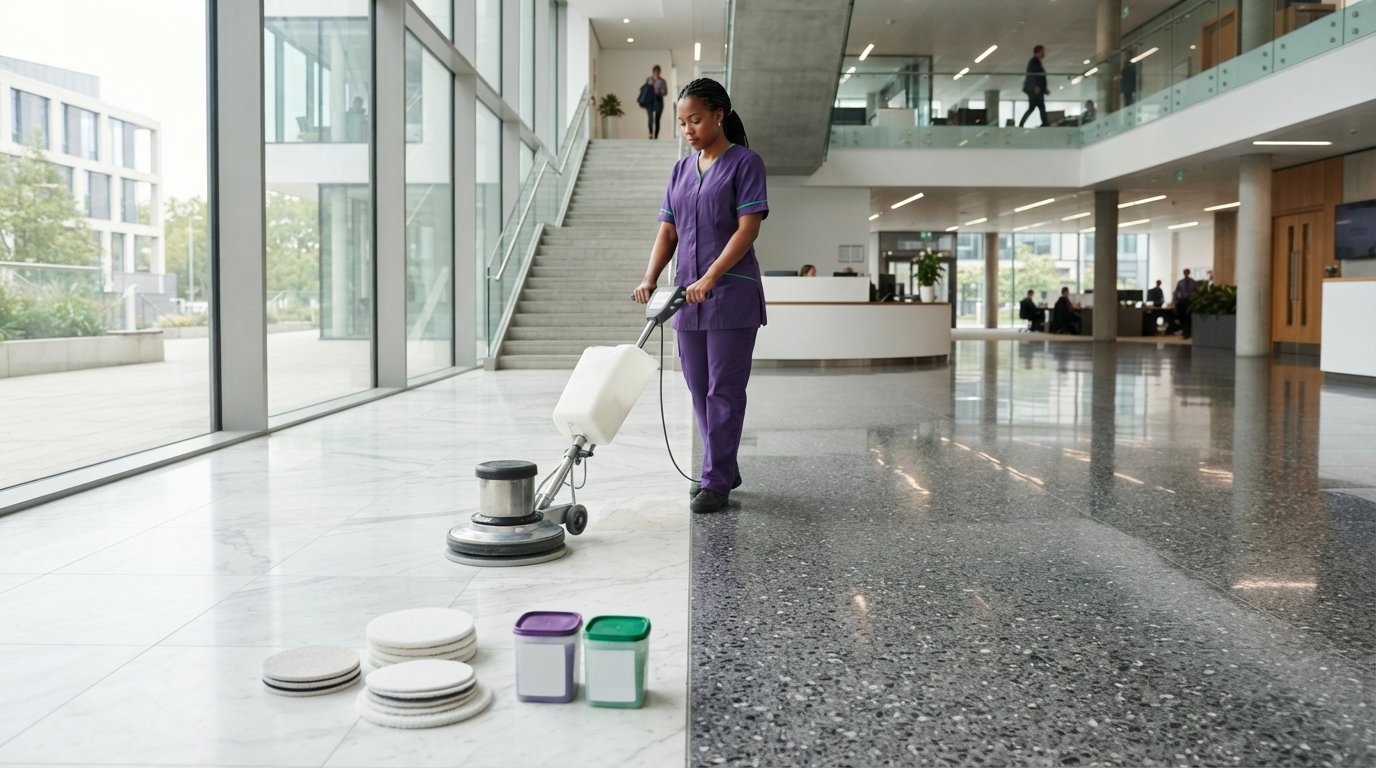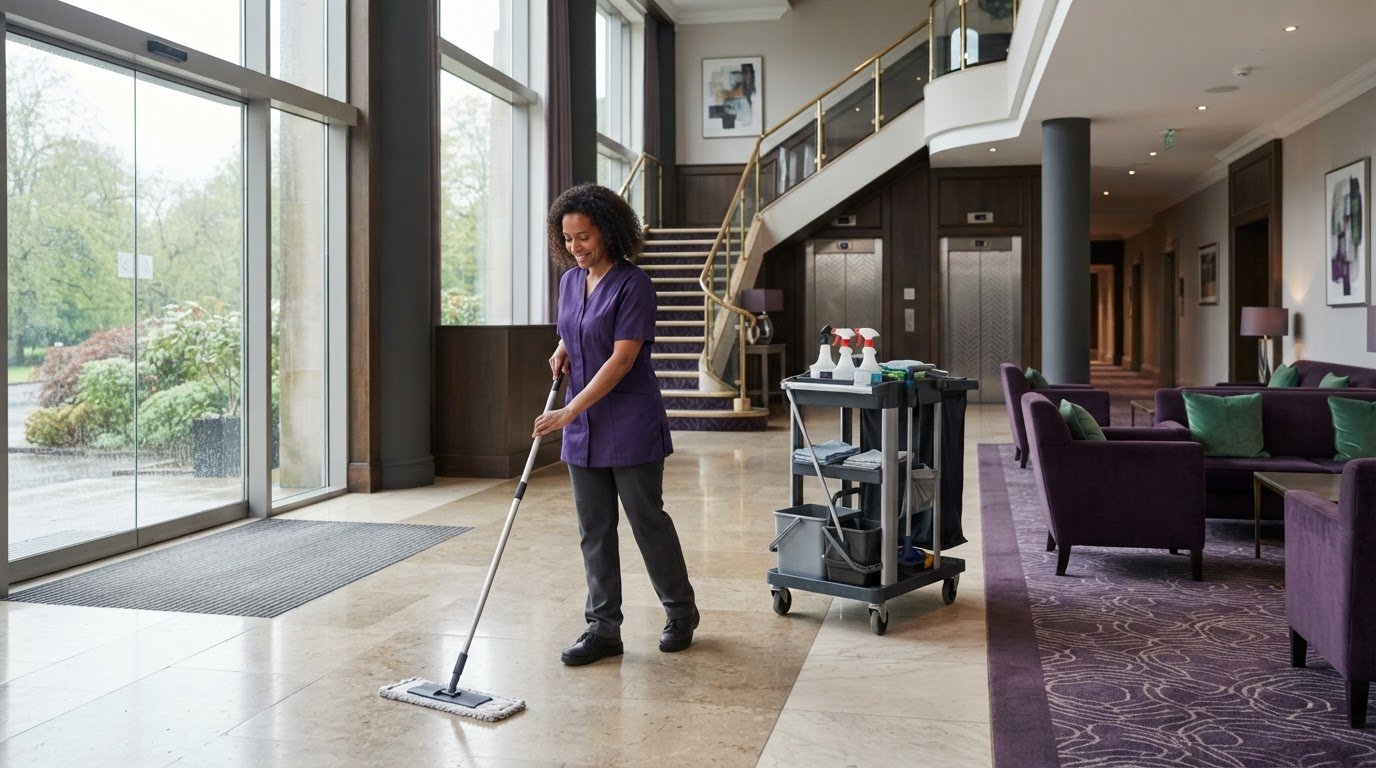
Reliable workplaces need more than clean floors. Facility support services in the UK bring cleaning and wider site support together, helping businesses maintain consistent standards and plan for recurring needs. For warehouses and factories, this means considering day-to-day cleaning alongside the tasks required to keep the site working smoothly.
Businesses need dependable support without having to oversee every detail themselves. Clear instructions, staff supervision and a considered schedule help teams meet agreed expectations and keep essential cleaning aligned with how each site operates.
This article explains how training and oversight contribute to consistent facility services, what to consider when planning support for different workplaces, and how year-round warehouse and factory maintenance fits into a reliable site routine. You’ll also see where professional cleaning can support that wider picture, from industrial environments to offices and other working spaces.
Key Takeaways
- Match support to the demands of your workplace, whether it is an office, retail space, hotel or industrial site.
- Look for clear staff training and supervision processes that help maintain consistent standards across routine tasks.
- Assess contract costs by considering the required scope, site conditions, staffing and service schedule.
- Define your priorities before selecting support, and distinguish cleaning requirements from broader maintenance needs.
What types of UK businesses use facility support services?
Facility support services in the UK combine practical workplace tasks with ongoing site care. A business may need cleaning, housekeeping, staff supervision or planned maintenance, depending on its premises. For example, a distribution warehouse has different priorities from a city-centre office. The right scope reflects how each building is used, rather than applying one routine everywhere.
In an office, cleaning can focus on desks, meeting rooms, kitchens and shared floors to keep the workplace orderly. Retail premises have different priorities, including presentable floors and tidy customer-facing areas. Scheduling tasks around how people use each space helps maintain standards without disrupting daily operations.
Warehouses store or move goods, while factories produce or process them. Both may need cleaning plans that account for loading areas, production zones, staff facilities and changing site conditions. Warehouse cleaning may prioritise walkways and shared rooms; factory cleaning may need to work around equipment and production activity. A recurring task list helps keep routine needs visible throughout the year.
Hotels need clean guest rooms and shared spaces, supported by housekeeping and coordinated operations. Event venues have changing requirements before, during and after gatherings. In both settings, clearly assigned responsibilities and well-timed cleaning help keep the site ready for its next use.
An education site serves pupils, students or staff in classrooms and shared facilities. Its routines may cover teaching rooms, corridors, dining areas and toilets, with attention to how those spaces are used. Healthcare premises also rely on clean, well-organised environments, although requirements vary by setting. In either case, staff need clear task instructions and supervision suited to the site’s activities.
To define the right support, list the areas that need attention, the tasks involved and how often they recur. Note operational constraints, such as production activity or guest-room turnover. This site profile helps clarify the service scope, assign responsibilities and identify whether regular cleaning, housekeeping or another form of facilities support is the priority.
Which facility support services companies operate across the UK?
A national facilities management provider delivers services across multiple UK regions. Its model can suit organisations managing offices or sites in England, Scotland, Wales and Northern Ireland. Larger contracts may combine cleaning with other facilities functions, coordinated through central management. The service scope matters: one provider may cover several functions, while another focuses on a narrower operational brief. A multi-site business can define shared standards first, then identify where each location needs a different schedule or task list.
A regional facilities provider concentrates its operations on a particular area, such as London or the Midlands. This approach may fit a business with premises clustered within one region. The practical distinction is geographical coverage and how the provider organises local teams. For example, a group of offices in London may require consistent cleaning routines at each address, with tasks adapted to room use and site access. A clear location schedule helps set expectations across the portfolio.
A specialist cleaning service focuses on a defined task or environment, such as office cleaning, carpet care, window cleaning, retail premises or industrial sites. This can suit a business with a specific requirement rather than a broad facilities brief. A warehouse, for instance, may need attention to floors and staff areas, while a shop may prioritise customer-facing spaces. Defining the task makes the required service easier to specify.
An integrated facilities management provider coordinates several workplace services under one contract. The term describes a delivery model, not a guarantee that every required task sits within the same scope. A company should map its needs before comparing this model with regional or specialist provision. List each site, the service required, the responsible contact and the expected reporting process. Then group requirements that genuinely need coordinated delivery. This makes it easier to see whether a single broad contract or separate specialist arrangements better fit the organisation’s operations.
For organisations with sites across the UK, define shared standards and identify the tasks and schedules needed at each location.
How do UK facility management providers price contracts?
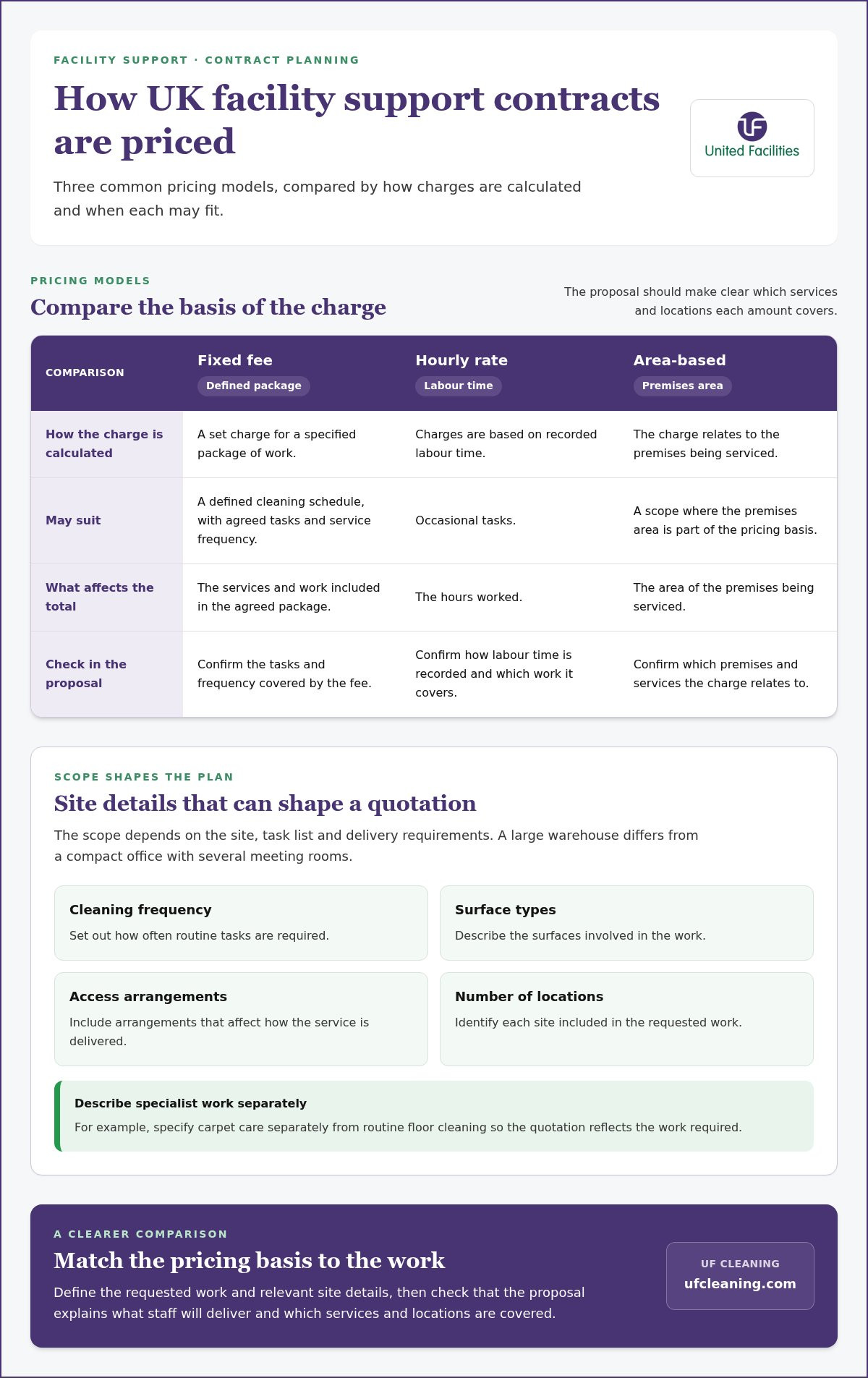
A pricing model explains how a provider calculates charges for agreed work. Common approaches include a fixed contract fee, hourly rates or charges based on site area. Each suits a different scope. A fixed fee can help a business budget for a defined cleaning schedule, whilst hourly pricing may suit occasional tasks. The proposal should state which services and locations each amount covers.
A fixed-fee contract sets a charge for a specified package of work. For example, an office agreement might define routine cleaning, agreed tasks and service frequency. An hourly model charges for recorded labour time, making the total depend on hours worked. An area-based model relates the charge to the premises being serviced. The chosen basis should match the work, not obscure what staff will deliver.
The scope depends on the site, task list and delivery requirements. A large warehouse differs from a compact office with several meeting rooms. Cleaning frequency, surface types, access arrangements and the number of locations can also shape the plan. Specialist tasks such as carpet care should be described separately from routine floor cleaning so the quotation clearly reflects the work required.
A quotation is prepared from the requested work and relevant site details. UF Cleaning provides a free, no-obligation quote based on the building, tasks, frequency, cleaning hours and service arrangements. To prepare, list each location, the work required and suitable times. For a hotel, distinguish guest-room housekeeping from cleaning shared areas.
Before comparing proposals, check that they cover the same locations, tasks and service frequency. Review how additional work, schedule changes and reporting are handled. A lower total may reflect a narrower scope, so compare the specified services and responsibilities, not just headline figures. Ask for a clear breakdown to understand what is included and identify gaps before agreeing terms.
How do I choose a facility support services provider in the UK
A service specification describes the work a cleaning provider will deliver. For facility support services in the UK, list each site, task, schedule and responsible contact. Include relevant spaces, such as reception areas, staff kitchens, meeting rooms or warehouse floors. A consistent brief makes it easier to compare proposals against the same requirements.
Staff supervision means guiding the work and checking that agreed tasks are completed. Clarify how instructions reach staff, who oversees delivery and how concerns are recorded. For example, a supervisor can review a completed cleaning checklist and report missed tasks to the site contact. Clear responsibilities help resolve issues and maintain consistent working practices across locations.
Site experience means understanding the activities and demands of a particular workplace. Hotels, schools and manufacturing sites have different routines, access arrangements and busy periods. Ask how the proposed task schedule will reflect your premises. A practical example from a similar setting can help show whether the approach addresses your needs.
- Define the scope. Separate routine tasks from periodic work, such as regular floor care and occasional carpet cleaning.
- Map the locations. Record each address, the spaces requiring service and any site-specific access arrangements.
- Review oversight. Identify who manages staff, tracks completed work and communicates service issues to your team.
- Compare like with like. Check that each proposal covers the same tasks, frequency, locations and reporting responsibilities.
Performance measures are practical checks used to assess whether agreed work is being completed. Choose measures linked to the specification, such as completed room checklists or documented responses to reported concerns. A single site contact can consolidate feedback from reception, facilities staff and department managers, giving the provider a clear route for updates.
For a workplace cleaning requirement, explore a tailored cleaning support option as you define the tasks and site priorities.
UF Cleaning: Office Cleaning London
UF Cleaning delivers professional workplace sanitation as part of comprehensive facility support services UK wide, helping businesses maintain immaculate environments. The scope can be planned around the premises, shared spaces, work areas, hard floors and the tasks required.
For hospitality settings, Housekeeping and Hotel Management support accommodation and operational needs. Office Hard Floor Cleaning suits workplaces where floor care is a specific priority. Identifying the site type and areas that need attention helps match the service to the operational requirement.
To discuss office cleaning or a related workplace service, contact UF Cleaning and request a free, no-obligation quote.
Set a practical plan for your next site
Make your next decision manageable by turning your site priorities into a clear service brief. Identify the areas needing attention, the outcomes staff should support and how you want updates shared. This gives your team a practical starting point for planning suitable support.
A considered approach to facility support services in the UK starts with one defined site need, rather than an expansive brief that blurs priorities. Decide who will own day-to-day communication and how completed work should be reviewed; these choices help turn your requirements into a working arrangement.
UF Cleaning provides Office Cleaning London, Housekeeping and Hotel Management for office and hospitality settings. Choose the service that matches your immediate need, then shape the brief around the spaces and routines that matter most.
Explore UF Cleaning’s services and take the next step towards a clearer site plan. A focused starting point can make future decisions more straightforward.
Frequently Asked Questions
What do facility support services include in the UK?
Facility support services in the UK can include workplace cleaning, housekeeping and routine site support. The right scope depends on the building and its daily use. An office may need shared areas cleaned and issues reported; a hotel may need housekeeping alongside operational support. Clear task instructions and staff supervision help align the service with each site’s needs.
What are the risks of outsourcing facility support services in the UK?
A poorly defined service scope can leave tasks or responsibilities unclear, while a lower quotation may reflect less work. Compare proposals against the same locations, tasks and frequency, and clarify how schedule changes, additional work and reporting are handled.