The busiest office touchpoint isn’t automatically the most important. A high-contact touchpoint frequency matrix for corporate offices helps rank interactions by how often they occur, their emotional impact, their effect on the business and the context of the industry. Score each touchpoint’s importance and performance on a simple 1-5 scale, then use the results to identify where attention is most valuable.
It makes sense to start with frequency: repeated encounters shape how people experience an office. But a less frequent interaction may matter more if it affects trust, safety or business continuity, and priorities vary by sector. This guide explains how to identify specific touchpoints, score them consistently and interpret the results without treating every workplace alike. You’ll learn to distinguish routine contact from high-impact moments and see how industry context changes what deserves attention.
Key Takeaways
- Score each touchpoint for frequency, emotional impact, business impact and performance to distinguish routine interactions from priorities that need attention.
- Adapt your matrix to the people, activities and operational demands of your industry; the same touchpoint can carry different weight in different workplaces.
- Identify shared surfaces and equipment used repeatedly, then prioritise them according to use, context and the needs of the office.
- Set cleaning frequencies around actual use and workplace requirements, rather than applying one schedule to every surface or office.
Touchpoint importance and performance scoring
Score each office interaction for frequency, emotional impact, business impact, importance and performance. Keep dated cleaning schedules, completion logs, inspection findings and corrective-action records for each cleaning touchpoint to support consistent reviews.
Assessing Touchpoint Performance
Assess touchpoint performance by comparing how much an interaction matters with how well it meets expectations. This separates a frequently used point of contact from one whose failure could cause greater disruption.
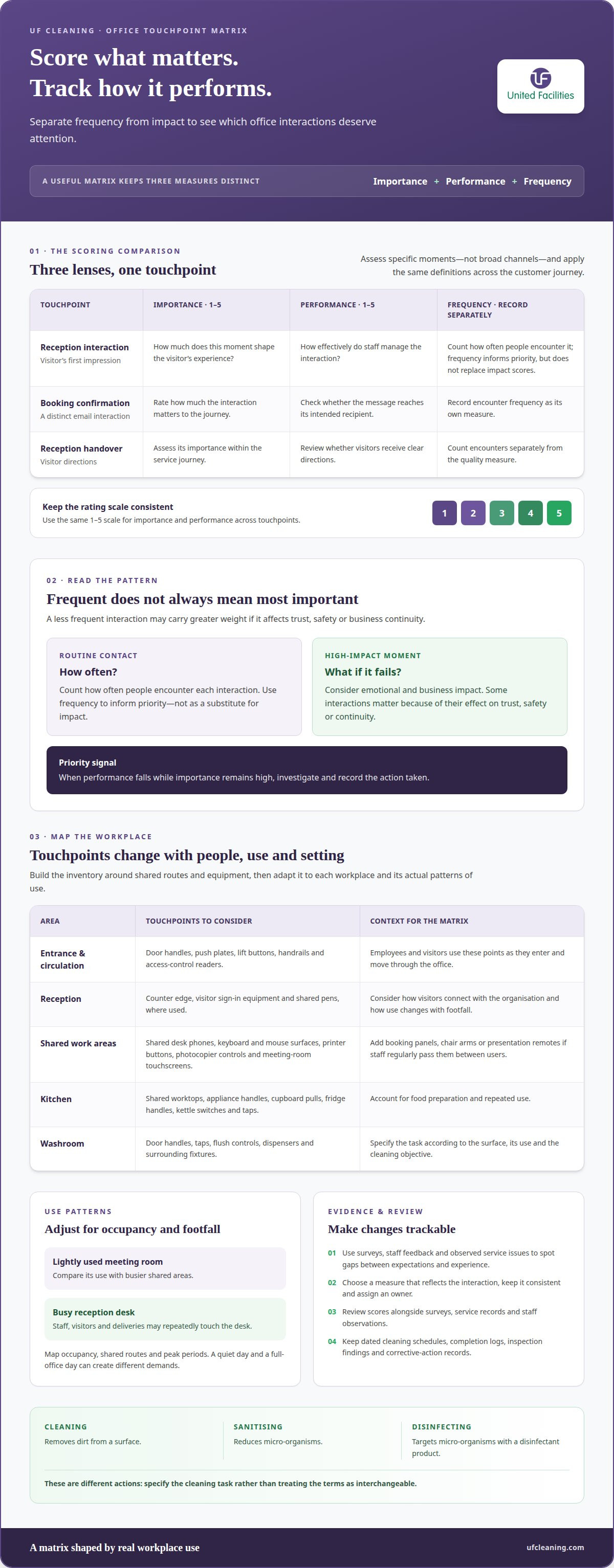
Use a 1-5 scale for importance and performance, applying the same definitions across the customer journey. For example, score a reception interaction highly for importance if it shapes a visitor’s first impression, then assess how effectively staff manage it. Record frequency separately, so it informs priority without replacing the impact scores.
Evaluate specific moments, not broad channels. An email can include several distinct interactions, such as a booking confirmation and a response to a complaint. Surveys, staff feedback and observed service issues can show where expectations differ from actual experience.
Performance Measures and Monitoring
Performance measures indicate how a particular touchpoint is working; monitoring tracks those measures over time. This helps identify changes in customer experience and engagement instead of relying on a general channel measure.
Choose a measure that reflects the interaction. For a booking confirmation, track whether the message reaches its intended recipient. For a reception handover, review whether visitors receive clear directions. Keep the measure consistent and assign an owner who can respond to the results.
Review scores alongside surveys, service records and staff observations. If performance falls while a touchpoint’s importance remains high, investigate and record the action taken. Comparing successive reviews shows whether a change improved the experience or the measure itself needs refining.
Separate frequency from performance: count how often people encounter each interaction, then assess its quality against the chosen indicator. This gives decision-makers a clearer view of which moments matter most, where performance differs between touchpoints and what should receive attention first.
Touchpoint differences across businesses and industries
Touchpoint priorities depend on the people, activities and service journey in each workplace. A useful matrix reflects those differences rather than applying one standard to every organisation.
Cleaning removes dirt from a surface; sanitising reduces microorganisms, while disinfecting targets them with a disinfectant product. These terms describe different actions, so a cleaning plan should specify the task rather than treat them as interchangeable.
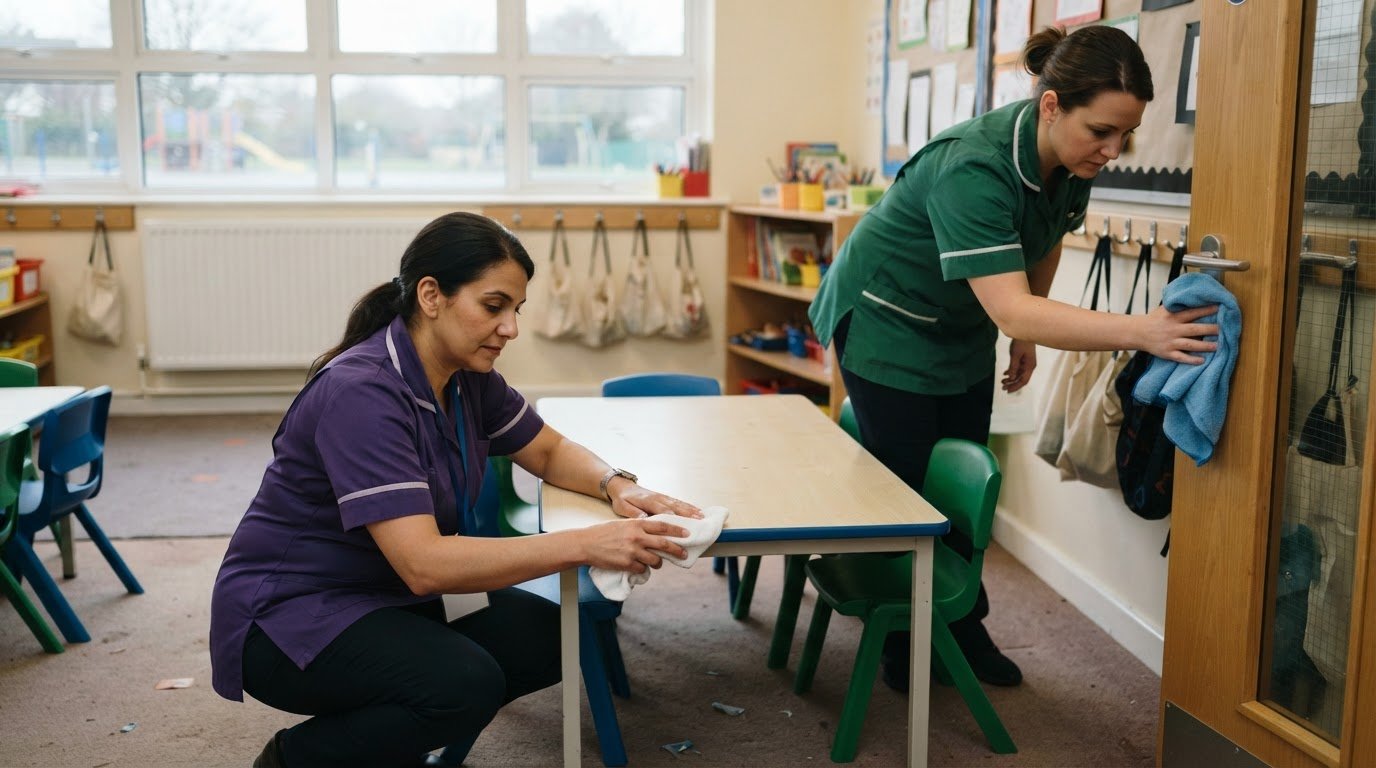
A journey map can link each interaction to a business stage and its intended outcome. A visitor’s reception experience, for example, may shape trust, while a staff member’s shared-kitchen experience affects their daily working environment. Retail, education and office settings have different users and routines, so their touchpoints and priorities differ.
Requirements Across Office Areas
Cleaning requirements for office areas are the tasks assigned to touchpoints according to their use and setting. This distinction helps teams build a plan that reflects practical differences between spaces.
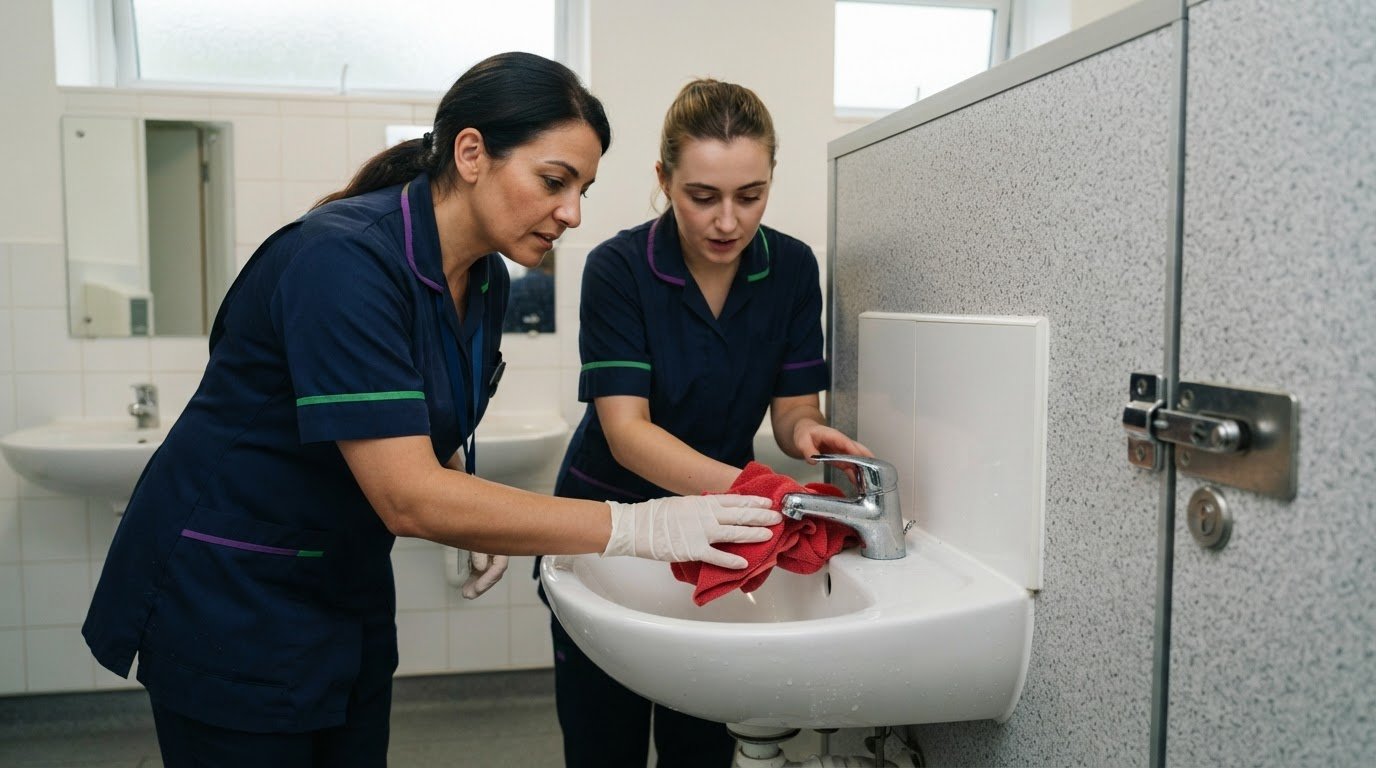
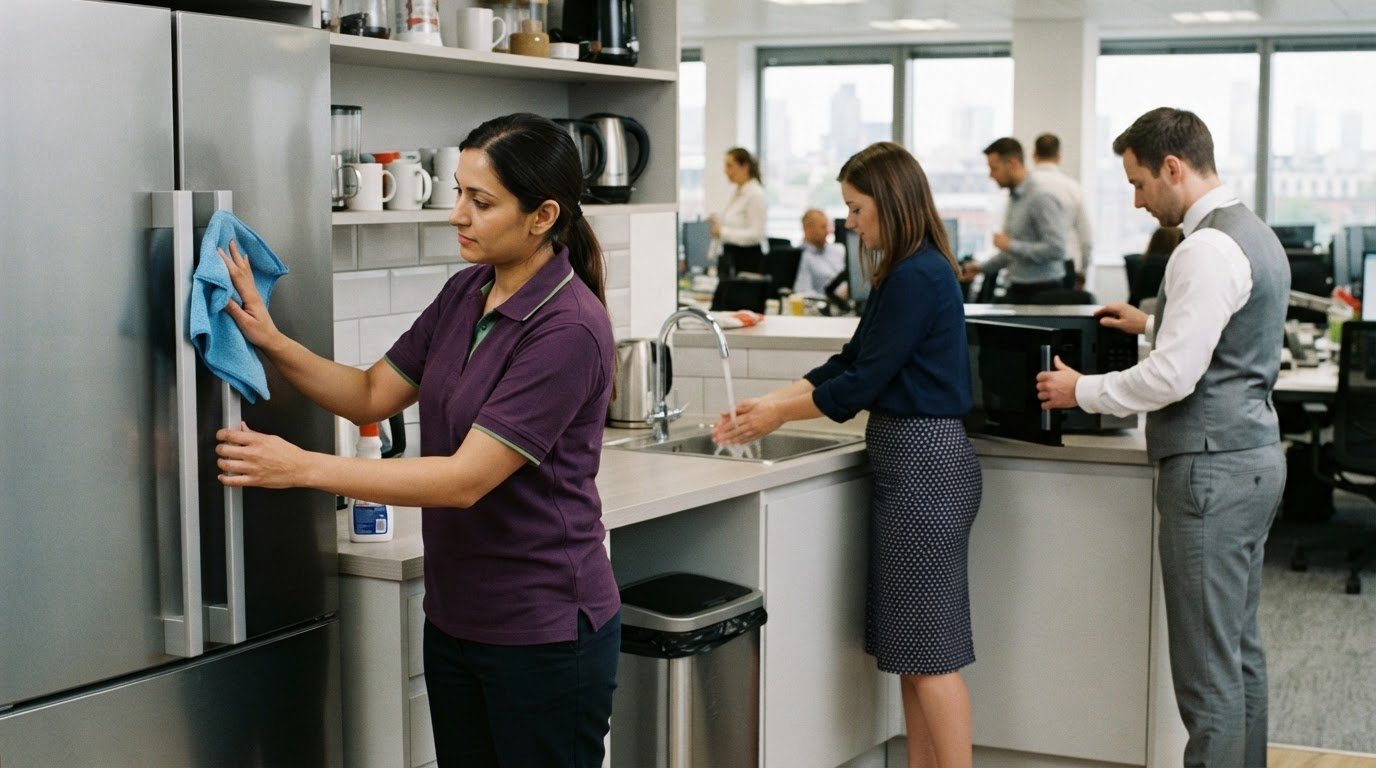
In a kitchen, map shared worktops, appliance handles and taps, accounting for food preparation and repeated use. In washrooms, include door handles, taps and flush controls, along with surrounding fixtures. Reception areas need attention to counters, entrance handles and visitor seating, which connect visitors with the organisation. The task depends on the surface, how it is used and the cleaning objective.
Adjusting Frequencies for Occupancy and Footfall
A frequency matrix adjusts planned attention to how many people use a space and how often they pass through it. This makes the schedule more relevant to actual workplace patterns.
Compare a lightly used meeting room with a busy reception desk: staff, visitors and deliveries may repeatedly touch the desk. Map occupancy, shared routes and peak periods, then revise priorities as patterns change. A quiet day and a full-office day can create different demands within the same organisation.
Use the matrix to connect cleaning tasks with workplace performance, staff engagement and visitor experience. The relevant stages, users and decisions shape which touchpoints matter in each industry. Reviewing them together supports considered service delivery and can contribute to retention and loyalty.
Which office surfaces and shared touchpoints are considered high contact?
A high-contact touchpoint is a surface or object people handle repeatedly during ordinary office routines. Start the inventory with shared routes and equipment, then add workplace-specific items such as reception desks and meeting-room controls.
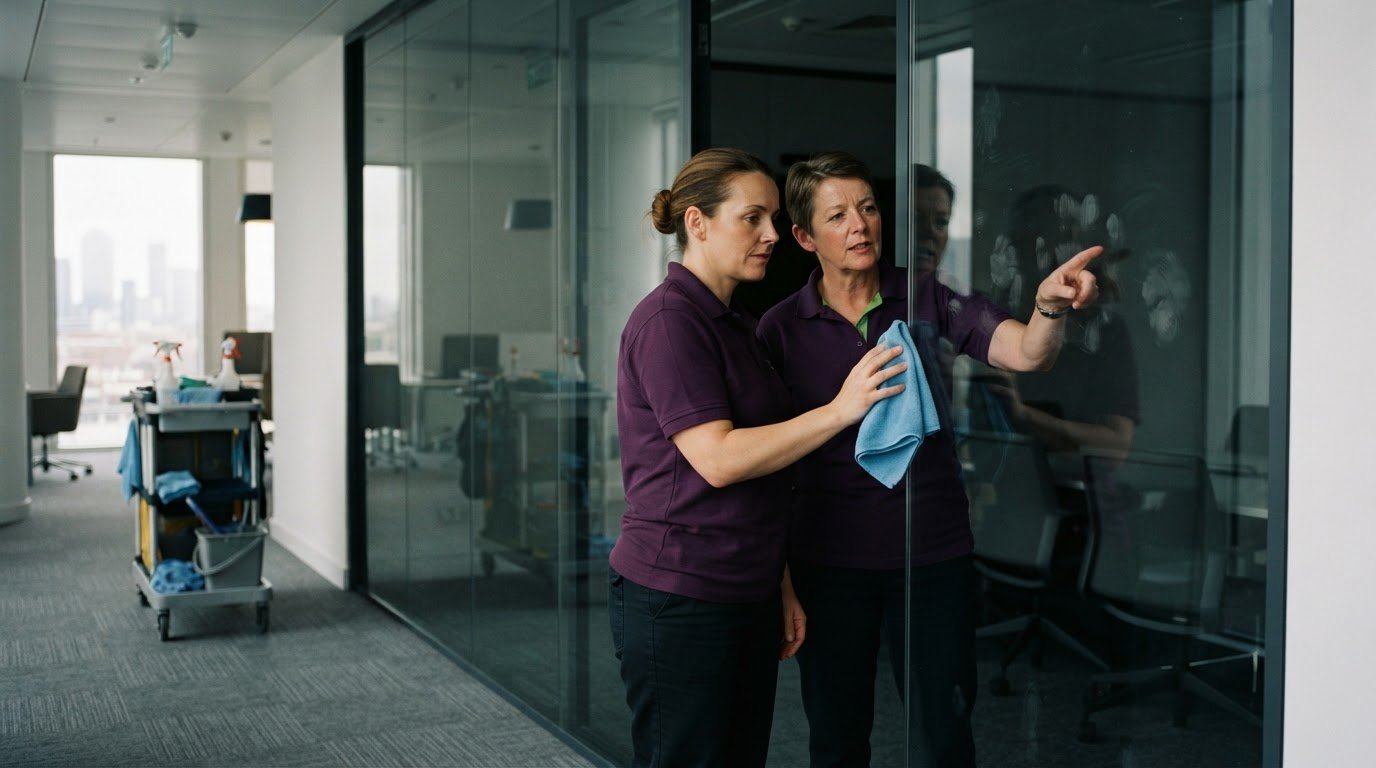
In entrance and circulation areas, consider door handles, push plates, lift buttons, handrails and access-control readers. Employees and visitors use these points throughout the working day. At reception, include the counter edge, visitor sign-in equipment and shared pens, where used. The list should reflect how people enter, move through and use the office.
Shared work areas contain touchpoints that are easy to overlook. Include desk phones, keyboard and mouse surfaces where equipment is shared, printer buttons, photocopier controls and meeting-room touchscreens. Add a room-booking panel, chair arm or presentation remote if staff regularly pass it between users.
- Kitchen: cupboard pulls, fridge handles, kettle switches, taps and shared appliance controls.
- Washroom: door handles, taps, flush controls and dispensers.
- Meeting rooms: table edges, light switches, chair arms and shared AV controls.
- Workstations: shared phones, input devices and frequently handled desk controls.
Make the inventory specific: “meeting-room touchscreen” is more useful than “technology” because it identifies the item and its location. Separate shared equipment from individually assigned items, then record who uses each surface and how often. This distinguishes a communal printer control from a personal keyboard, even when both are in the same office.
Review the list when office layouts, shared equipment or visitor routes change. A new access reader creates a touchpoint; a removed communal device no longer needs the same place in the matrix. Treat hard floors around busy entrances as a separate cleaning consideration, since foot traffic affects them differently from hand-contact surfaces.
Customer touchpoints can vary considerably depending on the nature of a business and its industry. Businesses should make customer touchpoints consistently on-brand and high quality. Businesses can more easily control the quality and consistency of contact-centre entry points, such as IVR menus and online chat interfaces. Contact centres can manage touchpoints through agent training, technology such as IVR systems, and monitoring customer interactions to maintain service quality and consistency.
How often should high-contact surfaces be cleaned in UK corporate offices?
No single cleaning interval suits every office touchpoint. Set the cadence according to how often people use a surface, its location, visible soiling and the consequences of leaving it unattended.
A shared entrance handle or busy reception counter may need attention more often than a rarely used meeting-room control. Consider occupancy patterns, visitor traffic and shared equipment use. A fixed schedule provides structure, while observations during the working day show when actual use calls for a change.
Make the matrix practical by recording each surface, its location, planned cleaning cadence and responsible person. For example, list kitchen taps separately from a meeting-room table rather than assigning one frequency to every shared area. Specify the task too: routine cleaning removes visible soil, while a spill or other immediate issue may need prompt attention outside the planned cycle.
Review the schedule when conditions change. Higher occupancy, a new visitor route or changes to shared equipment can increase contact with particular surfaces. Lower use may mean a touchpoint needs less frequent routine attention. Use inspection findings and cleaning records to identify missed tasks, repeated soiling or areas that need a revised cadence.
Match the method to the surface as well as the interval. A hard-floor entrance needs a different cleaning approach from a door handle, even if both experience frequent contact. Clear task instructions help maintain consistency across shifts and keep high-use points from being overlooked.
For a practical schedule, align planned tasks with occupancy, footfall and surface type, then review it as office use evolves. Arrange office cleaning around your workplace’s needs to bring routine tasks and high-contact areas into one considered plan.
No single recommended interval applies to every workplace surface. Set cleaning frequency according to use, location, visible soiling and the consequences of leaving a surface unattended, then review it as conditions change.
A customer journey touchpoint is a specific interaction, rather than only a channel. Customer journey maps should include physical and human touchpoints as well as digital ones, particularly in B2B. Analyse the Brand Touchpoint Matrix’s touchpoint positions individually for each brand and customer segment. Robust touchpoint mapping using research, surveys and instrumentation often takes 4-8 weeks.
UF Cleaning
UF Cleaning helps organisations maintain office environments with professional commercial cleaning services, tailoring cleaning plans to the premises and priorities. If your touchpoint matrix identifies frequently used shared surfaces, use it to inform how those areas fit into the wider cleaning schedule.
This approach is useful when occupancy, visitor traffic or shared equipment changes and routine tasks need to reflect how people use the space. UF Cleaning also provides specialist office hard floor cleaning to support care for busy floor areas alongside high-contact surfaces.
For a cleaning plan tailored to your workplace and its touchpoints, contact UF Cleaning for a free, no-obligation quote.
Turn your matrix into a practical cleaning plan
A high-contact touchpoint frequency matrix for corporate offices is useful when its priorities guide consistent work across the premises. Use it to identify which shared areas need attention, fit cleaning tasks around office activity and adjust the plan as workplace use changes. It provides a clear basis for discussing the environment instead of treating every surface or schedule alike.
UF Cleaning provides Office Cleaning London, Housekeeping and Hotel Management. These services support organisations with different premises and operational needs, while the matrix can help frame a conversation about your office’s cleaning priorities. If you’re ready to discuss a plan shaped around your workplace, contact UF Cleaning about your office. A considered next step can help turn your priorities into a practical approach for the space.
Frequently Asked Questions
What is a high-contact touchpoint frequency matrix for corporate offices?
A high-contact touchpoint frequency matrix is a planning tool that records frequently handled office surfaces and helps set cleaning priorities. A practical matrix might list a shared printer panel, its location, how often staff use it, its priority and the assigned cleaning task. This makes omissions easier to spot when responsibilities change, such as when a team relocates equipment or a previously private workspace becomes shared.