A degreased floor is not automatically a safe or compliant one. Effective industrial factory floor degreasing protocols match the method to the floor, the contamination and nearby work, while controlling chemical use, wastewater and production residues.
Oil, grease, swarf and settled dust can create practical risks as well as stubborn cleaning challenges, so the response needs to account for both. The Health and Safety at Work Act 1974 establishes duties for UK manufacturing operators to maintain clean and hazard-free workplaces, according to UK Government.
This guide explains how cleaning teams assess factory floors, choose a suitable degreasing method and manage chemical handling and contaminated wash water. It also covers how risk assessments, equipment, drying arrangements and production schedules shape a protocol, and when specialist industrial cleaning can help maintain a cleaner, safer working environment.
Key Takeaways
- Match the degreasing method to the floor material, the type of residue and the work happening nearby to address oil, grease and swarf effectively.
- Safe chemical handling depends on appropriate training, protective equipment and controls suited to the cleaning agent and work area.
- A site-specific risk assessment helps shape cleaning procedures around floor condition, machinery, pedestrian routes and production needs.
- The Health and Safety at Work Act 1974 establishes duties for UK manufacturing operators to maintain clean and hazard-free workplaces, according to UK Government.
Oil, grease, metal swarf and production waste
Oil films, grease deposits and metal swarf each call for a method suited to the floor and residue. Industrial factory floor degreasing protocols must also account for nearby production, water use and safe drying.
The UK cost per square metre depends on floor area, surface, contamination and access, and is provided after a quote request.
Selecting oil and grease removal methods
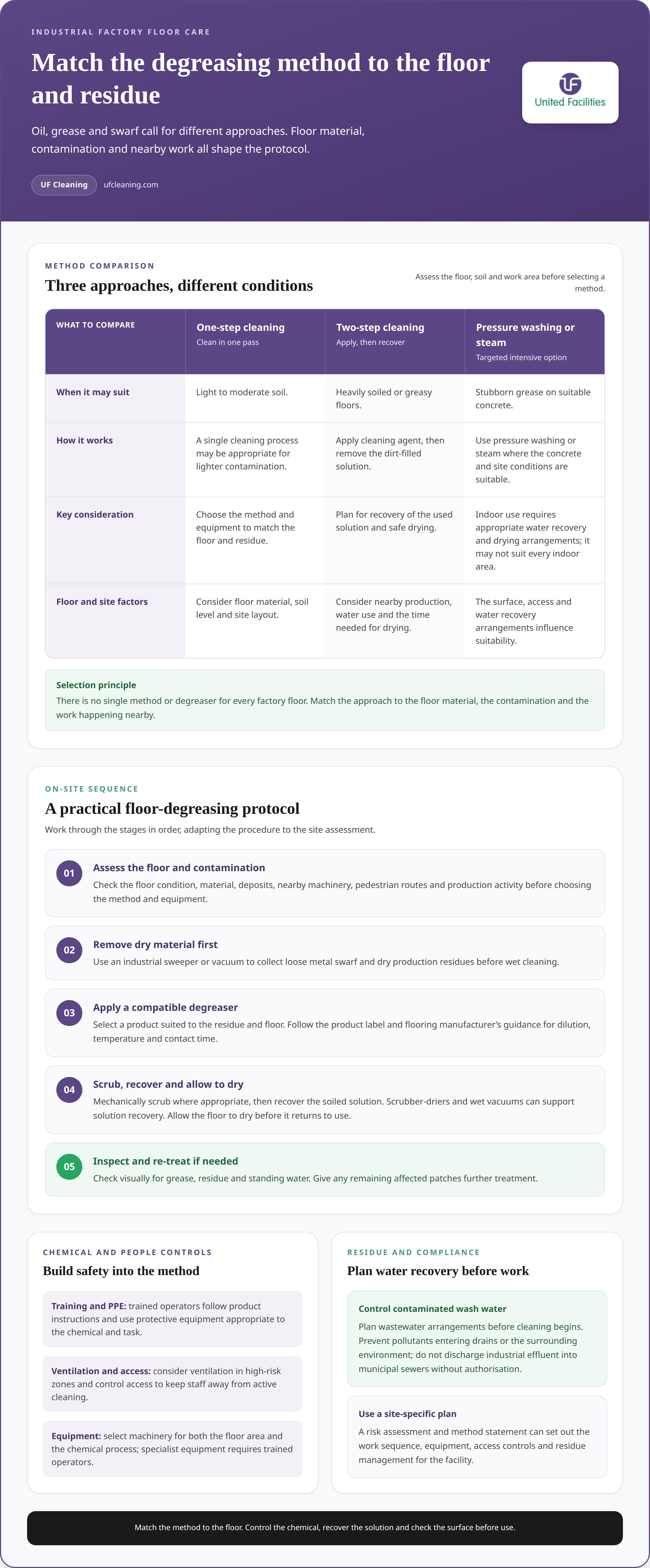
Cleaning teams assess the floor material, level of oil or grease and site layout before choosing a method and equipment. A two-step process applies cleaning agent, then removes the dirt-filled solution, making it suitable for heavily soiled or greasy floors. One-step cleaning may suit light to moderate soil. Pressure washing or steam can tackle stubborn grease on suitable concrete, but indoor pressure washing requires appropriate water recovery and drying arrangements.
Professional industrial floor degreasing protocol steps
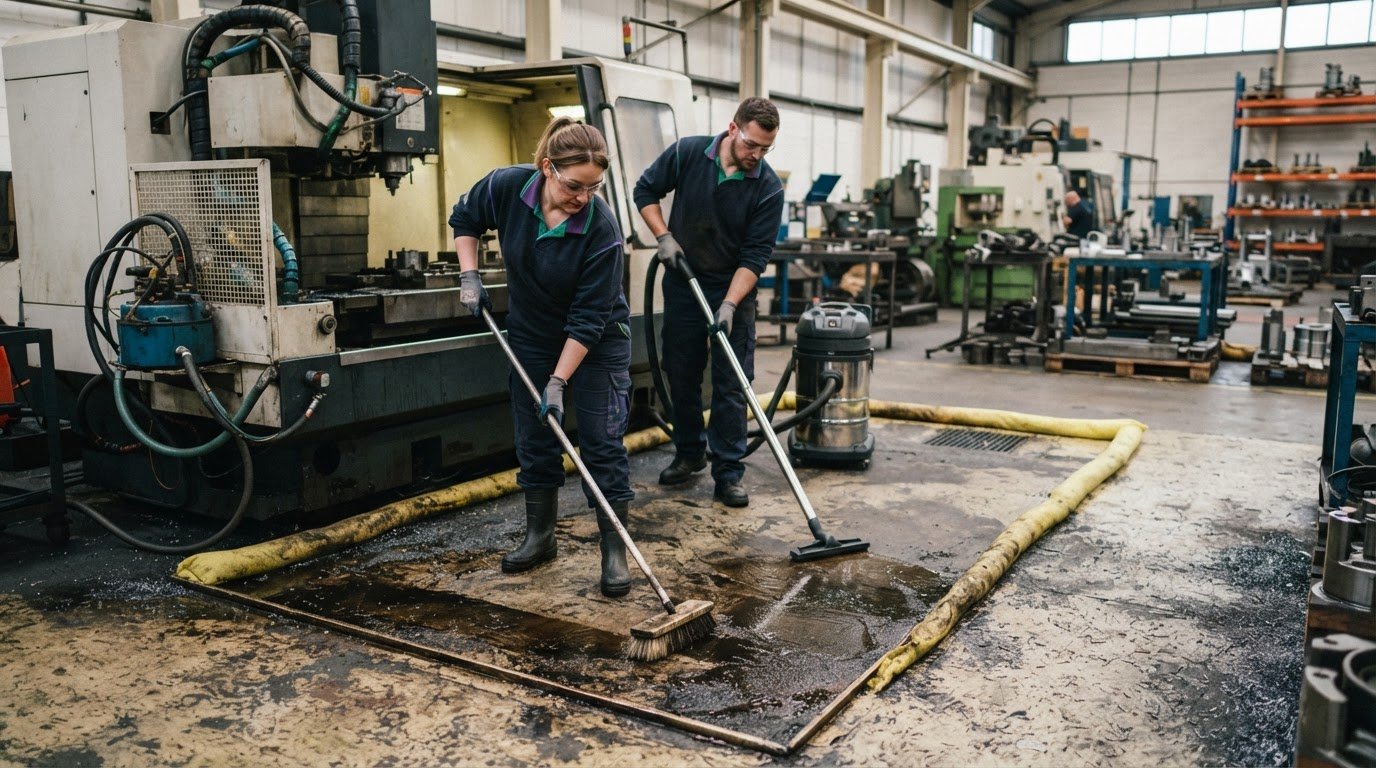
Teams first assess the contamination and floor condition, then remove loose swarf and dry production residues with a sweeper or vacuum before wet cleaning. They apply a compatible degreaser, follow its specified contact time and mechanically scrub where appropriate. Next, they recover the soiled solution and allow the floor to dry before it returns to use. A final visual inspection checks for grease, residue and standing water; any remaining affected patches can receive further treatment.
Determining degreaser dilution, temperature and contact time
Trained operators follow the degreaser label and flooring manufacturer’s guidance to determine dilution, rather than applying one ratio to every factory floor. The choice also depends on the soil, surface and method: oil on suitable concrete may need targeted treatment, while porous concrete can retain staining. Temperature and contact time follow product directions and site conditions. Hot-water pressure washing or steam may suit some concrete grease, but not every indoor area.
Equipment professionals use for safe and effective degreasing
Choose equipment to suit the floor and contamination. Industrial sweepers or vacuums remove dry swarf before wet work, while scrubber-driers can scrub mechanically and recover water. Wet vacuums support solution recovery, and pressure washers or steam cleaners may suit stubborn grease on appropriate concrete. Operators also consider access, manoeuvrability and water recovery. These steps help remove residue while limiting excess water and allowing thorough drying.
COSHH training and chemical handling
In manufacturing environments, degreasers must be handled with controls suited to their hazards and the cleaning task. COSHH procedures guide work involving hazardous substances, while trained operators and appropriate personal protective equipment help protect health during floor cleaning. The product, surface and work area all matter.
Before deep cleaning, the team identifies the chemical suited to the residue and floor material. Degreasers, solvents and other industrial cleaning agents are formulated for particular soils and surfaces, so no single product suits every factory. Operators follow product instructions for preparation and use, and wear protective equipment appropriate to the task.
Ventilation matters when cleaning chemicals are used in high-risk zones. Controlling access also keeps staff away from active cleaning and reduces interruptions around production equipment. The plan should account for nearby machinery, pedestrian routes and the time needed for the floor to dry before normal use resumes.
Equipment must suit the chemical process as well as the floor area. A scrubber-drier can apply mechanical action and recover used solution; a wet vacuum can support recovery in areas the machine cannot reach. Operators need training to use specialist machinery and work safely in controlled areas. Chemical handling and machine operation are connected parts of the same procedure.
Used solution and contaminated residues need careful control. Plan the work to prevent pollutants entering drains or the surrounding environment, and do not discharge industrial effluent into municipal sewers without authorisation. Establish wastewater arrangements before work starts, rather than leaving disposal decisions until after deep cleaning. This is especially important when recovered solution contains oil, grease or chemicals.
A thorough protocol brings together trained staff, suitable PPE, ventilation, controlled access and wastewater management. These measures support deliberate, consistent chemical use and keep the cleaning method aligned with the manufacturing environment.
Risk assessments, method statements and PPE
Industrial cleaning in a hazardous facility should start with a site risk assessment. It identifies hazards and informs the cleaning plan. For factory floor degreasing, assess the floor material, deposits and existing damage before selecting a method. Oil on coated concrete, for example, may call for a different approach from loose metal swarf beside active machinery.
The assessment should also consider operating conditions. Nearby equipment, pedestrian routes, access points and wastewater arrangements can affect where cleaning takes place and how the area is controlled. A method statement can set out the work sequence, equipment, access controls and residue management. This gives the team a clear procedure for the specific setting, rather than a generic plan for every production area.
Hazardous environments or processes may require specialist cleaning. The cleaning plan should account for identified hazards, with trained technicians and suitable equipment selected for the contamination and facility. Documented procedures help the team follow the agreed method, while post-clean checks establish whether the area has been left in the intended condition.
Personal protective equipment must suit the task and substances involved. Work with a chemical degreaser, for example, requires protection appropriate to that product. Operating a scrubber-drier calls for machine training and a controlled work area. PPE supports risk controls; it does not replace an assessment of the floor, machinery or surrounding work.
Before work begins, the team uses the assessment to coordinate access and reduce conflicts with production. If contamination, floor damage or operating conditions differ from what was identified, review the method before cleaning proceeds. This keeps the procedure aligned with the actual facility instead of relying on assumptions that could compromise the work or its verification.
UK factory health and safety compliance
Factory floor cleaning supports workplace safety when it addresses both visible contamination and operational hazards. According to UK Government, the Health and Safety at Work Act 1974 establishes duties for UK manufacturing operators to maintain clean and hazard-free workplaces. That makes cleaning part of broader site management, not simply a cosmetic task.
Explosive dust requires specific attention. According to UK Government, UK factory operators must mitigate explosive dust accumulations under the Dangerous Substances and Explosive Atmospheres Regulations 2002. Where production creates combustible dust, cleaning arrangements should consider how deposits collect around machinery, structures and work areas. The method and equipment must suit the hazardous conditions identified at the facility.
Oil leaks and settled industrial dust can create slip and trip risks. A cleaning plan should account for pedestrian routes, nearby equipment and the production schedule. Wet cleaning requires suitable water recovery and drying arrangements, while wastewater controls should prevent pollutants entering drains or the surrounding environment. These considerations connect cleaning procedures to the practical demands of factory operations.
There is no single degreasing frequency for every factory. High-traffic areas, such as aisles, loading zones and production floors, may need daily machine cleaning; schedules should reflect traffic, contamination and operational risk. Weekly scrubber-drier deep cleaning of production-line walkways can also form part of a plan, with frequency adjusted to site conditions.
For compliance, document why each area has its chosen cleaning method and schedule. The plan should identify relevant hazards, control access around machinery, manage contaminated water and confirm the floor is dry before it returns to use. Where explosive atmospheres are involved, equipment and procedures must address those specific risks, not rely on a standard floor-cleaning approach.
For a structured approach to factory cleaning, arrange industrial cleaning support tailored to your facility’s operational needs.
UF Cleaning: Office Hard Floor Cleaning
UF Cleaning provides Office Hard Floor Cleaning and Industrial & Manufacturing Cleaning for organisations seeking professional support with floor care and production environments. For factory floors affected by operational residues, its industrial cleaning service can be tailored to the facility and its cleaning requirements.
Consider professional support when routine cleaning no longer addresses floor contamination or when work must be planned around machinery and production. For hard floors in office settings, UF Cleaning’s Office Hard Floor Cleaning is the appropriate service. The right approach depends on the setting and the work required.
To discuss industrial or office floor cleaning for your premises, contact UF Cleaning.
Plan the next stage of floor care
Make floor care part of production planning, rather than waiting for visible build-up. Recording recurring spill points, affected surfaces and areas needing attention can help shape future cleaning arrangements as processes or site use change. This gives operations teams a practical basis for reviewing whether the current approach still fits.
Treat your industrial factory floor degreasing protocols as a working framework, and adapt them when production conditions, floor condition or contamination patterns change. Start by identifying the areas requiring attention and the operational considerations that matter most, so the cleaning plan can match the facility’s needs.
For professional support with factory floor cleaning, contact UF Cleaning about factory degreasing. A considered plan can help you move forward with greater clarity and keep floor care aligned with your operation.
Frequently Asked Questions
How Do You Ensure Industrial Cleaning Meets Environmental Regulations?
Build environmental controls into the cleaning plan before work begins. Plan how to recover wash water, contain oily residues and prevent pollutants entering drains or the surrounding environment. Do not discharge industrial cleaning effluent into municipal sewers without authorisation. A scrubber-drier, for example, can recover used solution during floor cleaning, making wastewater management part of the process.
What are the Different Methods of Industrial Floor Cleaning?
Industrial floor cleaning methods include sweeping, vacuuming, damp cleaning, mechanical scrubbing, pressure washing and steam cleaning. The right option depends on the floor material, contamination and production setting. A scrubber-drier can scrub and recover water across larger areas, while a vacuum removes dry dust and debris. Pressure or steam cleaning may suit grease on appropriate concrete, but water use and drying must suit the indoor environment.
What safety measures do you have in place?
Plan professional floor cleaning around the hazards identified on site. Measures can include a risk assessment, trained machine operators, suitable PPE and controlled access around active work. For example, keep a production walkway clear while a scrubber-drier is operating, then out of use until the surface is dry. Ventilation also matters when cleaning chemicals are used.
How do professionals choose degreasers for different factory floor materials and types of oil or grease?
Match the degreaser to both the floor and the deposit, using product directions and flooring guidance to inform the choice. Oil on suitable concrete, for example, may need targeted treatment, while a moisture-sensitive surface calls for another approach. The assessment should also consider whether contamination is fresh or ingrained, the floor’s coating and whether the cleaning agent can be recovered effectively.
How do professionals collect and dispose of degreasing wastewater, oily residues and chemical containers in the UK?
Recover used cleaning solution with suitable equipment, such as a scrubber-drier or wet vacuum, and control oily residues to prevent pollution. Do not allow wastewater into drains or municipal sewers without appropriate authorisation. Manage chemical containers within the site’s waste arrangements, following product instructions. Establish these controls before work starts, particularly when wash water contains grease or chemical residues.
What UK COSHH requirements apply to industrial floor degreasing chemicals and procedures?
In UK workplaces, personnel must follow Control of Substances Hazardous to Health (COSHH) procedures when working with hazardous substances. For floor degreasing, plan chemical use around the product, task and work environment. Suitable training and PPE are necessary, and ventilation should be considered, especially in high-risk areas. Operators must also use cleaning machinery safely and keep the work area controlled.