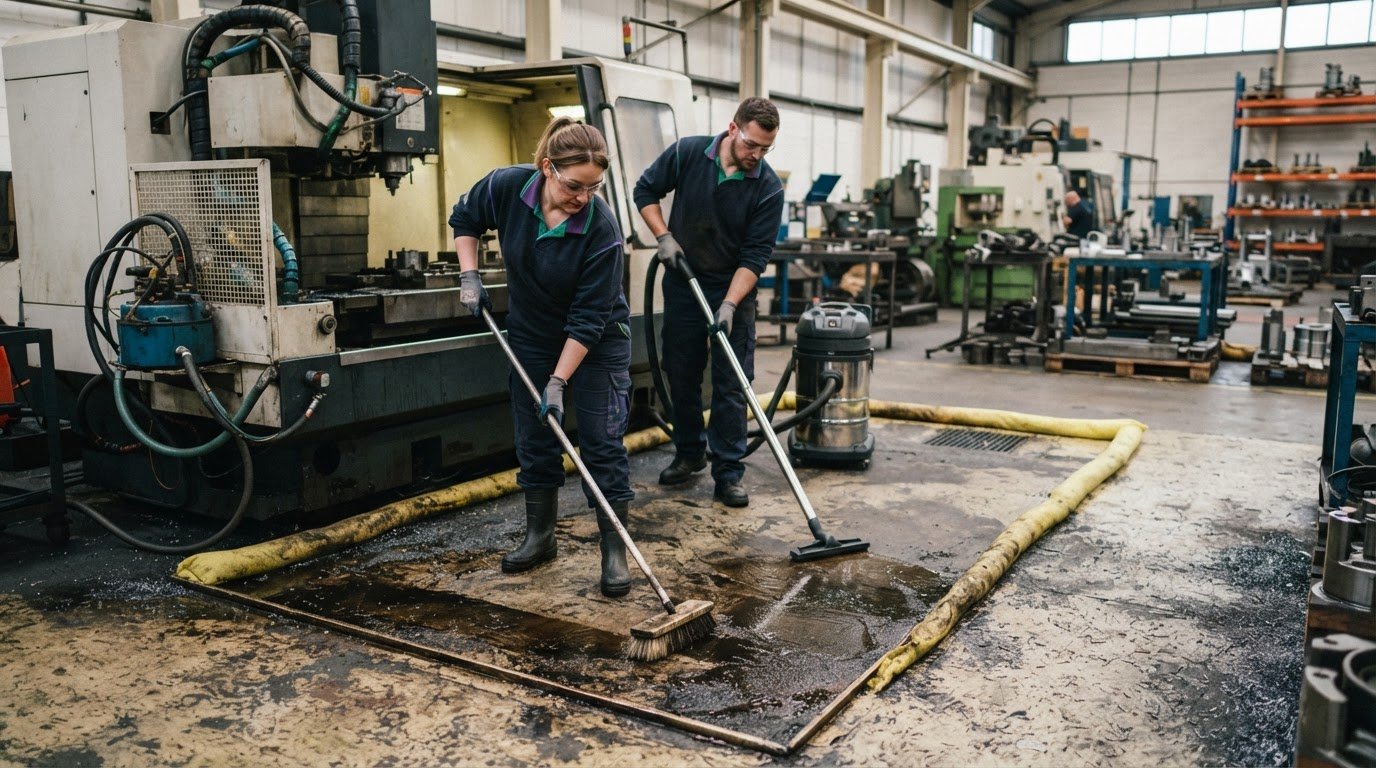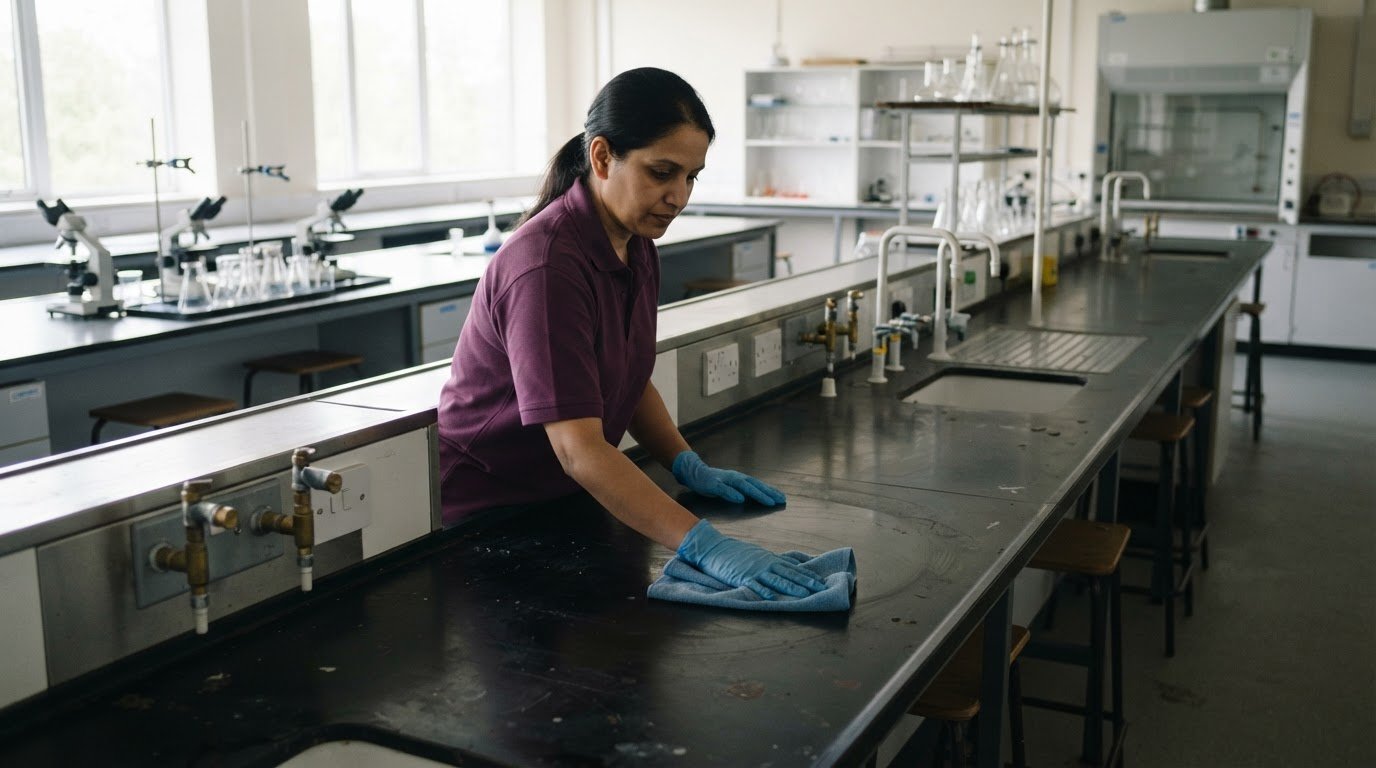
A clear floor alone does not keep a warehouse consistently clean. A practical starting point for warehouse high bay dusting and cleaning standards is high-level cleaning one to four times per year for many warehouses, adjusted for activity, product sensitivity and dust generation. Daily routines should also keep walkways clear, address spills promptly and maintain busy work areas.
Floors and visible surfaces are central to daily operations, so they often receive attention first. But dust also settles on racking, beams and ventilation systems. An effective programme covers both routine upkeep and elevated areas. This article explains how to set cleaning frequencies, plan high-level dusting around warehouse activity and assess results through consistent checks. It also shows how daily, weekly and deeper cleaning tasks fit together to maintain a clean working environment.
Key Takeaways
- Organise cleaning by warehouse zone and task frequency so daily upkeep and less frequent deep cleaning both have a clear place in the programme.
- Set cleaning intervals around dust levels, site activity, product sensitivity and operational demands rather than relying on one schedule for every warehouse.
- Include beams, rafters, vents and other elevated surfaces in the cleaning plan to address dust beyond routine floor-level work.
- Use consistent inspection checklists to track cleanliness across floors, racking, shared equipment, staff facilities and waste points.
What Are the Most Important Warehouse Cleaning Best Practices?
Effective warehouse schedules divide work by zone and frequency, from daily floor and walkway cleaning to periodic high-level dusting. Methods and access arrangements should account for the stock, equipment and activity in each area.
Zone-Based Warehouse Cleaning Schedules: How Professionals Set Tasks and Frequencies
A zone-based schedule assigns tasks and intervals according to each area’s use and exposure to debris. Loading areas, forklift routes and busy walkways need daily attention, while quieter spaces may need less frequent cleaning. This directs effort towards places where dirt builds up quickly without overlooking racking, machinery surrounds or staff facilities.
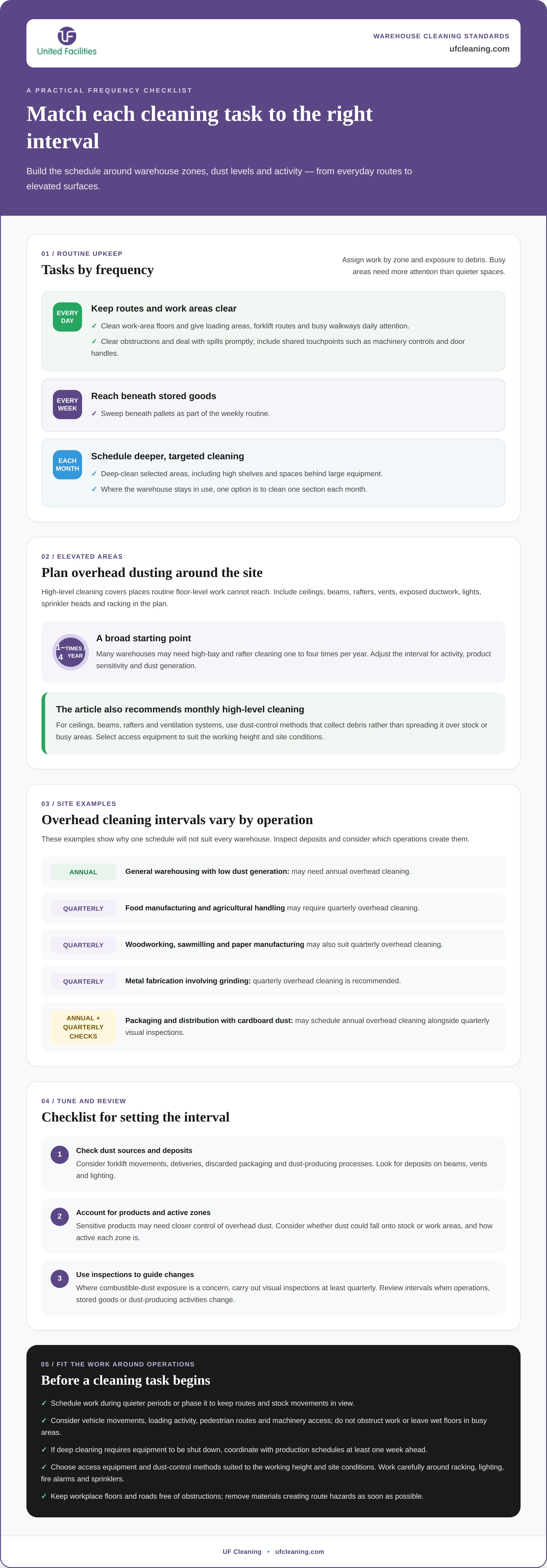
Cleaning tasks can be grouped by frequency: clear routes and deal with spills daily, sweep beneath pallets weekly, and schedule deeper cleaning for selected areas monthly. Work-area floors should be cleaned every day. Include shared touchpoints, such as machinery controls and door handles, so routine upkeep covers more than visible floors.
Scheduling Warehouse Cleaning Around Operations: A Professional Approach
Schedule cleaning during quieter periods or phase the work to keep routes and stock movements in view. Before setting a task, consider vehicle movements, loading activity, pedestrian routes and machinery that could affect access. In an active warehouse, cleaning must not obstruct work or leave wet floors in busy areas.
If deep cleaning requires equipment to be shut down, coordinate the work with production schedules at least one week ahead. Another option is to clean one section each month while keeping other areas in use. In multi-shift warehouses, incorporating daily upkeep into the working day helps maintain standards across handovers.
Periodic Tasks and Compliance
Periodic tasks are less frequent activities assigned set intervals within the wider programme. Monthly cleaning might cover high shelves and spaces behind large equipment, while an annual deep clean can address the warehouse as a whole. Planned intervals help prevent areas from being overlooked between daily tasks.
To protect racking, lighting, fire alarms and sprinklers, select access equipment and dust-control methods suited to the working height and site conditions. Work carefully around fixtures, keeping equipment and cleaning materials from striking them. The Health and Safety Executive (HSE) says workplace floors and roads should remain free of obstructions. Remove materials that create hazards on routes as soon as possible. A documented schedule makes assigned tasks and periodic cleaning easier to track.
Factors affecting warehouse cleaning frequency
Cleaning frequency should reflect the dust a warehouse generates, its activities and the sensitivity of stored products. Forklift movements, deliveries and discarded packaging can spread debris across floors and storage areas within hours. A cleaning schedule that accounts for these patterns helps address hazards before they affect working routes or stock.
High-level cleaning frequency depends on the environment. Many warehouses may need high-bay and rafter cleaning one to four times per year, depending on activity, product sensitivity and dust generation. General warehousing with low dust generation may need annual overhead cleaning, while food manufacturing or agricultural handling facilities may require quarterly cleaning. Woodworking, sawmilling and paper manufacturing environments may also suit quarterly overhead cleaning.
Metal fabrication involving grinding is another setting where quarterly overhead cleaning is recommended. Packaging and distribution facilities with cardboard dust may schedule annual overhead cleaning alongside quarterly visual inspections. These examples show why one interval cannot suit every site. Inspect dust deposits and consider which operations produce them to decide whether cleaning needs to be more frequent.
Storage and materials also matter. Sensitive products may need closer control of overhead dust, while processes that produce fine debris can quickly leave deposits on beams, vents and lighting. The cleaning plan should account for where dust settles, whether it could fall onto stock or work areas, and how active each zone is. Forklift traffic and delivery patterns also affect how quickly lower surfaces get dirty.
Where combustible-dust exposure is a concern, visual inspections should take place at least quarterly. Findings can reveal changes in deposits and help determine the next cleaning interval. Review the schedule as operations, stored goods or dust-producing activities change, rather than relying only on the original routine. This keeps high-level cleaning aligned with the warehouse’s actual conditions.
Warehouse high bay dusting and cleaning standards are most useful when they turn observed dust, site activity and product sensitivity into suitable cleaning intervals. Pair planned overhead cleaning with regular inspections so intervals respond to actual conditions rather than guesswork.
High-level dusting of ceilings, beams, rafters and ventilation
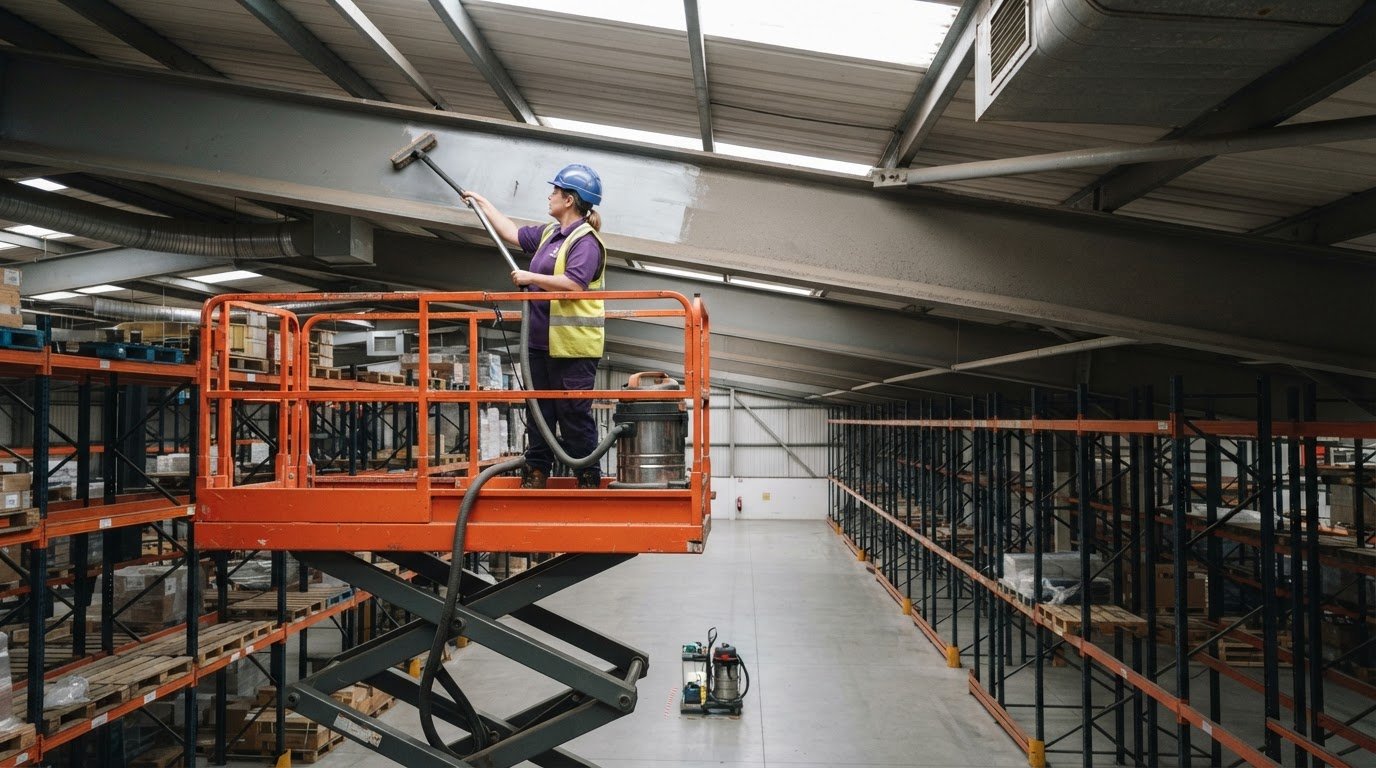
High-level cleaning removes dust from surfaces that routine floor-level work cannot reach. In warehouses, these include ceilings, beams, rafters, vents, exposed ductwork, lights and sprinkler heads. Dust on these structures can fall onto stock or packaging, while deposits in ventilation systems can obstruct airflow. Effective standards therefore cover elevated structures and racking, not just visible floors.
The recommendations do not set one cleaning interval for every warehouse. Monthly high-level cleaning is recommended for ceilings, beams, rafters and ventilation systems. Methods should collect dust and debris rather than spread them over stored goods or busy areas. Choose equipment according to working height, contamination and site conditions, using dust-control systems and suitable access equipment.
High-level cleaners need task-specific training, safe access equipment and suitable personal protective equipment. The recommendations do not specify one universal certification for every warehouse; competence should match the access method, equipment and site risks. Operatives should know how to protect stock and avoid disturbing lighting, sprinklers, racking or ventilation components.
Before work starts, a site-specific risk assessment should cover vehicle movements, forklifts, pedestrian routes, work at height, machinery, chemicals and wet surfaces. A safe system of work should set out controls, including trained operatives, inspected equipment, suitable PPE, clear signage and segregation of the cleaning area. Access arrangements must also account for warehouse traffic and nearby operations.
Plan cleaning around stock, packaging and operating activity, using quieter shifts, planned maintenance windows or phased areas where appropriate. Select methods and cleaning agents to suit each surface and help prevent damage to racking, lights and other fixtures. After cleaning, a visual inspection can reveal dust remaining on beams, vents or ledges and inform the next scheduled clean. These checks connect high-level dusting with daily hygiene and the wider commercial cleaning programme.
Warehouse inspection checklists and performance measures
Consistent inspections make results easier to assess and recurring oversights easier to spot. Monthly checklists provide a regular basis for reviewing warehouse spaces.
Visual Checks of Cleaning Outcomes
A visual inspection checks whether scheduled cleaning has removed visible dust and debris from specified surfaces. Review floors, walkways, racking, staff facilities, shared equipment and waste points against the same checklist each month. This helps identify missed areas, recurring build-up and tasks needing closer attention. Where combustible-dust exposure is a concern, quarterly visual inspections are recommended at minimum.
When comparing cleaning proposals, check whether the scope identifies relevant zones, frequencies, access controls and inspection processes. Clear records of completed tasks and repeat findings make performance easier to review than a general claim that cleaning was thorough.
Dust Levels and Measurement
Assess dust in relation to the materials handled, processes performed and site-specific hazards, rather than using an assumed figure for every warehouse. Visual inspections can record where deposits appear, such as on beams, vents, racking or machinery, and whether they return after cleaning. This creates a consistent record of visible conditions, but does not provide a numerical airborne-dust measurement.
Where combustible dust is a concern, set inspection frequency and cleaning priorities according to exposure and where deposits collect. Record observations by zone, then compare findings over time to identify changes. This helps distinguish isolated dust from recurring build-up that may call for a different cleaning frequency.
A useful performance review considers checklist completion, repeat findings and whether daily cleaning covers the agreed areas. For example, a monthly inspection may flag dust returning on high racking or debris repeatedly collecting beside machinery. These observations help refine the schedule and direct attention to areas that need more thorough cleaning.
For support with industrial cleaning routines and structured inspections, discuss your cleaning requirements.
UF Cleaning
UF Cleaning can help organisations coordinate commercial cleaning arrangements to support a consistently well-maintained workplace. This is a useful step when routine tasks and inspection findings need to form one coherent programme rather than being managed separately.
For warehouses, the priorities are clear: define the areas needing attention, set suitable frequencies and review whether results meet operational needs. UF Cleaning provides commercial cleaning and facilities support, including office cleaning and hard-floor care. Start by discussing your site’s cleaning requirements and the standards it needs to maintain.
Contact UF Cleaning to discuss your cleaning requirements.
Keep Your Cleaning Programme Responsive
A warehouse changes as stock, processes and traffic patterns evolve. Treat warehouse high bay dusting and cleaning standards as a working framework, and revisit priorities when inspections reveal recurring deposits or operations change. This keeps cleaning aligned with the building’s actual use instead of relying on a routine that no longer fits.
Professional support can help when elevated areas, industrial spaces or changing schedules make consistent cleaning difficult to coordinate in-house. UF Cleaning provides industrial and manufacturing cleaning alongside other commercial services, so organisations can discuss cleaning needs as part of their wider facilities requirements. Its services also include housekeeping and hotel management.
A considered conversation can help clarify which areas need attention and how cleaning should fit around operations. Contact UF Cleaning for support and take the next step towards a cleaning programme that remains practical as your warehouse changes.
Frequently Asked Questions
How Often Should High Dusting Be Done?
Many warehouses can use one to four high-bay cleans per year as a starting range, adjusting for dust generation, activity and product sensitivity. For example, a low-dust storage site may need less frequent overhead cleaning than a facility handling materials that release fine dust. Where combustible-dust exposure exists, schedule visual inspections at least quarterly to help identify deposits between planned cleans.
Is rafter dust actually a fire hazard?
Rafter dust can contribute to fire risk in some environments, particularly where combustible dust is present. The concern depends on the materials handled and the processes that produce dust, so visible deposits call for a considered inspection, not an assumption that every warehouse faces the same risk. Facilities with combustible-dust exposure should include quarterly visual inspections in their cleaning programme.
What Is High Dusting in Commercial Cleaning?
High-level dusting means cleaning elevated surfaces that routine floor-level work cannot reach. In a warehouse, this can include beams, rafters, light fittings, vents and exposed ductwork. Unlike ordinary daily cleaning, it targets overhead structures and hidden ledges where dust collects. A defined scope helps ensure important surfaces are not overlooked.
What should a warehouse cleaning specification include when appointing a professional provider?
A useful specification identifies warehouse zones, included surfaces, cleaning intervals and access or operational constraints. It can also set out how completed work will be recorded and how missed or recurring areas will be reported. Naming separate storage aisles and loading areas, for example, makes the scope clearer than a general request to clean the whole building.
What equipment do professionals use for high-bay cleaning?
For overhead dust, suitable equipment may include industrial vacuum cleaners and access platforms, selected according to working height, surface material and site conditions. Scrubber dryers, pressure washers or steam cleaners may suit other tasks, but no method is right for every surface. A delicate fitting, for example, needs a different approach from a robust floor or machinery surround.
Why Can’t High-Level Cleaning be Skipped?
Without planned overhead cleaning, dust can remain on structures above stock, packaging and work areas. Deposits may fall onto products, while dust in ventilation systems can obstruct airflow. Dust around lights or machinery can also go unnoticed during routine floor-level work. Including elevated areas in a planned programme helps address less visible deposits before they become recurring cleanliness or operational concerns.