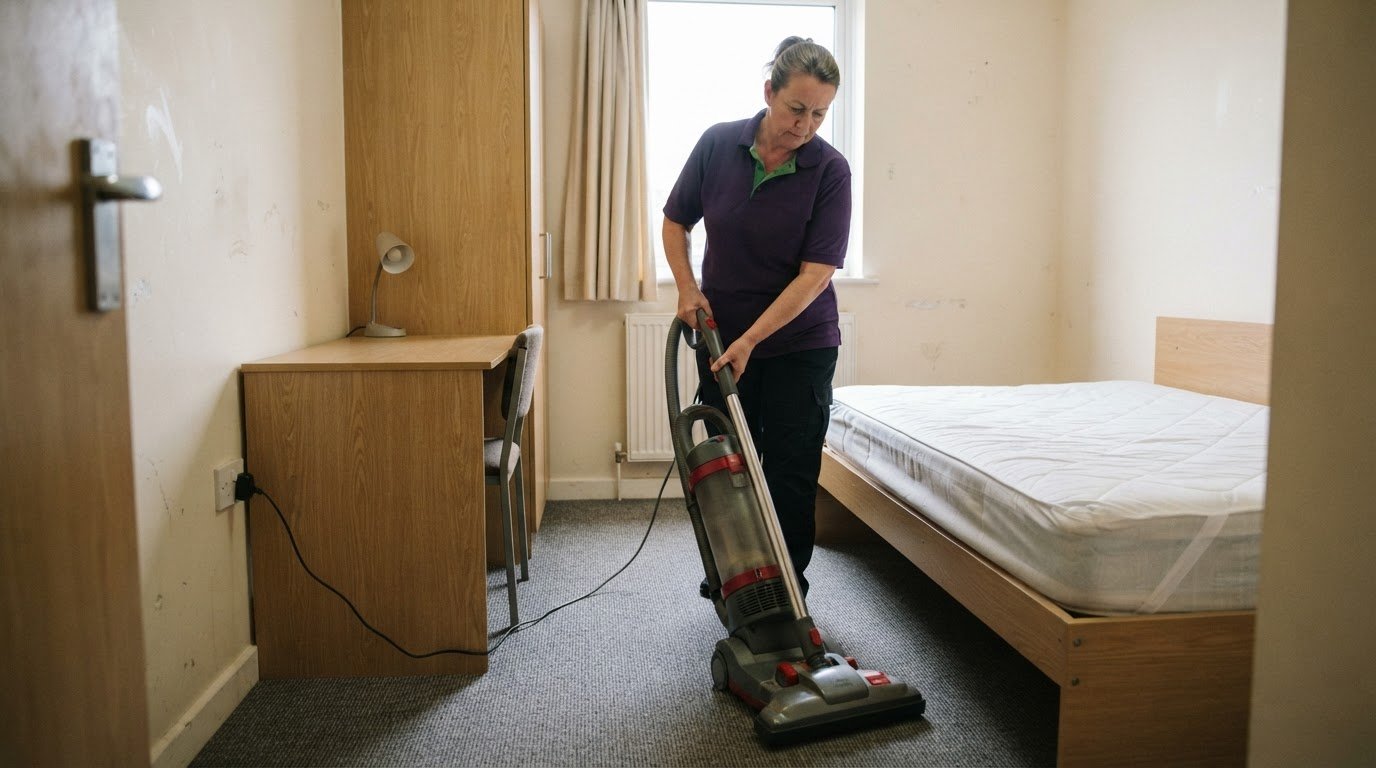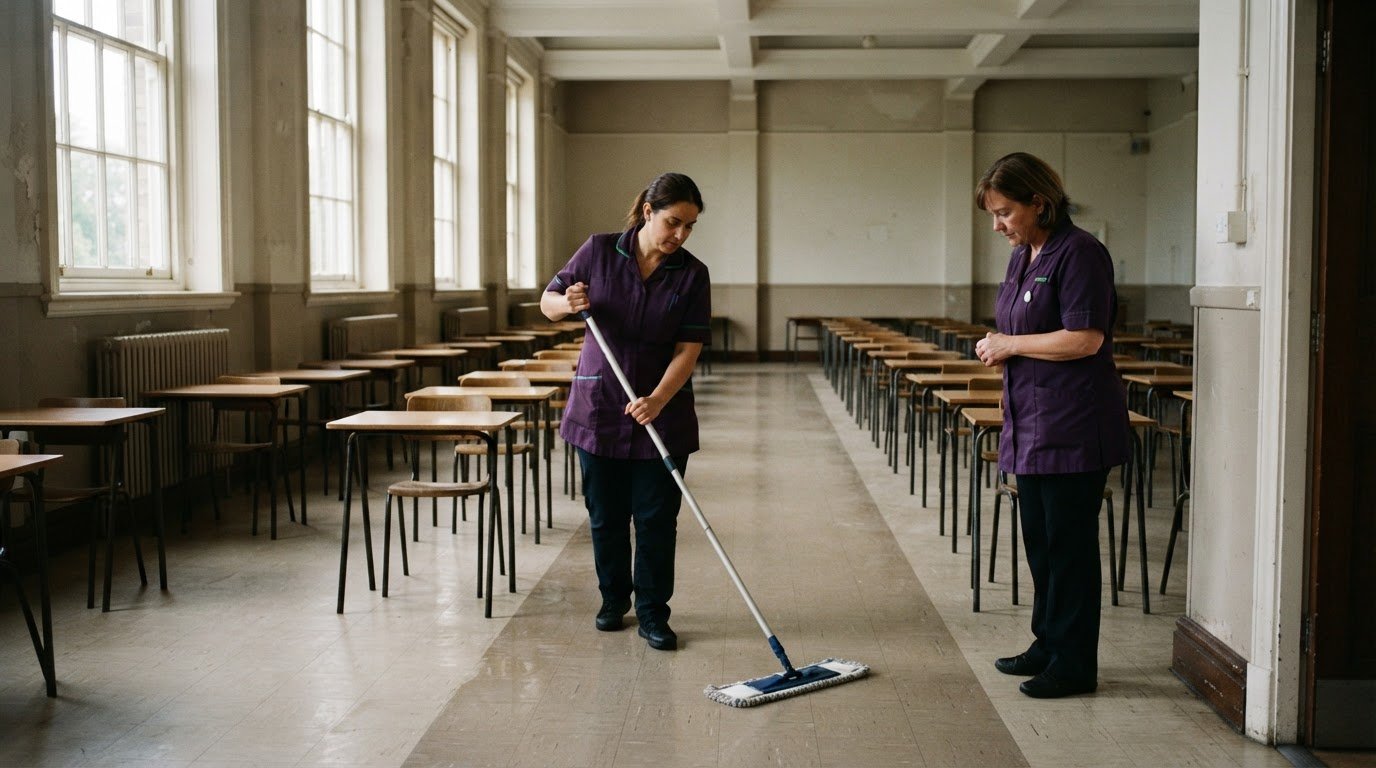
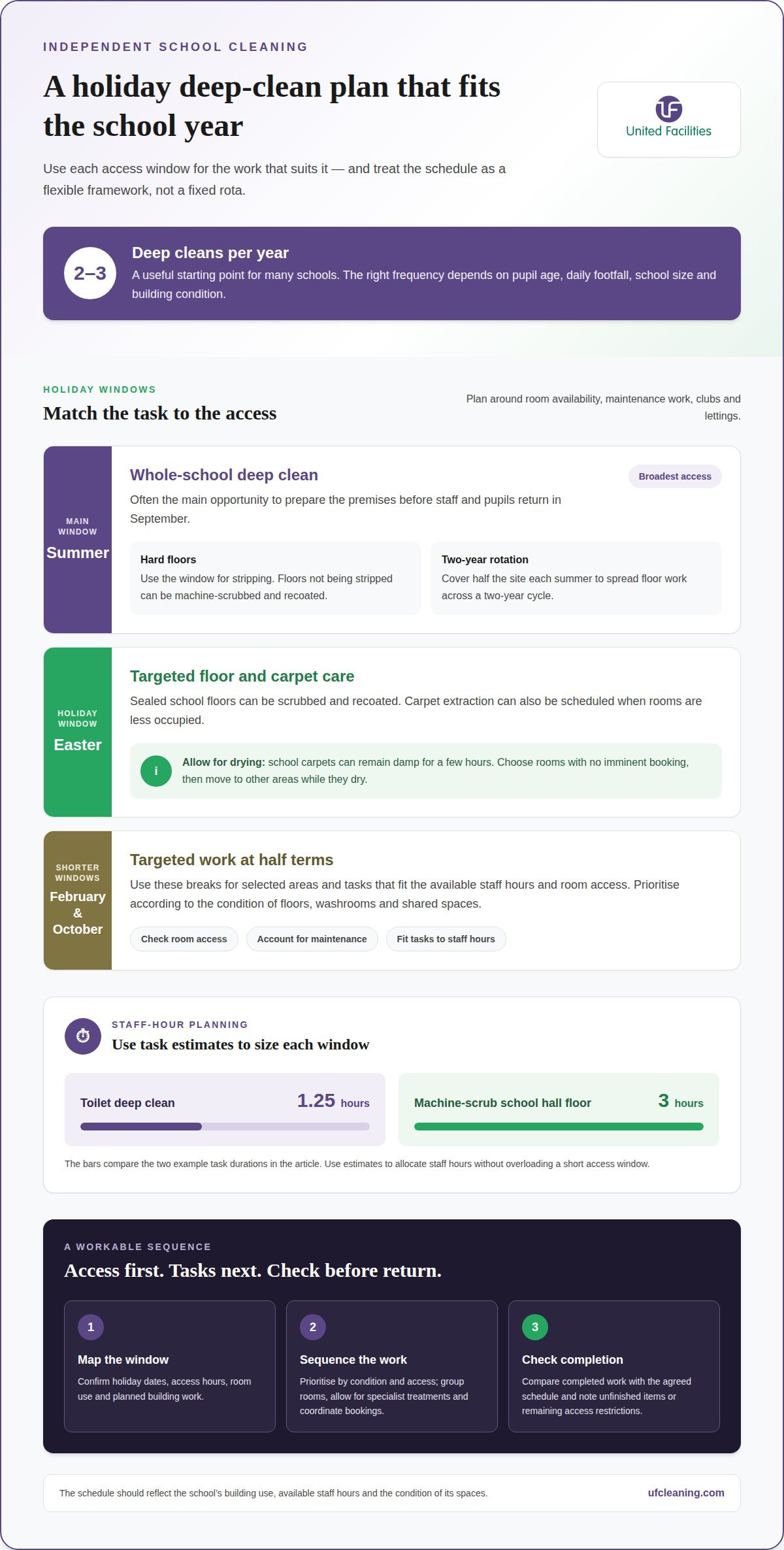
Two or three deep cleans a year can be a useful starting point for an independent school, scheduled during holidays when rooms are accessible. An independent school deep cleaning holiday schedule often includes a whole-school clean in summer, with targeted work at Easter and the February and October half terms.
Treat this as a framework, not a fixed rota. Staff hours, building use and the condition of floors, washrooms and shared spaces all affect what can be completed in each window. Prioritise tasks, coordinate cleaning with school activities and choose a frequency that suits your site, so the premises are ready for staff and pupils to return.
Key Takeaways
- Prioritise areas by condition and access, then agree the cleaning order around school use and maintenance work.
- Match the task list to the staff hours available in each holiday window, allowing time for intensive floor and carpet treatments.
- Plan around clubs and lettings by coordinating room access and allowing cleaned carpets time to dry before spaces are used again.
- Set the deep-cleaning frequency according to the school’s size, pupil age, footfall and building condition, rather than relying on a fixed rota.
How do professional cleaners plan deep cleaning across school holidays?
Build the schedule around the school calendar, access and the needs of each space. Coordinate cleaning with maintenance, clubs and lettings so thorough work fits how the site is actually used.
Calendar-Led Holiday Planning
Summer, Easter and the February and October half terms can provide windows for periodic cleaning. Use summer for hard-floor stripping, while floors not being stripped can be machine-scrubbed and recoated. Sealed school floors can be scrubbed and recoated at Easter. A two-year rotation, covering half the site each summer, can spread out floor work. Carpet extraction can also be scheduled at Easter, when rooms are less occupied.
School-Specific Cleaning Schedules
Before work starts, professional cleaners identify priority areas, confirm access requirements, account for maintenance and agree the cleaning order. They coordinate with the school about holiday clubs and lettings, then sequence rooms around when each space is available. A toilet deep clean takes around 1.25 hours, while machine-scrubbing a school hall floor takes around 3 hours. These estimates help allocate staff hours and avoid overloading a short access window.
When comparing cleaning services, check that the written specification names each task, its frequency and who is responsible. UKHSA describes a comprehensive cleaning contract as having daily, weekly and periodic schedules with these details. Department for Education guidance includes quality standards, inspections, staff timekeeping, absence management, stock levels, equipment reporting and machinery maintenance in contract monitoring. These points help distinguish a specific service plan from general promises.
For health and safety, UKHSA says colour-coded cleaning equipment is good practice in schools, although it is not a legislative requirement. Match cleaning methods to each surface: floors, specialist finishes and sensitive equipment need appropriate treatment. Rushed or missed cleaning can leave bacteria and general build-up on shared surfaces, while a deep clean cannot eliminate illness. A detailed sequence gives cleaners time to cover high-use areas without overlooking less accessible facilities.
Holiday windows and available staff hours
Holiday access is useful only when the work fits the available staff hours. The summer break is often the main opportunity for a whole-school deep clean before staff and pupils return in September. Professional teams map the school’s holiday dates against planned building work and room use, then allocate staff hours to spaces that will be accessible.
Plan a practical task sequence for each access window. Group rooms by location, allow time for specialist floor or carpet work, and account for areas unavailable during maintenance. For example, schedule classrooms free from building work together, then clean a sports space used by a holiday club once its booking ends. The contract should specify annual cleaning weeks, access hours and periodic tasks beyond the term-time routine.
Staffing arrangements also shape the schedule. Set site-access and safeguarding requirements in the contract, identify who is responsible for each area and agree how absences are managed. Clear arrangements make allocated hours easier to coordinate and help prevent essential tasks being left uncovered.
Define tasks for staff rooms, offices and kitchens too. A holiday clean can include staff-room fridges and kitchen areas, as well as vacuuming sofas and soft seating. Schedule this work around maintenance access and room availability. For instance, clean an office after repairs are complete, rather than using staff hours before surfaces are ready.
Before pupils and staff return, check completed work against the agreed schedule. Department for Education guidance includes quality standards, daily inspections, staff timekeeping, absence management, stock levels, equipment reporting and machinery maintenance in contract monitoring. A final inspection can record unfinished items, confirm facilities are ready for use and identify access restrictions that still need resolving.
Can school cleaning take place around clubs, lettings or evening use?
Yes. Cleaning teams can sequence classrooms, dining areas and sports spaces around bookings, using room access and school activities to set the order.
Classroom and Shared-Area Cleaning
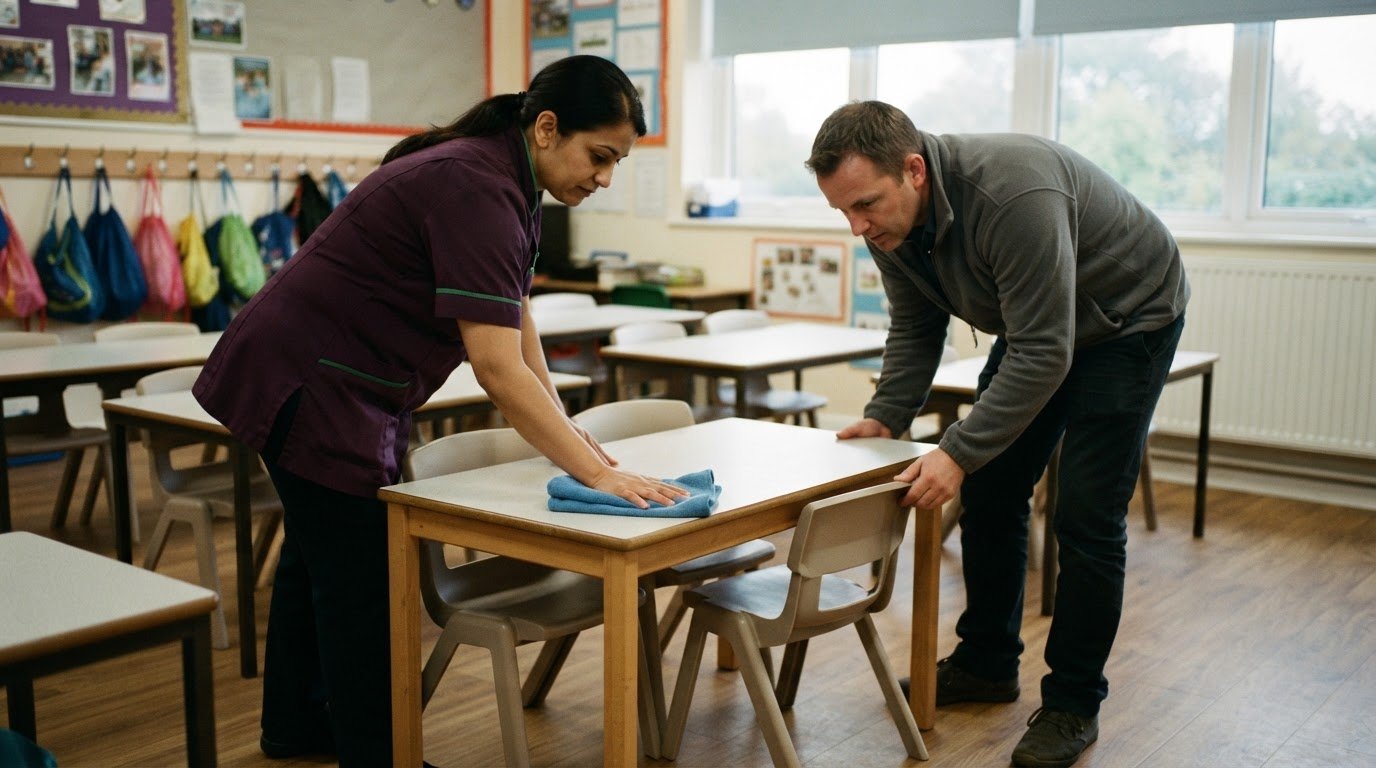
In classrooms, prioritise desks, chairs, storage units, doors, light switches and shared equipment. Moving furniture during the holiday exposes floor areas usually blocked during term time. Clean accessible surfaces and floors before returning furniture, and record each room against its task schedule.
Give dining halls a separate sequence for tables, shared touchpoints and floors, timed around meal service or holiday activities. In sports halls and gyms, clean equipment and shared surfaces, then schedule floor work when the space is clear. This allows the specification to reflect how each facility is used.
Reducing Disruption
To minimise disruption, professional cleaners coordinate the room plan with clubs, lettings, maintenance work and school access arrangements. They can clean available classrooms first, then move into a hall after its booking ends. A named contact and agreed cleaning order help prevent teams entering occupied spaces or duplicating work.
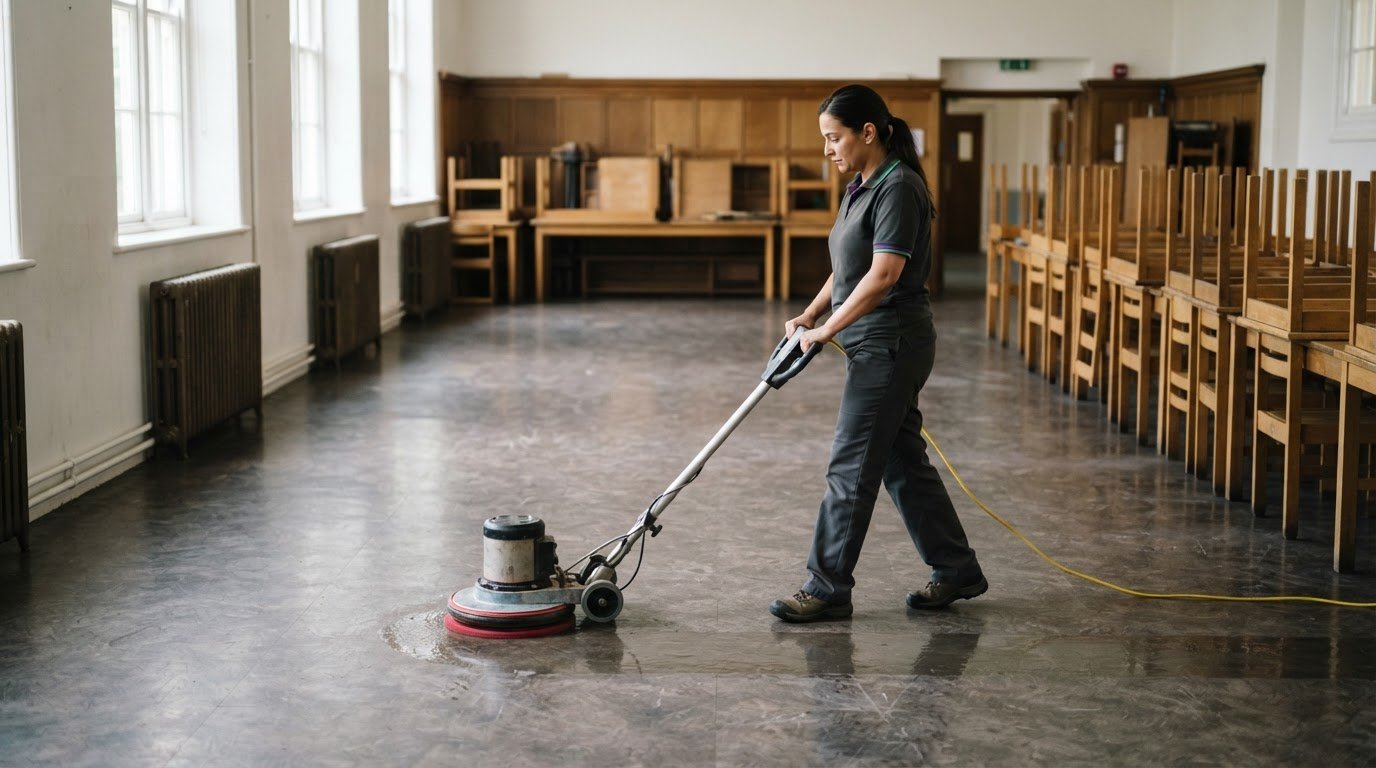
Allow for drying time after carpet extraction: school carpets can remain damp for a few hours. Schedule carpet work in rooms with no imminent booking, then move to other areas while the carpets dry. Fit hard-floor scrubbing or polishing into clear access windows, keeping routes used by students and visitors available where possible.
Separate high-use shared areas from rooms with flexible access. For example, clean classrooms while a club uses the sports hall, then clean the hall once it is vacant. Record room access, bookings and task completion so school staff can see which facilities are ready to use.
Deep-cleaning frequency during school holidays
For many UK schools, two or three deep cleans per year can be a practical starting point. The right frequency depends on pupil age, daily footfall, school size and building condition. An independent school deep cleaning holiday schedule should prioritise spaces showing the greatest wear: a busy dining area may need more targeted attention than a lightly used classroom.
Some schools schedule one deep clean during the summer break; others include work in every school holiday. These approaches suit different sites and do not define a single required frequency. The Department for Education says a whole-school deep clean may take place during summer where the site needs that level of work. Use summer for broader tasks, then reserve shorter holiday windows for priority areas.
Match each task to the access and drying time it needs. Carpet cleaning is best scheduled during holidays because it takes time and carpets can remain damp afterwards. Floor stripping and polishing, machine scrubbing and high-level cleaning also suit periods when rooms are less occupied. Include windows in the periodic plan, sequencing the work around access and maintenance.
Daily cleaning remains important between deeper treatments. School toilets, dining halls and door handles are daily priorities, while desks, shared equipment and hard-to-reach spaces can receive more intensive attention during a holiday clean. This helps teams use limited holiday hours on work that term-time routines may not fully address. Review the frequency when building condition or room use changes, rather than automatically repeating the previous rota.
As a clear starting point, plan a summer whole-school clean where site needs justify it, then add targeted holiday cleans according to use and condition. Arrange an education cleaning schedule that aligns periodic tasks with your school’s access windows.
UF Cleaning
UF Cleaning provides education cleaning to help schools plan work around their calendar, access arrangements and priority areas. Once the required frequency and holiday windows are clear, a tailored schedule can set out which spaces need attention and how cleaning fits alongside school use. This is particularly useful when the site includes several buildings or when maintenance, clubs and lettings affect room access. A clear plan helps align the agreed tasks with available hours, while keeping the school’s priorities central. If you’re arranging holiday cleaning for an independent school, contact UF Cleaning to discuss a schedule suited to your premises and requirements.
Set your next cleaning plan in motion
A school cleaning plan works best as part of the wider site calendar, not as an isolated task. An independent school deep cleaning holiday schedule gives facilities teams a practical framework for coordinating access, maintenance and room use as plans change. Keep the cleaning specification aligned with those decisions to make priorities clear and give the cleaning team a defined scope.
Before the next holiday window, bring together the site timetable, planned building work and spaces with restricted access. This provides a practical starting point and helps identify where professional support can make planning easier. UF Cleaning provides education cleaning, alongside services including Office Cleaning London, Housekeeping and Hotel Management.
Contact UF Cleaning to plan your schedule, and take the next step towards a cleaning programme shaped around your school’s needs.
Frequently Asked Questions
How much time should be allowed for a school deep clean?
Allow time by task and area rather than assigning one duration to the whole site. Indicative planning figures are around 1.25 hours for a school toilet deep clean and around 3 hours to machine-scrub a school hall floor. These are task allowances, not complete site durations; the total also depends on room access, surface condition, furniture moves and how many areas teams can clean concurrently.
What does a holiday deep clean cover?
A holiday deep clean can address areas routine cleaning may not fully reach, including high-level dust, gum or ink marks, and build-up on less accessible surfaces. The scope can also include carpet extraction, floor treatments and detailed cleaning of shared facilities. For example, prioritise marked classroom surfaces and high-level dusting in one block, then schedule deeper floor care elsewhere.
How often should classrooms, toilets, kitchens and sports facilities be deep cleaned?
Set cleaning frequency according to use and condition, while maintaining routine cleaning between periodic treatments. Daily priorities include school toilets and dining halls; science labs, sports halls and staff rooms are weekly priorities, while air vents are a termly priority. These routines do not replace deeper holiday work. Higher footfall, younger pupils or visible build-up may call for more targeted attention in particular spaces.
What should a professional independent school holiday deep-clean checklist include?
For each area, record the task, room, access window and completion, with a way to note snags or restricted access. A checklist entry, for example, can identify a classroom needing high-level dusting and whether furniture must be moved. Include maintenance coordination and cleaning order so teams can track what is ready, what remains and what needs follow-up before reopening.
How long does a professional school deep clean take, and how is the schedule planned?
A whole-school clean has no set duration: building size, condition, task scope and access determine the workload. Break the work into areas and sequence tasks around holiday bookings and maintenance. Allow for drying time after carpet cleaning and identify where teams can work at the same time. This creates a site-specific schedule rather than assuming every school needs the same amount of time.