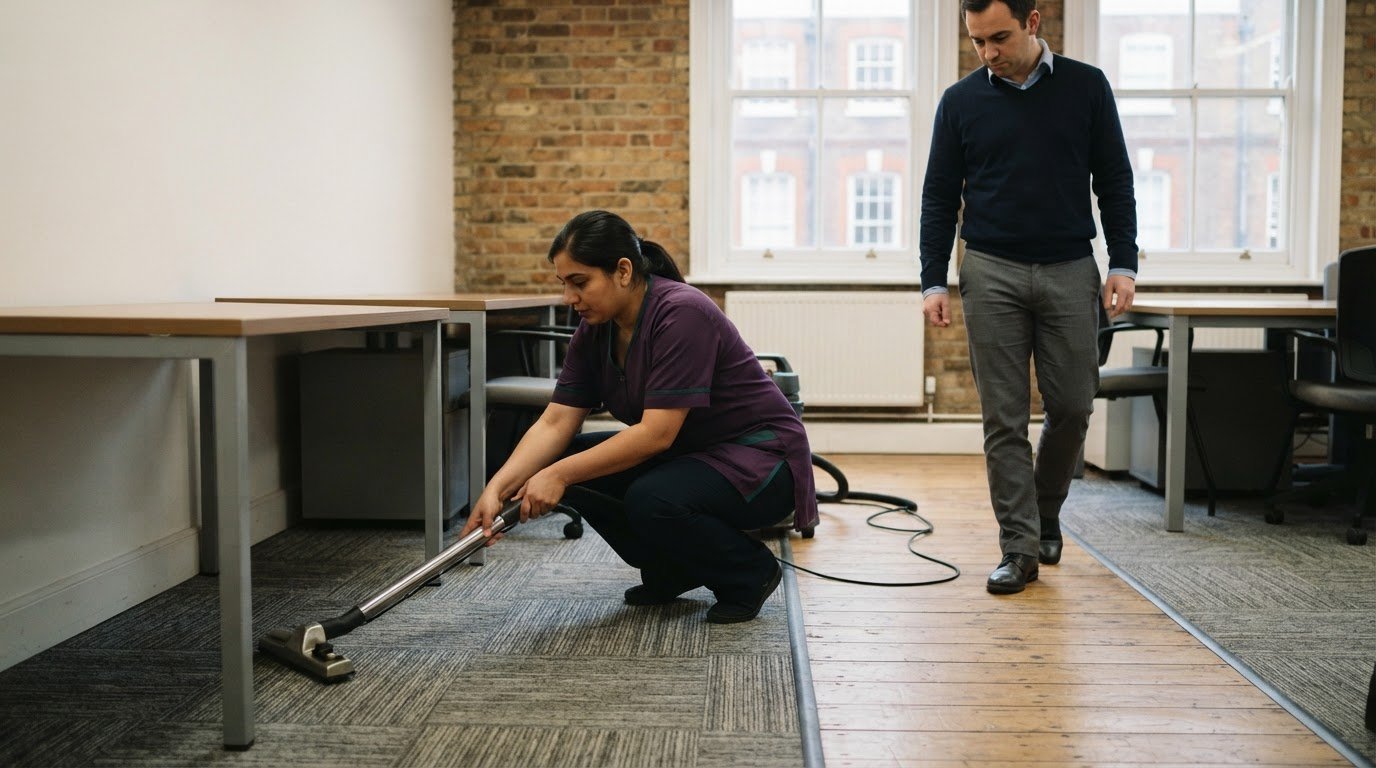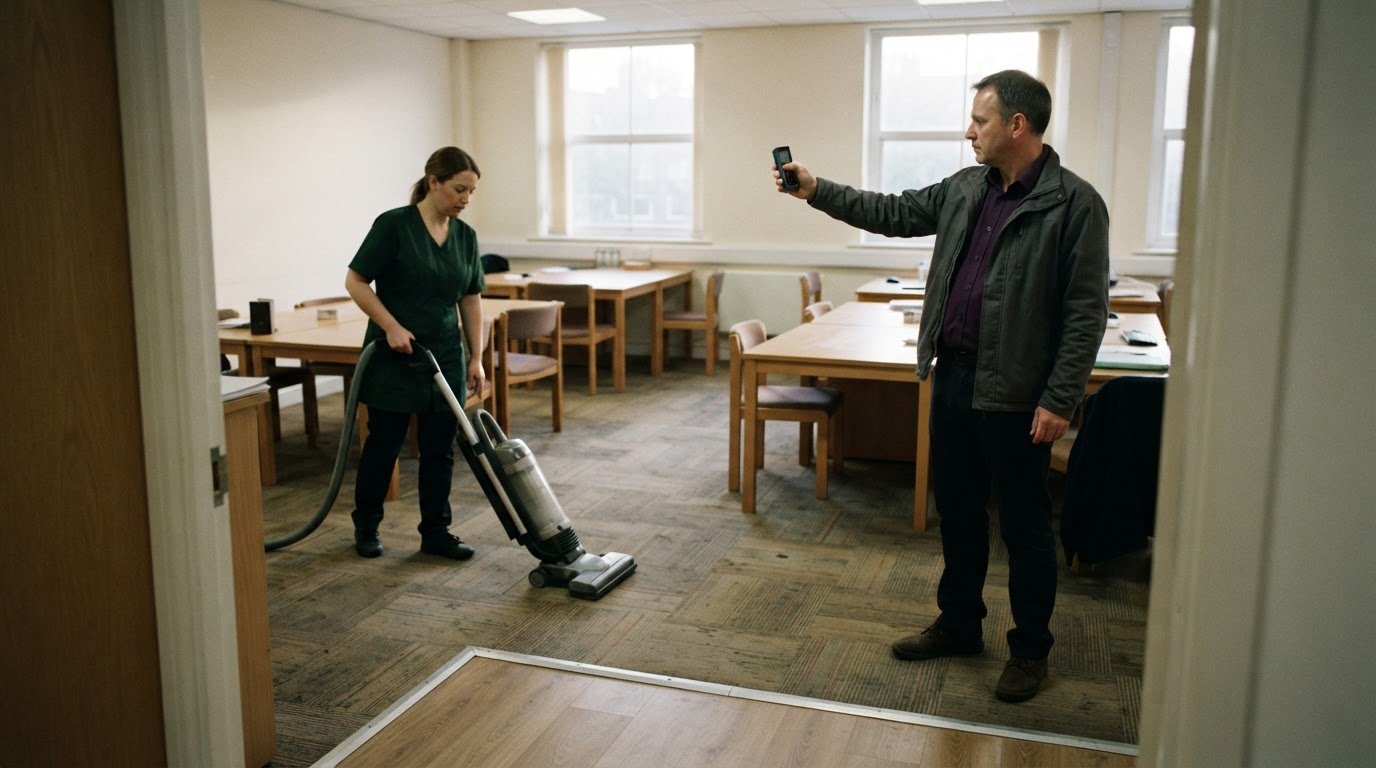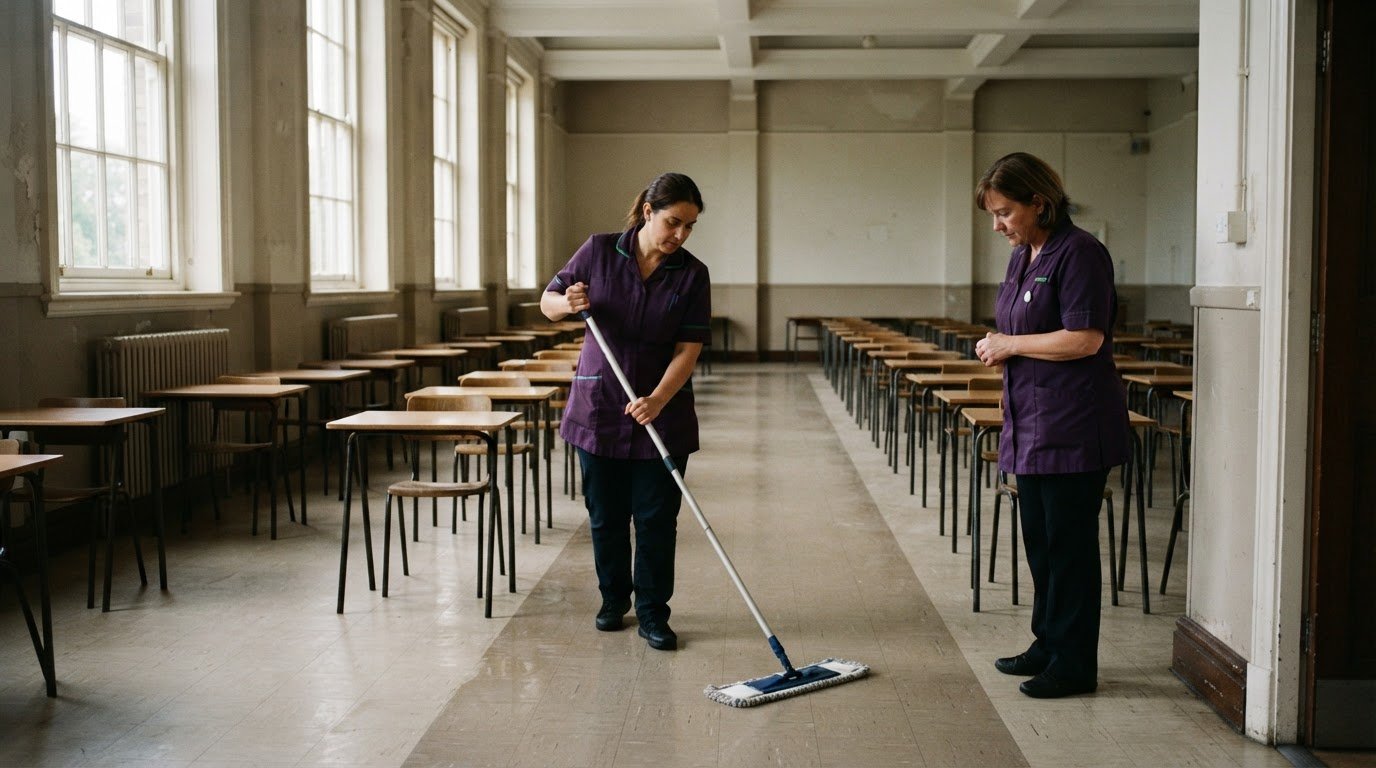
A campus cleaning plan is only as dependable as its ability to adapt to the academic calendar. Meeting university campus cleaning contractor requirements means assessing staff training and continuity, site-specific risks, quality checks and schedules that accommodate examinations, events and university breaks. The right approach maintains cleanliness without disrupting campus activities.
Universities need consistent cleaning, but requirements vary with building use, footfall and the rhythm of term time. A plan that accounts for these differences can maintain teaching spaces, residences and shared facilities while adapting to changing campus priorities.
This article explains what to assess when appointing a campus cleaning contractor, from operative training and measurable quality checks to risk assessments and scheduling. It also covers adapting cleaning programmes for exams, ceremonies, events and holiday periods, helping you decide what service your university needs.
Key Takeaways
- Assess how a contractor trains and vets operatives, and how consistent staffing supports secure, reliable campus cleaning.
- Look for quality reporting that records inspection results, identifies recurring issues and tracks corrective actions through to completion.
- Expect risk assessments and method statements to reflect the actual buildings, access arrangements, surfaces and activities on campus.
- Plan cleaning around the academic calendar, with schedules adapted for examinations, events, quieter breaks and deeper-cleaning needs.
Operative training, vetting and staff continuity
University campus cleaning contractor requirements should link staff competence, controlled access and service continuity to each building’s use. Tender criteria can also define environmental standards, staffing cover, service hours and how bids will be evaluated.
Staff induction and TUPE transition
During a TUPE transition, a structured handover helps preserve site knowledge and daily routines. Induction should cover building access, cleaning schedules, reporting routes and restricted areas, including research facilities. A dedicated supervisor can help new and transferring staff understand local procedures and maintain continuity across facilities.
The service specification should distinguish contractor duties from occupant responsibilities. For example, it can assign cleaning for lecture theatres, accommodation, dining halls and shared study areas, and explain how staff report missed tasks. Universities can assess tenders against this defined scope, proposed staffing and delivery plan, then record the reasons for their award decision. This makes evaluation criteria clear before work begins.
Vetting and safeguarding checks
Vetting should reflect campus security, safeguarding needs and the access required for each role. Enhanced checks may be appropriate where security, safeguarding or controlled access requires them. For example, cleaners entering research facilities can be restricted to approved areas, with local procedures explained before work begins.
At the University of Warwick, applicants selected for interview for a campus cleaning role are asked to bring details of two referees, including email addresses. After a successful interview, details of an applicant’s unspent conviction are reviewed to decide whether the application progresses.
Training and supervision
University campus cleaning contractor requirements should match training to assigned buildings and tasks. University of Exeter cleaning staff renew their qualifications every three years. Biological-agent facilities may require relevant biosafety-level training, from BSL 1 to BSL 4. Supervision should reinforce site procedures and provide a clear reporting route.
Staffing levels and service hours depend on building use and footfall. Teaching rooms typically require daily cleaning; libraries, residences and communal areas may need multiple cleans per day. Schedules can include early-morning, evening or overnight work. Tender documents can set out environmental expectations, service coverage, and how training and supervision will be assessed.
Quality reporting, audits and measurable checks
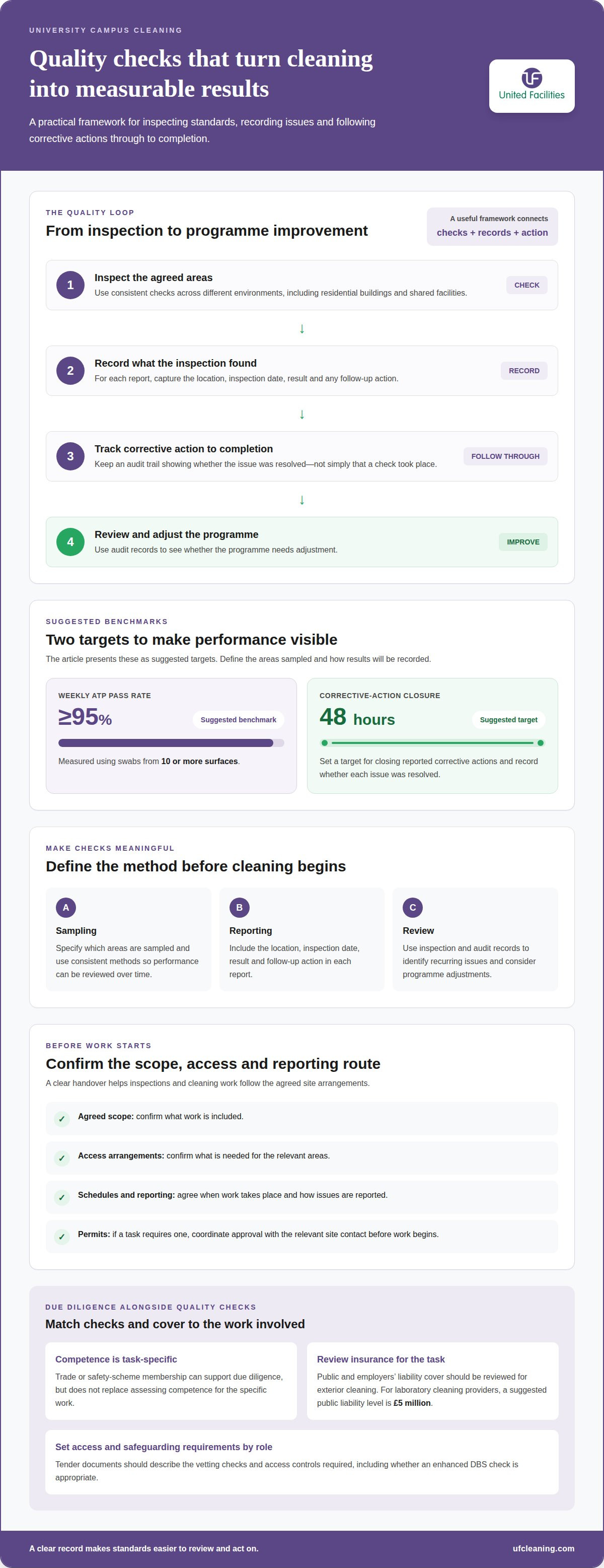
A useful quality framework links inspection results to the cleaning programme, schedules and corrective action. It should show whether standards are maintained across different environments, including residential buildings and shared facilities.
One suggested benchmark is a weekly ATP pass rate of at least 95 per cent, measured using swabs from 10 or more surfaces. This offers a measurable check alongside visual inspections, but the contract should define which areas are sampled and how results are recorded. Consistent methods make performance easier to review over time.
Reports should identify the location, inspection date, result and any follow-up action. A suggested target is to close corrective actions within 48 hours. Audit records can then show whether the issue was resolved and whether the programme needs adjustment, rather than simply recording that a check took place.
Before work starts, a handover should confirm the agreed scope, access arrangements, schedules and reporting route. If a task requires a permit, the start-up process should coordinate approval with the relevant site contact. For example, a team entering a restricted teaching or research area needs the correct access arrangements before beginning work.
Trade or safety-scheme membership can support due diligence, but it does not replace assessment of competence for the specific work. Insurance checks also need to match the task: public and employers’ liability cover should be reviewed for exterior cleaning. For laboratory cleaning providers, a suggested public liability level is £5 million. Enhanced safeguarding or controlled access may call for vetting checks; tender documents should set out the checks and access controls required for each role, including whether an enhanced DBS check is appropriate.
Clear reporting and properly scoped checks help universities manage a complex cleaning programme. Education cleaning support can help align service delivery with the needs of campus facilities.
Site-specific risk assessments and method statements
Lecture rooms, residences, laboratories and sports facilities need protocols tailored to their use; healthcare areas require procedures suited to their specific risks. Contractors should assess each location and explain how equipment, chemicals and access arrangements are controlled.
Risks often arise when generic assessments miss nearby activities, changing conditions or safe access. UK Government says exterior cleaning contractors should understand the Health and Safety at Work etc. Act 1974; other requirements depend on the work involved.
Site-specific risk assessments
A risk assessment and method statement should identify the buildings, surfaces, access routes, operating hours and nearby activities. A plan for a busy lecture theatre, for example, should account for student movement and cleaning times. The safest practical approach to working at height is to avoid it where possible, then prioritise collective fall prevention before personal fall protection.
Review the assessment if the work area, method or conditions change. This keeps inspection procedures and control measures aligned with the actual site.
COSHH and hazardous-material procedures
According to UK Government, UK laboratory cleaning providers must account for the COSHH Regulations 2002 when assessing hazardous substances. A COSHH assessment should cover detergents, biocides, solvents and graffiti removers, alongside storage, use and disposal procedures.
For laboratory work, protocols should reflect the substances and activities in each space. The contractor’s method statement should explain how operatives identify hazards, follow local instructions and report spills or unexpected materials. Waste segregation and handover routes should also be defined for the site, not left ambiguous.
Chemicals and PPE
Where practicable, substitute a hazardous product or choose safer access arrangements; PPE is a final control, not a replacement. Depending on the project, exterior cleaning may also involve the Work at Height Regulations, COSHH, PUWER or the Personal Protective Equipment at Work Regulations.
Where BICSc training is specified, assess staff against the relevant task and site protocols. Confirm they can select equipment, follow chemical instructions and use PPE appropriately. A generic method statement can overlook hazards near active teaching spaces, research equipment or changing access routes, creating avoidable risks and inconsistent work.
Cleaning during examinations, events and university breaks
A university cleaning programme needs to respond to the academic calendar, not just routine building use. Examination periods, graduation ceremonies and campus events can each call for adjusted schedules and priorities.
During examinations, cleaning teams can coordinate work around room bookings and student movement. The programme should identify which areas need attention, when rooms become available and how standards will be maintained without interrupting assessments. For example, a lecture theatre used for exams may need a different cleaning window from a study area that remains in use. Clear scheduling helps teams deliver consistent professional cleaning while respecting activities in each building.
Graduation ceremonies and other events can change footfall across campus, including in halls, reception spaces and shared facilities. A practical plan maps event spaces and the cleaning tasks required before and after use. Event organisers and cleaning supervisors can agree access arrangements and priorities in advance, then adapt the schedule if room use changes. This keeps event preparation distinct from routine cleaning in laboratories, teaching buildings and accommodation.
University breaks create a different opportunity. Cleaning plans can include deep cleaning during summer recess, winter breaks and refurbishment periods. The contractor can sequence work based on which buildings are available, planned refurbishment activity and the condition of each space. For example, an unoccupied teaching building may be scheduled for deeper cleaning while residential accommodation remains in use. The agreed programme should clarify which areas are accessible and which tasks take priority.
The key is a calendar-led plan with defined changes for exams, ceremonies, events and breaks. It should connect building access, room use and cleaning priorities, rather than assume every week follows the same routine. This gives university teams a clear basis for coordinating professional cleaning as campus requirements change.
For a cleaning programme shaped around campus events and changing schedules, discuss event and venue cleaning.
UF Cleaning
UF Cleaning helps organisations plan cleaning arrangements around the needs of their buildings and facilities. For a university, this means translating priorities such as consistent standards, changing schedules and site-specific requirements into a tailored service plan.
Its commercial services include Office Cleaning London, Housekeeping, Hotel Management and Office Hard Floor Cleaning. Flexible schedules and real-time quality controls support service delivery across different workplace and facilities needs.
If your university is assessing its cleaning requirements, contact UF Cleaning to discuss a tailored service plan.
Turn your requirements into a practical next step
A considered cleaning partnership starts with a clear service brief built around campus priorities. Set out which buildings matter most, how academic and event schedules affect access, and what information will help you review delivery. This gives discussions a practical focus and aligns expectations before arrangements are made.
UF Cleaning offers Office Cleaning London, Housekeeping and Hotel Management, with cleaning plans tailored to operational needs. As you refine university campus cleaning contractor requirements for your setting, these services offer relevant experience in organising professional cleaning around different facilities and schedules.
A productive first conversation can clarify your campus priorities, the spaces involved and the way schedules affect service delivery. Contact UF Cleaning about campus cleaning to discuss the support your university needs. A clear brief is a constructive first step towards a well-organised cleaning programme.
Frequently Asked Questions
What qualifications, accreditations and experience must university cleaning contractors have in the UK?
Requirements depend on the contract’s scope, site risks and tender criteria; there is no single qualification set for every campus. Look for evidence that training matches the assigned work, such as specialist preparation for laboratory environments. Accreditations can support due diligence, but they do not replace assessing competence for the specific tasks, buildings and operating conditions in the contract.
What safeguarding, DBS checks and access-control requirements apply to cleaners on university campuses?
DBS and other vetting requirements should reflect the role, safeguarding needs and areas staff can enter, rather than being assumed identical for every operative. For example, a contract may set tighter access arrangements for staff working near controlled research facilities than for those cleaning public spaces. Tender documents should clarify required checks, how permissions are assigned, and how access changes when staff or duties change.
What service-level agreements and performance measures are used in university cleaning contracts?
Service-level agreements usually translate university requirements into measurable scope, reporting and escalation arrangements. They can specify which spaces are covered, how inspections are recorded, how complaints are logged and who follows up on missed tasks. For example, tracking a reported issue from the affected building through to resolution helps contract reviews identify recurring problems and adjust priorities without relying on informal feedback alone.
What insurance, liability and business-continuity requirements apply to university cleaning contractors?
Insurance requirements should reflect the contract’s activities and risks; public and employers’ liability cover are relevant due-diligence checks. Business-continuity provisions can explain how the contractor communicates service disruption, maintains priority tasks and arranges cover when staffing or access is affected. For instance, the agreement can identify who authorises a revised schedule during a building closure and how essential areas are prioritised.