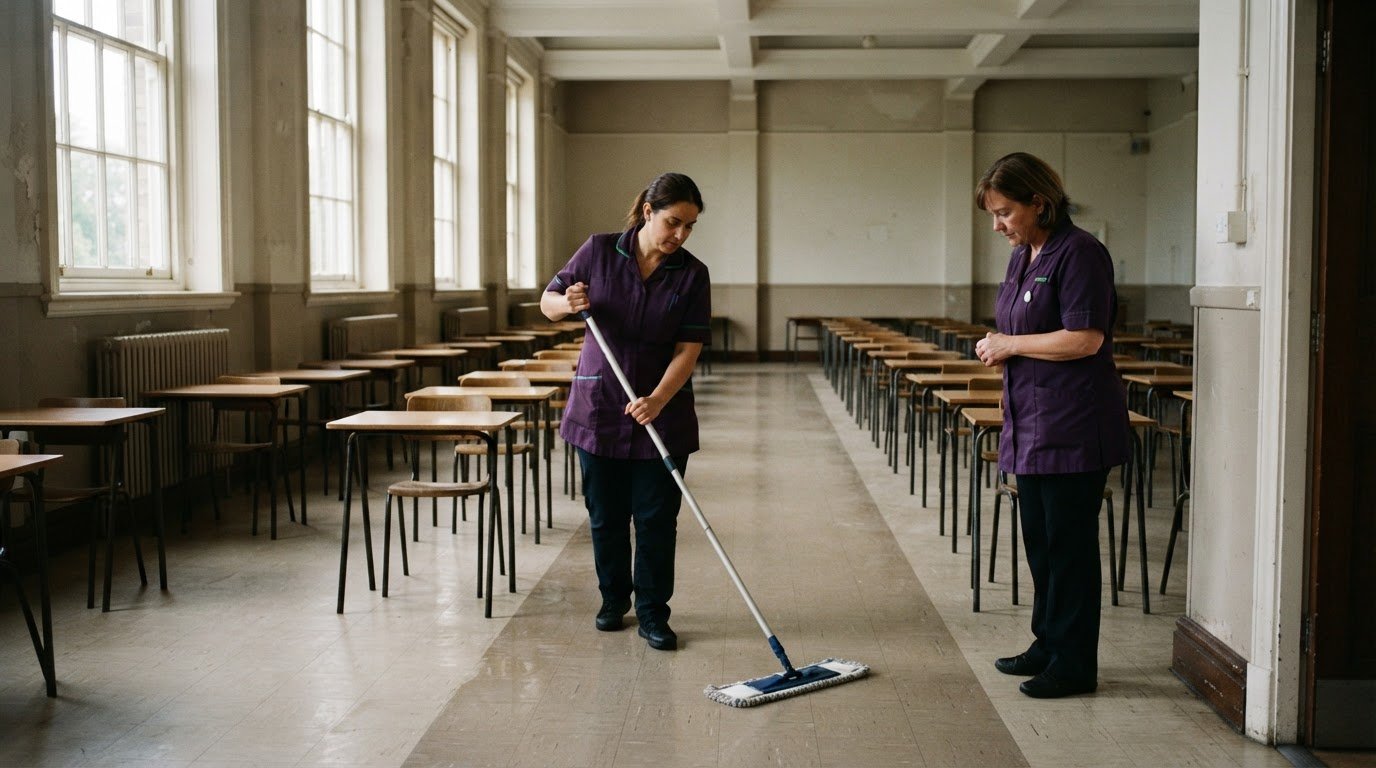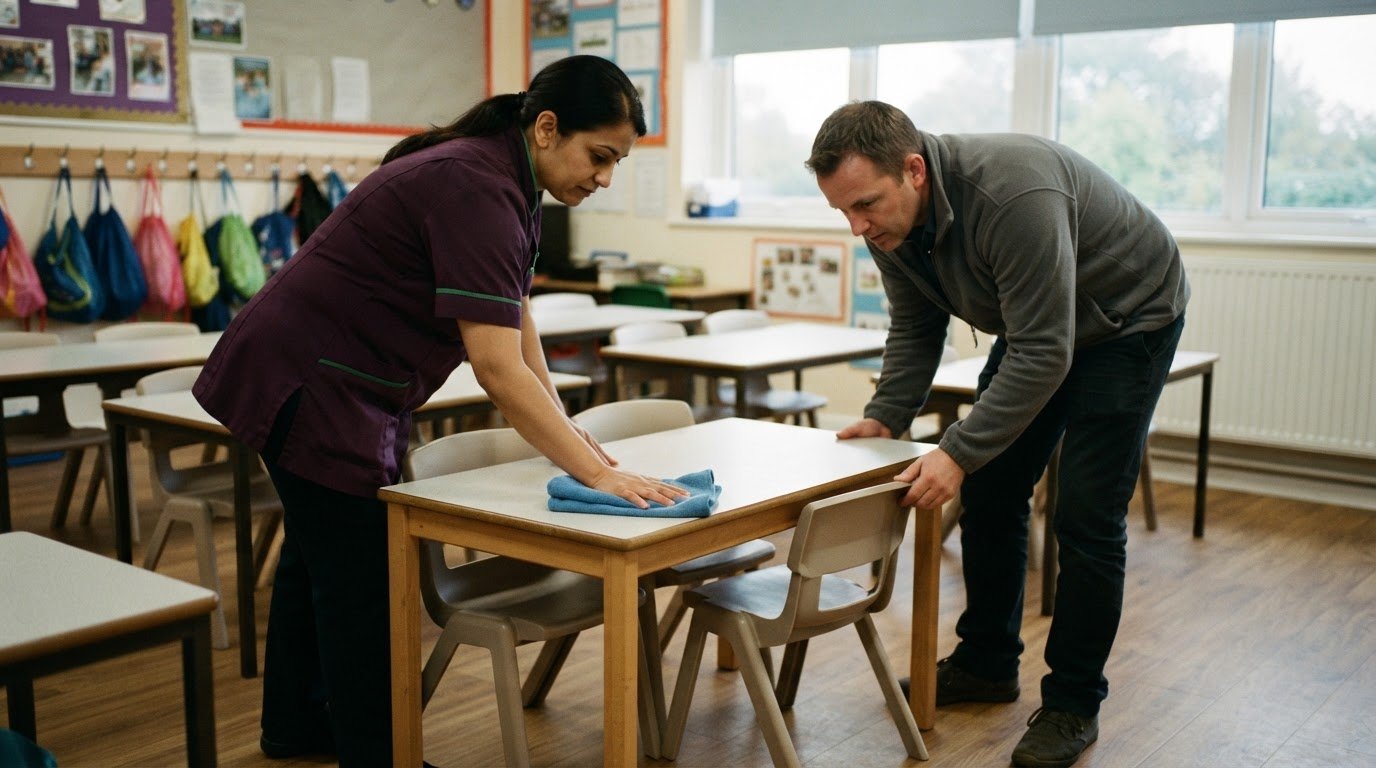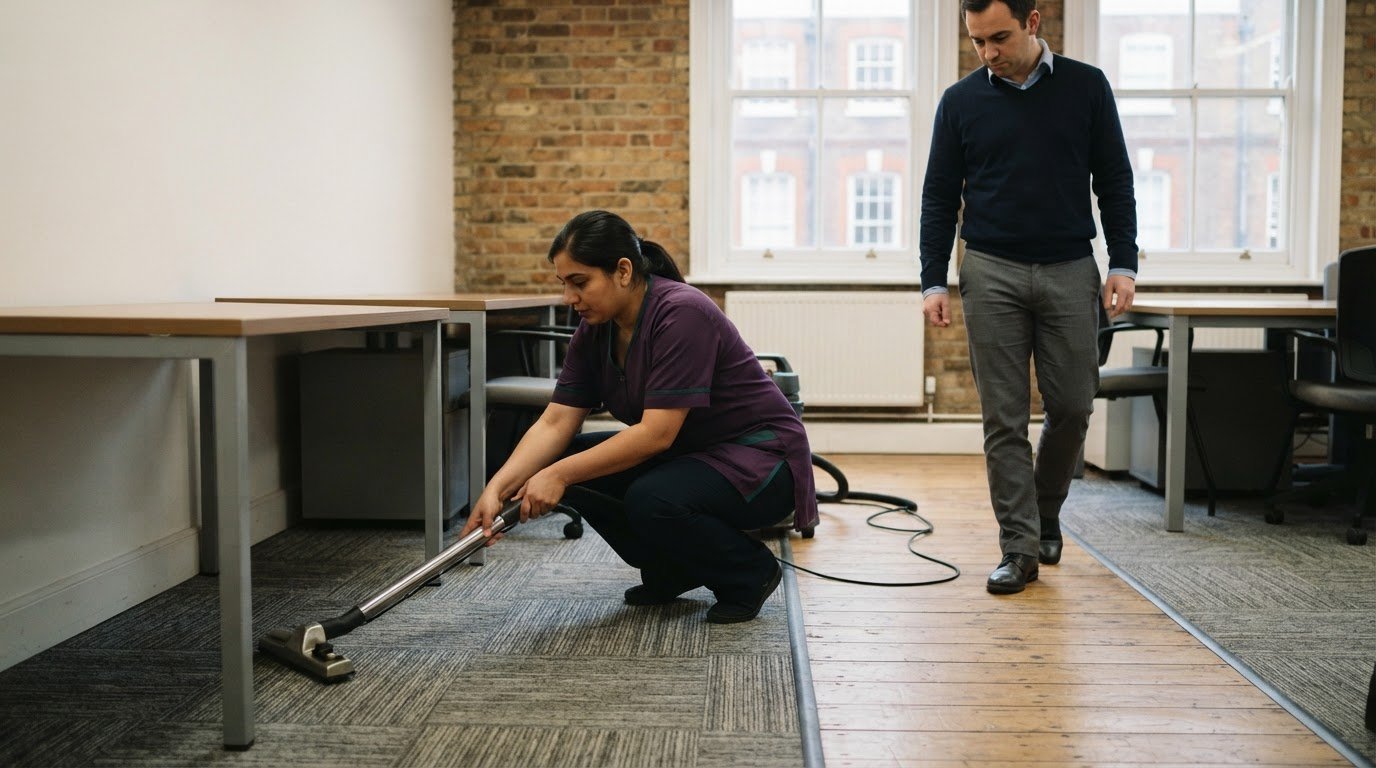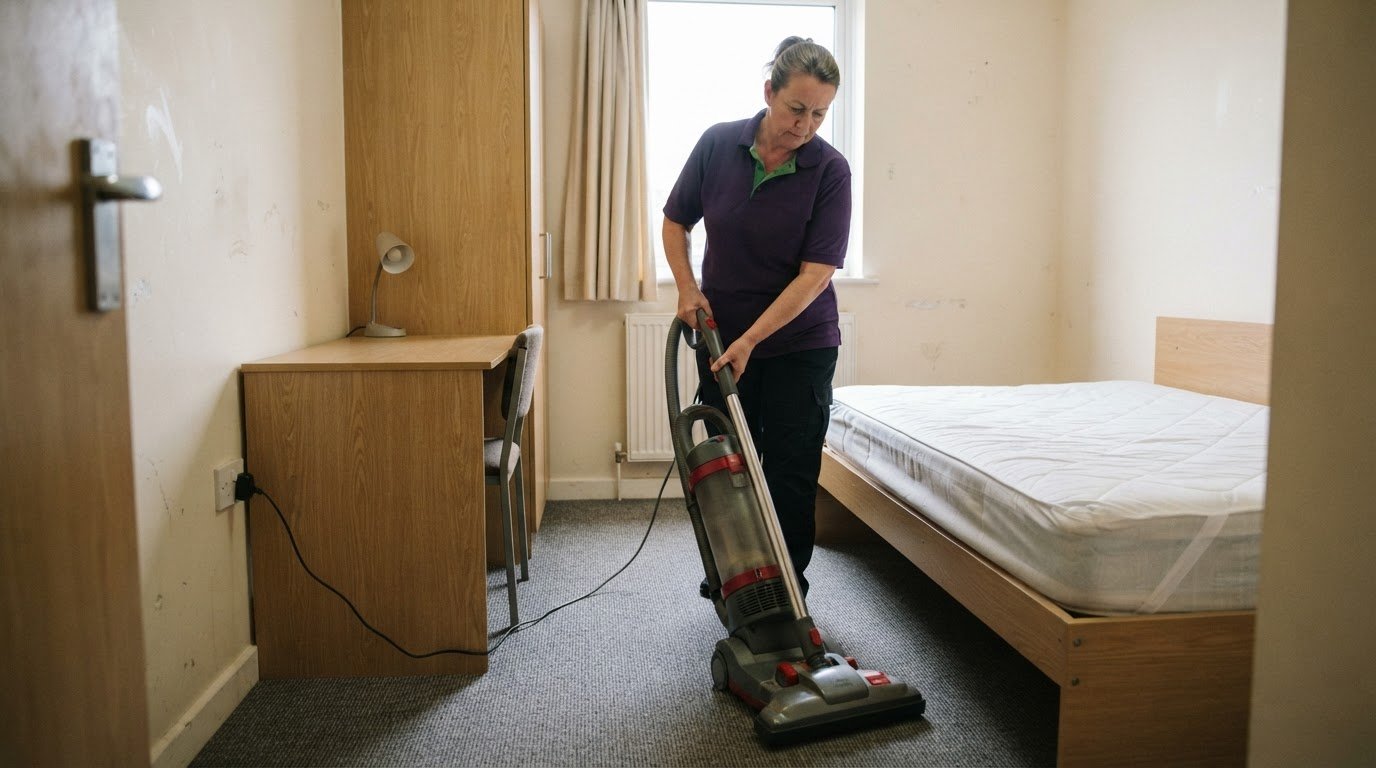
Clean floors are a key part of a student accommodation turnaround cleaning checklist. Cover bedrooms, bathrooms, shared kitchens, common areas and floors, including thorough carpet vacuuming and suitable hard-floor cleaning. Include surfaces, appliances, bathroom fittings and high-touch points that can be missed when time is tight.
Planning a student accommodation turnaround? A welcoming room needs more than a quick surface refresh: each space calls for attention suited to its condition and use. A clear checklist keeps tasks consistent from bedrooms to shared kitchens and ensures floors receive the right care.
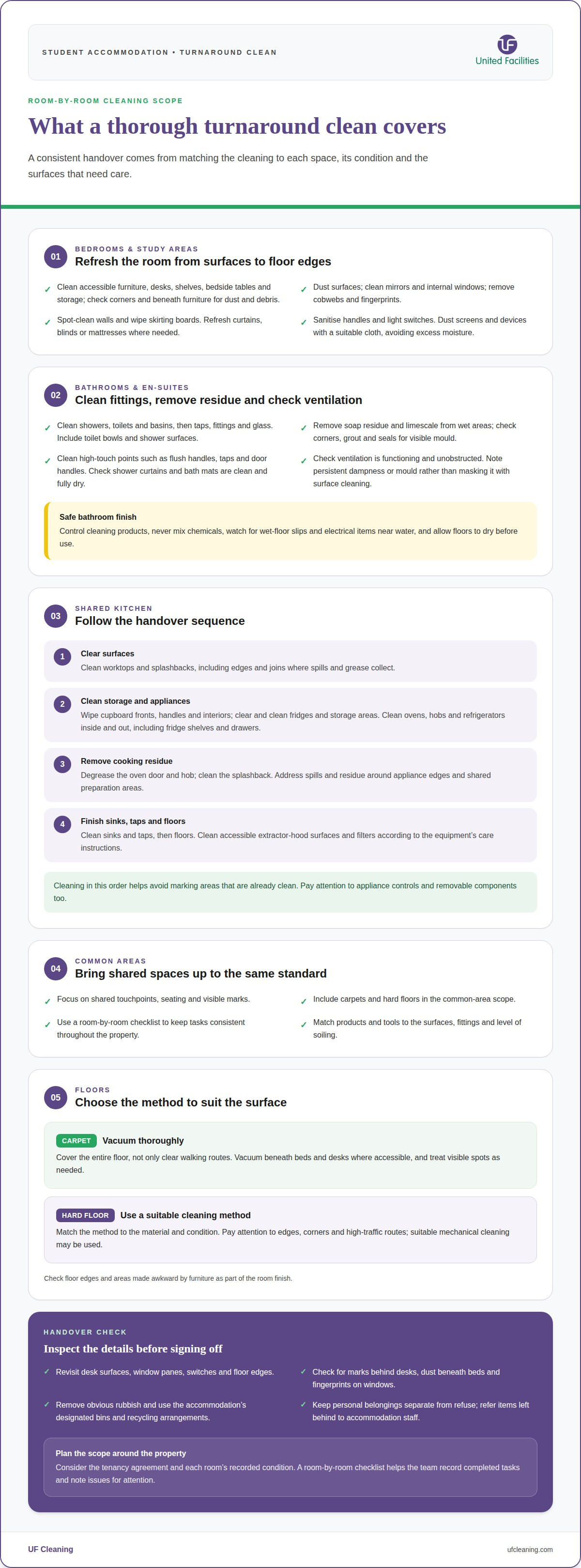
This guide sets out what a professional turnaround clean can include, from refreshing bedrooms and removing bathroom residue to cleaning kitchen appliances, common areas, carpets and hard floors. It also explains how to organise the work and what affects its scope, helping you plan the handover.
Key Takeaways
- Plan the handover around the condition of bedrooms, bathrooms and shared areas, and refresh curtains, blinds or mattresses where needed.
- Include worktops, appliances, cupboards, sinks and floors in the shared kitchen clean, with attention to food residue and grease.
- Bring bedrooms up to a consistent standard by addressing dust, mirrors, windows, high-touch points and areas beneath furniture.
- Match floor care to the surface: carpets may need thorough vacuuming and spot treatment, while hard floors benefit from suitable mechanical cleaning. The Renters’ Rights Act 2025 was implemented on 1st May 2026, according to UK legislation register.
Deep cleaning bedrooms, bathrooms, kitchens and common areas
The Renters’ Rights Act 2025 was implemented on 1st May 2026, according to UK legislation register. Plan the handover around the tenancy agreement and each room’s recorded condition.
Bedroom and Common-Area Deep Cleaning
In bedrooms, clean accessible furniture, storage, curtains, blinds and mattresses, refreshing items where needed. Dust surfaces, clean mirrors and internal windows, remove cobwebs, and spot-clean walls and skirting boards. In common areas, focus on shared touchpoints, seating and visible marks. A room-by-room checklist keeps the same tasks in scope throughout the property.
Bathroom and En-Suite Cleaning
In shared bathrooms, shower rooms and en-suites, clean showers, toilets and basins, followed by taps, fittings and glass. Remove soap residue and limescale from wet areas, and check corners, grout and seals for visible mould. Check that ventilation is functioning and unobstructed. These steps make the clean more thorough than a quick wipe of exposed surfaces.
Bathroom Sanitation and Ventilation
Clean high-touch points such as flush handles, taps and door handles, as well as toilet bowls, basins and shower surfaces. Address visible mould, and use ventilation to help limit lingering moisture after cleaning. Note persistent dampness or mould rather than masking it with surface cleaning. Check shower curtains and bath mats too, including whether they are clean and fully dry.
The right supplies and equipment depend on the room and level of soiling. Cleaning may require suitable agents, cloths, brushes, a vacuum and floor-care equipment; match products and tools to the surfaces and fittings being cleaned.
During a turnaround, watch for wet-floor slip hazards, chemical exposure, electrical items near water and visible mould. Keep products controlled, never mix chemicals, and allow bathroom floors to dry before use.
Deep cleaning shared kitchen surfaces and appliances
A thorough kitchen turnaround covers worktops, splashbacks, cupboards, appliances, sinks, taps and floors. The sequence should remove visible residue from food preparation and leave shared surfaces ready for incoming residents.
Shared Kitchen Surfaces
Start with worktops and splashbacks, where spills and grease collect around edges and joins. Clean cupboard fronts, handles and storage interiors, especially where crumbs or marks remain. Clear and clean fridges and storage areas, then finish sinks, taps and floors. This gives the communal kitchen a consistent clean instead of focusing only on the most visible surfaces.
Kitchen Appliances and Extraction
Clean ovens, hobs and refrigerators inside and out. Degrease the oven door and hob surface, and clean the splashback to remove cooking residue. Clean fridge shelves and drawers before restocking. Accessible extractor-hood surfaces and filters can also be cleaned according to the equipment’s care instructions. Pay attention to each appliance’s surfaces, controls and removable components.
For an orderly handover, follow a defined kitchen sequence: clear surfaces, clean storage and appliances, then finish the sinks, taps and floors. This avoids marking areas that are already clean. Address food spills and residue around appliance edges, cupboard handles and shared preparation areas, not just the centre of each worktop.
In summer, when a property is being prepared for incoming residents, a room-by-room scope helps keep shared kitchens aligned with the wider turnaround. A professional education cleaning service can include these communal areas within a planned clean.
Bedroom surfaces, mirrors, windows and floors
A room-by-room sequence helps keep bedrooms and study areas consistent during a student handover. Clean desks, shelves, bedside tables and other accessible furniture, then check corners and spaces beneath furniture for dust and debris.
Leave bedroom surfaces dust-free, and clean mirrors and internal windows to remove fingerprints and marks. Remove cobwebs, spot-clean walls and wipe skirting boards. Sanitise handles and light switches as high-touch points. Carefully dust screens and devices such as laptops, televisions and game consoles with a suitable cloth, avoiding excess moisture.
Choose a floor-cleaning method to suit the material and its condition. Vacuum carpets thoroughly, including beneath beds and desks where accessible; treat visible spots as needed. Clean hard floors using a suitable method, paying attention to edges, corners and high-traffic routes. This helps maintain a consistent standard between bedrooms and nearby common areas, even where furniture makes access awkward.
During an academic-year changeover, room layouts and levels of use may vary. A checklist helps the cleaning team record completed tasks and note issues such as marks behind a desk, dust beneath a bed or fingerprints on a window. The final inspection should revisit these specific points, rather than relying on a quick look from the doorway.
For rubbish and recycling, remove obvious waste and use the accommodation’s designated bins and recycling arrangements. Keep personal belongings separate from refuse, and refer items left behind to accommodation staff rather than treating them as rubbish.
This approach prepares the room for incoming residents while keeping belongings separate from cleaning waste. Before signing off each room, check desk surfaces, window panes, switches and floor edges.
Carpet vacuuming and hard-floor cleaning
Floor care can make a visible difference during a student accommodation turnaround, but carpets and hard floors need different methods. A room-by-room plan helps the cleaning team prepare each space and check the finish before incoming residents arrive.
In carpeted bedrooms and common areas, vacuum the entire floor, not just clear walking routes. Move accessible furniture where practical and reach beneath beds, desks and chairs, where dust and debris collect. Pay particular attention to high-traffic areas, such as entrances and routes between beds and wardrobes. Treat visible marks as needed; occasional steam cleaning may suit carpets that need a deeper refresh.
Hard floors need a separate approach. Mechanical cleaning can remove accumulated soil from open areas, with careful attention to edges, corners and beneath accessible furniture. Choose a method suited to the surface to avoid residue or an uneven finish. Sinks and bathroom thresholds, shared kitchen entrances and communal corridors may need extra attention because residents pass through them frequently.
The sequence matters: finish dusting and cleaning furniture surfaces before vacuuming or washing floors, so settled debris is removed. Then inspect beneath beds, around furniture legs and along skirting boards. Apply the same standard in shared facilities as in individual rooms. This supports a consistent handover even when room layouts and flooring differ.
For accommodation teams preparing several rooms, a defined floor-care scope makes it easier to coordinate carpet and hard-floor work within the wider turnaround. Arrange professional floor cleaning as part of a considered plan for student facilities.
UF Cleaning
UF Cleaning helps accommodation teams plan consistent cleaning for student room turnarounds. When several bedrooms and shared spaces need attention before residents arrive, an agreed scope can coordinate the work across the property and prioritise areas such as bathrooms, kitchens and floors.
UF Cleaning’s Professional Housekeeping service supports teams maintaining clean, orderly accommodation. Cleaning plans reflect occupancy, access arrangements, floor types and the spaces that need the most attention. Agree the scope and standard for each area in the handover plan so accommodation teams can coordinate the turnaround.
If you are preparing student accommodation for a changeover, contact UF Cleaning to discuss your cleaning requirements.
Plan a smoother handover
A successful turnaround starts with a clear scope: which spaces need attention, their condition and when they must be ready. A student accommodation turnaround cleaning checklist gives accommodation teams a practical way to coordinate tasks and set priorities before residents arrive.
For larger properties, consistency across rooms matters as much as the finish in any one space. Agree expectations in advance to align cleaning tasks with the handover schedule and the accommodation team’s needs. UF Cleaning provides Professional Housekeeping and Hotel Housekeeping & Management Support, as well as School & Nursery Cleaning.
If you are planning a student accommodation handover and would like to discuss the cleaning scope, contact UF Cleaning to discuss your turnaround. A considered plan can help your team approach the changeover with clarity and prepare the accommodation for its next chapter.
Frequently Asked Questions
Planning your next student accommodation turnaround?
Set the handover date, access arrangements and rooms included, then agree which areas take priority. Record room condition and maintenance issues separately from cleaning tasks. For example, note a damaged fitting for the accommodation team rather than treating it as a cleaning defect. Setting the scope early helps coordinate the clean with residents’ arrival.
What should a professional student accommodation turnaround cleaning checklist include?
A student accommodation turnaround cleaning checklist should map tasks to each room and shared space, so completion can be reviewed consistently. Include bedroom furniture and storage, bathroom fittings, kitchen cupboards and appliances, shared touchpoints, and each floor type. Add fields for access restrictions, areas needing extra attention, and issues to report. This makes the document useful for allocating work and confirming the agreed scope.
Which rooms and surfaces need cleaning between student tenancies?
Include bedrooms, study areas, shared bathrooms, shower rooms, communal kitchens and lounges. Where accessible and empty, the scope can include bed frames, desk edges, door frames, window ledges and cupboard interiors. In circulation spaces, note entrances and corners where tracked-in dirt gathers. Keep cleaning tasks separate from repairs: record a loose handle or damaged surface rather than treating it as a cleaning issue.
How long does a student accommodation turnaround clean usually take?
A standard ensuite bedroom deep clean typically takes 4 to 6 hours. A whole-property turnaround takes longer, with the duration shaped by the number of rooms, their condition, access and the tasks required. A lightly used room with clear surfaces differs from one needing detailed work across furnishings and fittings. Allow time for a final inspection as well as the cleaning itself.
How can a professional cleaning checklist document condition and support a student accommodation inspection?
Use one record per room to note its condition, completed tasks and any issues needing follow-up. Clear descriptions, such as “mark on desk edge” or “loose wardrobe handle”, distinguish cleaning observations from maintenance concerns. For studio turnarounds, before-and-after photographs can provide a visual record. These details help accommodation staff compare the completed scope with their inspection findings.