A cleaning contract is only as useful as the specification behind it. Sixth form college contract cleaning specifications set out the tasks and frequencies required, or define the expected results while allowing flexibility in how they are achieved. Colleges can manage cleaning in-house or appoint an external provider.
Both approaches require a clear understanding of how the college operates. Teaching rooms, specialist spaces, washrooms and social areas have different cleaning needs, and term-time routines and holiday work must fit the academic calendar.
This guide explains how to shape a specification around the site, compare in-house and contracted provision, and define standards that can be monitored. It also covers staff checks, absence cover and deep-clean planning during breaks, helping colleges maintain clean, presentable spaces throughout the year.
Key Takeaways
- Map academic, social and specialist spaces so cleaning tasks and frequencies reflect how each area is used.
- Include safeguarding arrangements for cleaning staff, with particular attention to work carried out during college hours.
- Plan holiday deep cleaning around the academic calendar and define the work separately from routine term-time tasks.
- Compare in-house and contracted provision, then set clear standards and review arrangements for the chosen approach.
Do you clean both academic and social areas?
Yes. A college schedule can cover teaching rooms and the social spaces students use between lessons, with tasks and timing matched to each area. Offices, staff rooms, entrances, corridors, canteens, libraries and classrooms may need routine attention, while a gym, theatre or recording studio calls for a scope based on how it is used.
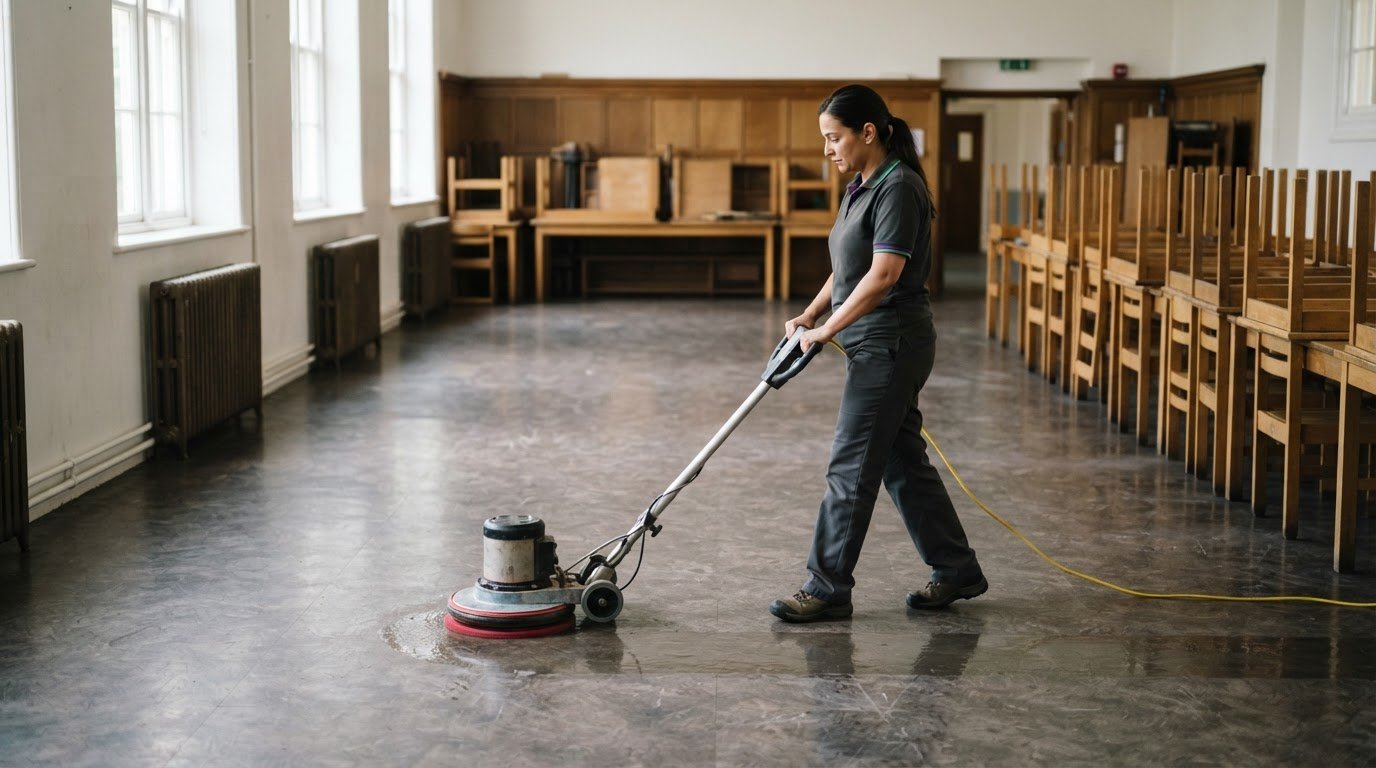
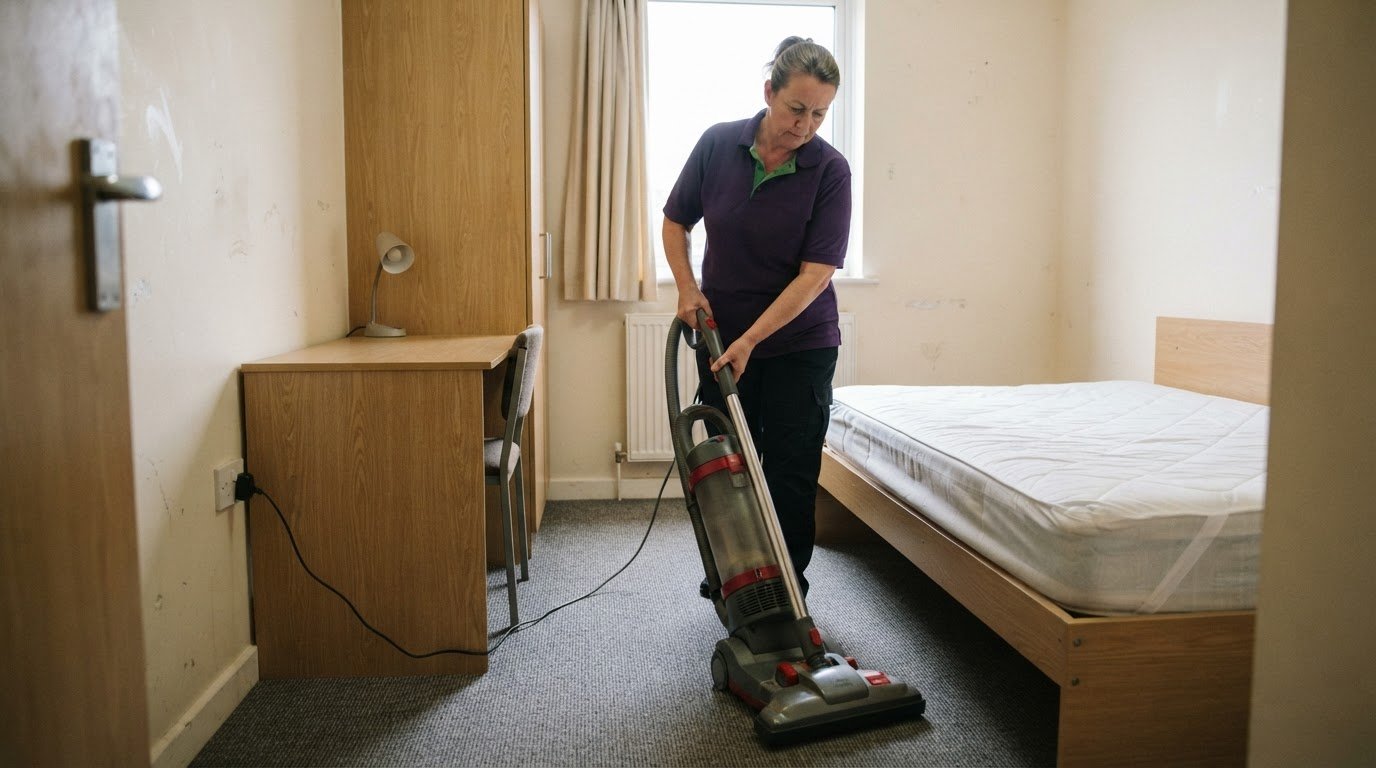
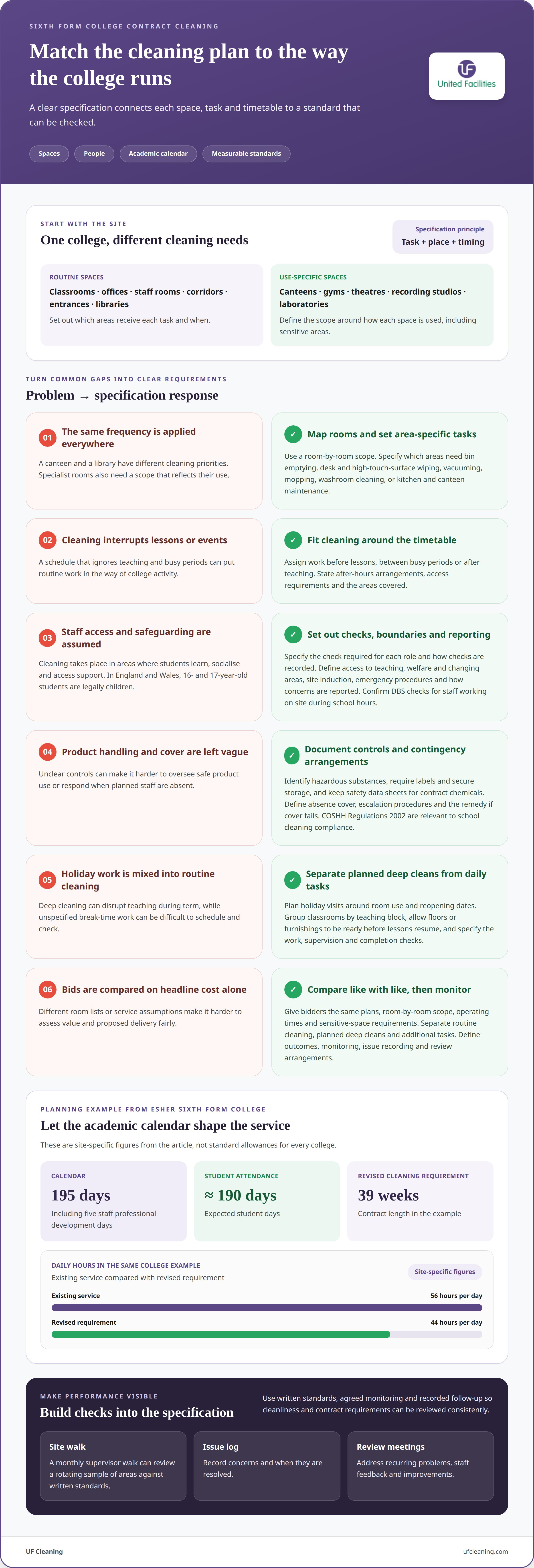
During term time, routine cleaning may include emptying bins, wiping desks and high-touch surfaces, vacuuming carpets, mopping hard floors, cleaning washrooms, and maintaining kitchens and canteens. The contract should specify which areas receive each task and when, rather than applying the same frequency across every building. A canteen, for example, has different cleaning priorities from a library.
Flexible schedules should fit the college timetable. The specification can assign work before lessons, between busy periods or after teaching, helping avoid disruption to classes and events. Term-time routines can then be adjusted for holidays, when quieter premises allow planned intensive work. State after-hours arrangements clearly, including access requirements and the areas covered.
For health and safety, cleaning products and their use need clear controls. The Control of Substances Hazardous to Health Regulations 2002 are relevant to school cleaning compliance, particularly in catering and welfare areas, according to The National Archives. Colleges should identify hazardous substances used on site, ensure they are labelled and stored securely, and keep safety data sheets for chemicals used under the contract.
Typical hours and staffing depend on the site’s size, layout, occupancy, timetable and required tasks. At Esher Sixth Form College, the existing service was set at 56 hours per day, while its revised requirement was 44 hours per day; these are site-specific examples, not a standard allowance.
For a tender, provide current building plans, a room-by-room scope, details of how areas are used, operating times and the requirements of sensitive spaces such as laboratories. The contract should also define access risks, cleaning exclusions, absence cover, escalation procedures and any remedy if cover fails. These details make standards measurable and performance easier to assess.
Safeguarding and DBS checks for cleaning staff
Cleaning staff work across spaces where students learn, socialise and access support. In England and Wales, 16- and 17-year-old students are legally children, so safeguarding arrangements matter even when cleaning is not the college’s core activity. Schools should confirm that staff working on site during school hours have DBS checks.
A college specification should explain how checks are recorded and access managed. It can identify which staff may enter teaching rooms, welfare areas or changing facilities, and how cleaners should report an unexpected interaction or concern. Clear boundaries support routine hygiene work without disrupting learning or compromising student privacy.
Address DBS checks carefully in the contract: specify the check required for each role and the college’s safeguarding arrangements, rather than assuming the same level applies to every cleaner. The contract can also describe site-specific induction, including access rules, emergency procedures and how to report concerns.
Training supports consistent practice. If BICSc training is part of the required standard, name the relevant competencies and explain how they apply to tasks such as washroom cleaning, product handling or work in specialist spaces. This makes expectations clear without treating a training label as a substitute for safeguarding procedures or supervision.
Quality checks should cover hygiene outcomes and contract requirements. A monthly site walk with a supervisor can review a rotating sample of areas against written standards, while an issue log records concerns and when they are resolved. Review meetings can address recurring problems, staff feedback and improvements. During holidays, access controls remain important when teams deep clean quieter buildings.
Clear procedures make education cleaning easier to oversee and help keep compliance visible in daily operations. A defined cleaning standards framework can bring staff conduct, checks and audit records into one practical arrangement.
Deep cleaning during term breaks and holidays
Holiday cleaning gives colleges time to address work that would disrupt teaching during term. A planned programme can cover classrooms, shared facilities and areas that are difficult to access during busy weeks. The summer break may suit larger tasks, while shorter term breaks can accommodate focused work in selected buildings.
Plan each visit around room use and reopening dates. For example, a schedule can group classrooms by teaching block and allow enough time for floors or furnishings to be ready before lessons resume. Deep cleaning heavily used PE department showers every six months is one suggested interval. Specify which tasks are routine and which are additional holiday work.
Academic calendars also affect the contract structure. Esher Sixth Form College’s calendar is based on 195 days, including five staff professional development days, and it is expected to receive students for approximately 190 days. Its revised cleaning requirement is a 39-week contract. These figures illustrate why term dates, staff training days and access periods matter when planning schedules.
For a fair tender, request a clear breakdown of contract components, separating routine term-time cleaning from planned deep cleans and additional tasks. Compare bids against the same room list, scope and expected service levels, not just the headline total. Competitive tendering can help assess value for money, while defined standards make proposed delivery easier to evaluate.
Check that each bid explains how holiday work will be scheduled, supervised and completed before teaching resumes. A service-level plan should identify the areas covered, expected outcomes, monitoring method and process for recording unfinished work. Review performance through site inspections, scored area samples and an issue log, then use the findings to agree improvements.
Safeguarding and access arrangements remain relevant during quieter periods. The contract should state who authorises entry, which areas are accessible and how completed work is reported. This supports facility maintenance and a controlled handover before students and staff return.
Cleaning requirements across a secondary school and sixth form
Sixth form buildings can combine general teaching rooms with spaces for practical subjects, sport and performance. A schedule should cover every area and surface, from desks and floors to touchpoints, toilets and changing rooms. For example, a gym floor may need a different method and frequency from a carpeted study space. Base the scope on actual use, not simply on whether a room is labelled a classroom.
Start with current building plans and a room-by-room list. Record each area’s purpose, flooring and other key surfaces, occupancy patterns and access constraints. Consult staff responsible for specialist rooms, such as laboratories, before setting tasks. This helps distinguish routine work from areas requiring trained staff, particular methods or restricted access. Clear detail supports a tailored commercial cleaning plan rather than a blanket service description.
The Workplace (Health, Safety and Welfare) Regulations 1992 apply to schools as workplaces and cover cleanliness, ventilation and the general condition of premises, according to The National Archives. A contract should translate those considerations into measurable cleaning standards, with a named person accountable for monitoring them. Photographic schedules can show the expected condition of individual areas, while inspection records provide evidence of performance and any improvement required.
Specifications can prescribe methods and frequencies or focus on required outcomes while allowing flexibility in delivery. Either way, state the task and frequency for each area. Washrooms, for instance, should have defined checks, with cleaning increased to twice daily during illness outbreaks. Agree a review process and assess a rotating sample of rooms against the written standard.
Clear sixth form college contract cleaning specifications connect each space to a task, frequency and check. To discuss a tailored approach for education premises, explore education cleaning.
UF Cleaning
UF Cleaning helps colleges turn cleaning requirements into a practical, tailored service plan. The team can align room-by-room standards, term-time routines, holiday work and quality checks within one coherent specification.
For a sixth form college, the plan should reflect how teaching spaces, shared facilities and specialist areas are used, as well as access times. UF Cleaning provides commercial cleaning and facilities support with flexible schedules and real-time quality controls, helping organisations monitor service delivery and standards. Clear priorities and site information are a practical starting point for tailoring the service to the premises.
If you’re ready to discuss cleaning arrangements for your college, contact UF Cleaning.
Set the next stage in motion
The next step is to turn operational priorities into a working brief for procurement and service delivery. Clear sixth form college contract cleaning specifications give decision-makers a shared basis for discussing responsibilities, expected outcomes and performance reviews. They can also make future changes easier to manage as room use, teaching patterns and site requirements evolve.
Before inviting bids or refreshing an existing arrangement, bring the relevant decision-makers together around the college’s priorities. This creates a practical foundation for a service that fits the premises and the way they are used. UF Cleaning provides comprehensive commercial cleaning and facilities support, alongside specialist housekeeping and hospitality management services nationwide. To discuss your college’s requirements and possible next steps, contact UF Cleaning. A considered brief is a strong beginning for a well-organised cleaning arrangement.
Frequently Asked Questions
What cleaning procurement options are available?
A college can manage cleaning in-house or appoint an external provider. In-house provision keeps staffing and daily management within the organisation, while contracting out places delivery under a service agreement. When considering an external appointment, competitive tendering can help assess value for money. Compare proposals against the same scope, expected outcomes, monitoring arrangements and approach to holiday work, rather than headline descriptions alone.
Can you clean multiple buildings on campus?
Yes. UF Cleaning supports organisations with multiple sites, tailoring cleaning plans to each building’s requirements. A campus plan can distinguish teaching blocks, shared facilities and access arrangements while maintaining consistent standards across the estate. For example, a building with evening activities may need a different schedule from one used mainly for daytime teaching.
Can you clean specialist vocational areas like science labs or training kitchens?
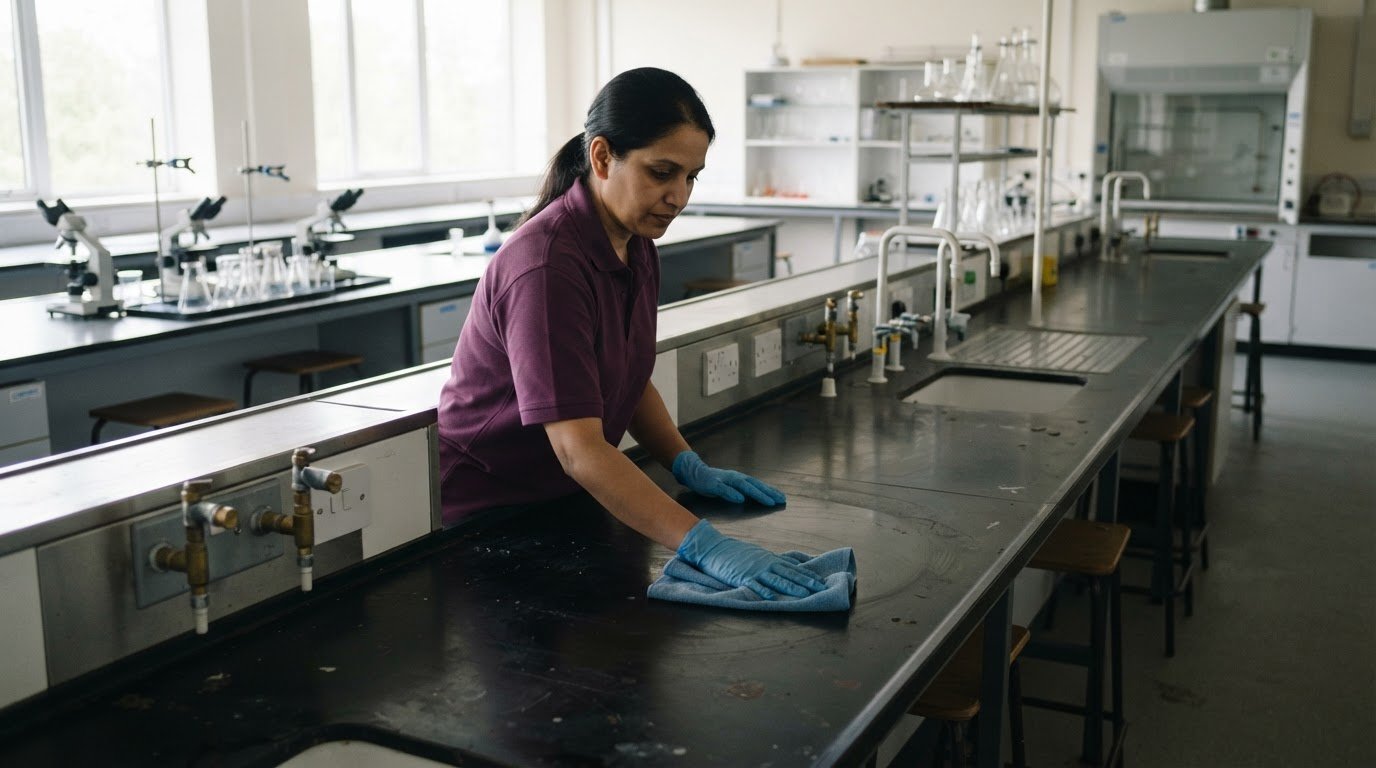
Education cleaning plans can be tailored to the spaces requiring attention, including specialist rooms identified in the college’s scope. For a science lab or training kitchen, specify the surfaces, access limits and cleaning tasks, following instructions from staff responsible for the area. This gives cleaning teams a defined remit and avoids treating specialist rooms like ordinary classrooms.
Do you clean shared areas like libraries, cafés, and student lounges?
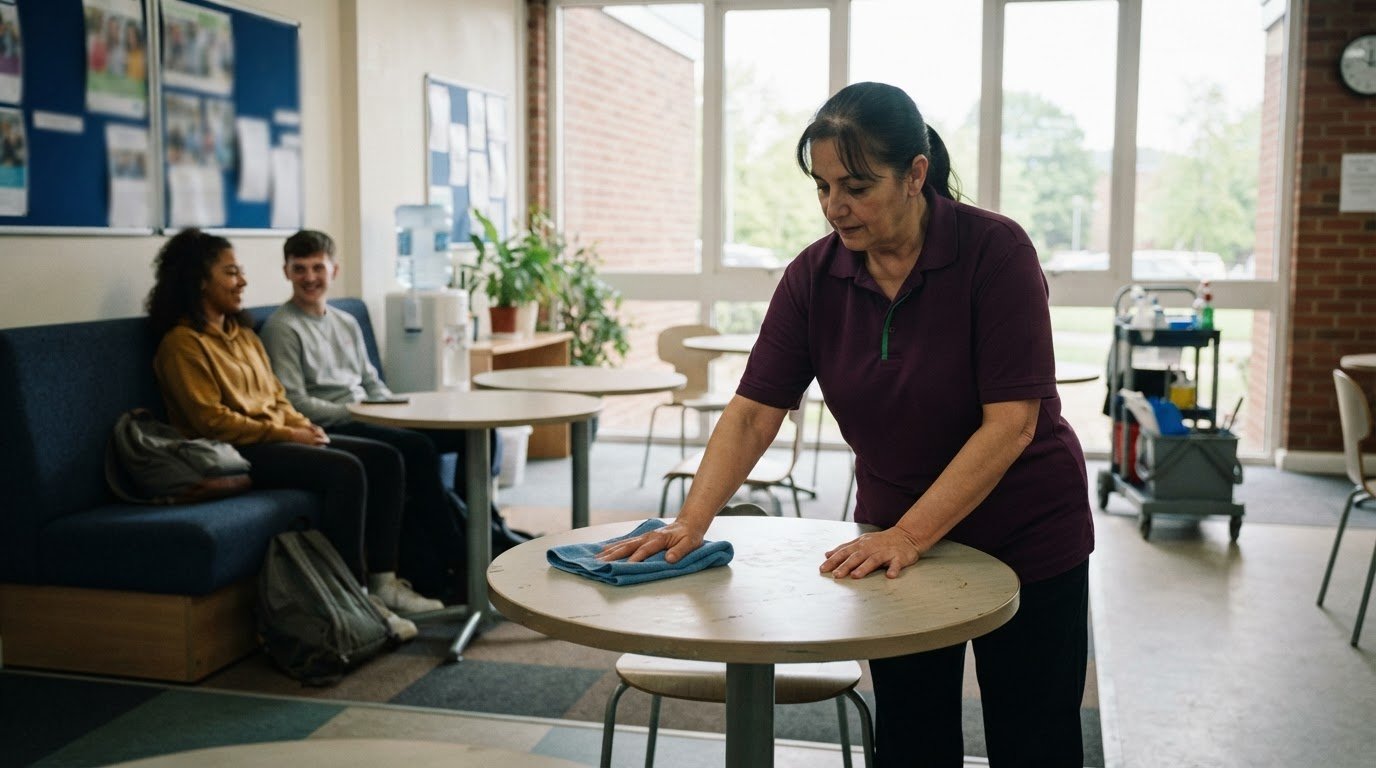
Yes. Shared areas can be included in an education cleaning plan, with tasks organised around how each space is used. A café, for instance, may need attention after food service, while a student lounge may require checks of high-use furniture and touchpoints. Listing these spaces separately helps the schedule reflect different patterns of use and gives supervisors clear areas to assess.
Do you provide consumables like soap and paper towels?
Soap and paper towels are consumables and can be included in the service arrangement where agreed. The quotation should clarify whether these supplies are included or charged separately, alongside any other materials or equipment. This helps a college plan purchasing and replenishment responsibilities without assuming routine cleaning automatically covers washroom supplies.
What Laws Govern School Cleaning Standards in the UK?
Relevant legislation includes the Health and Safety at Work etc. Act 1974 and the Workplace (Health, Safety and Welfare) Regulations 1992. The National Archives identifies the latter as covering cleanliness, ventilation and the general condition of school premises. The Control of Substances Hazardous to Health Regulations 2002 are also relevant to cleaning safety. In England, the School Premises Regulations 2012 address pupils’ health, safety and welfare.