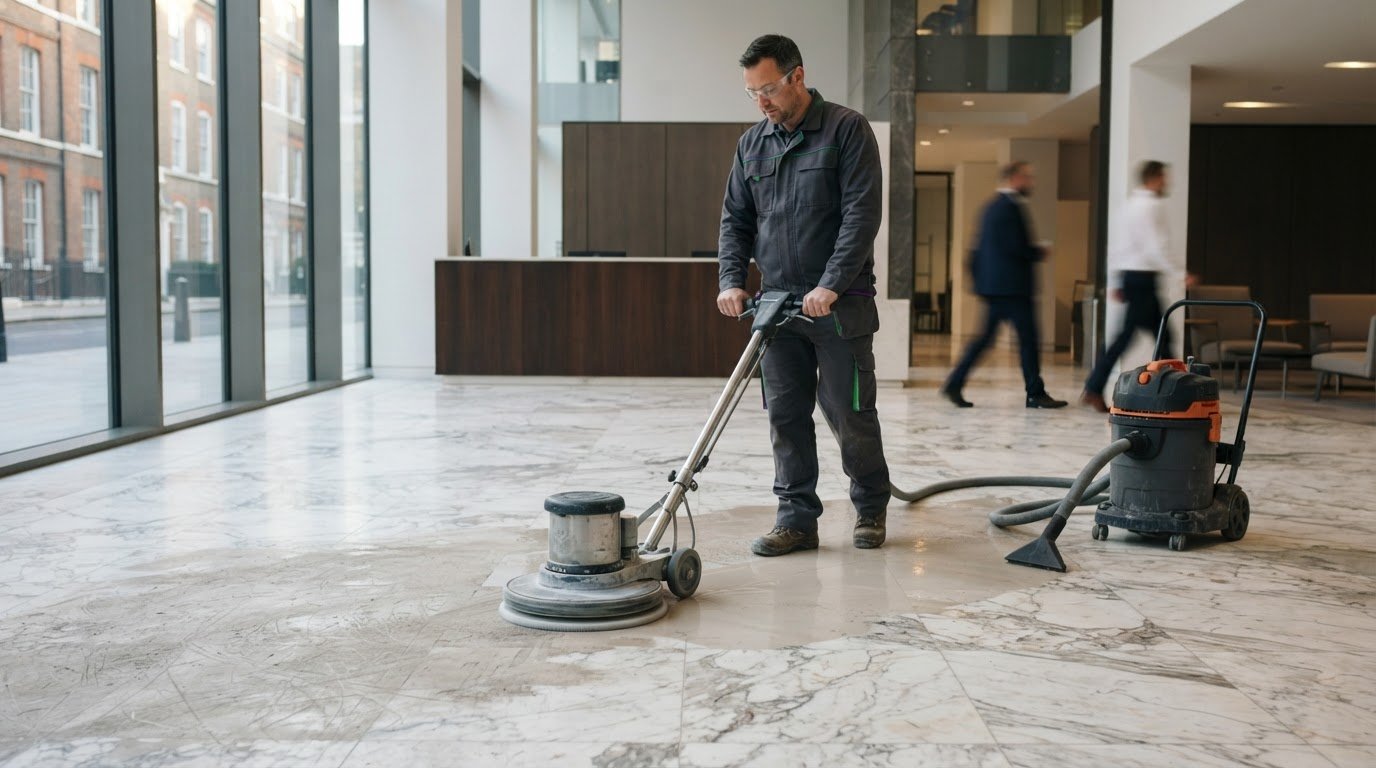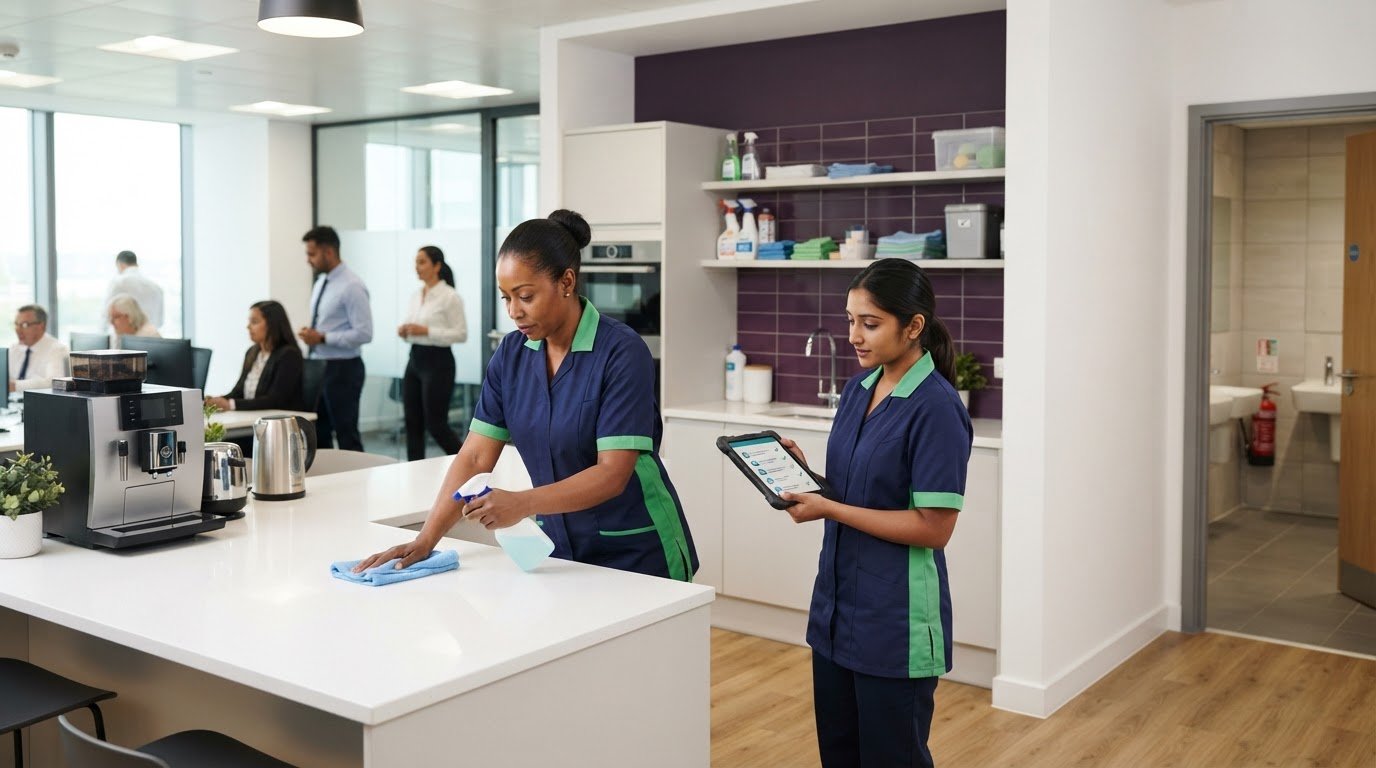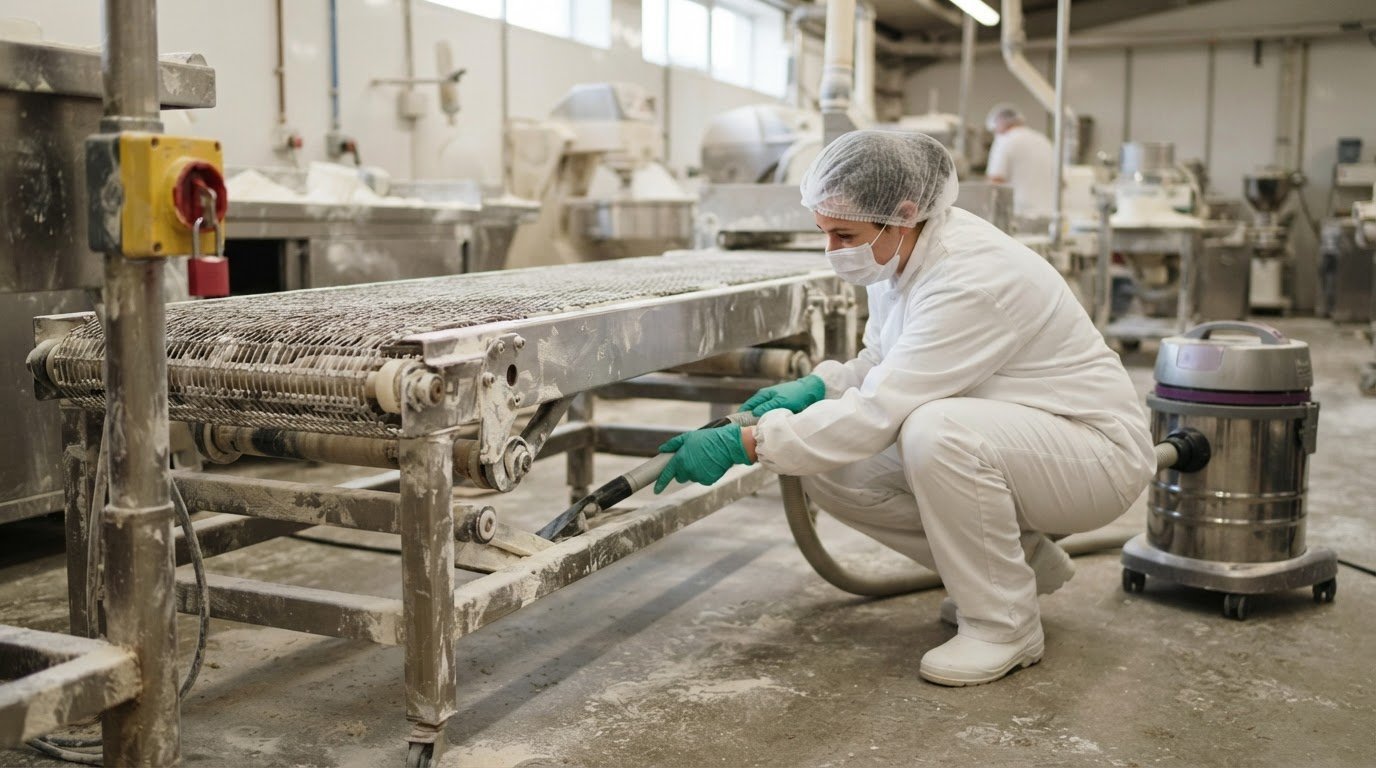
A clean production floor is only the start. Manufacturing plant cleaning in the UK can cover machinery, tanks and vessels, pipework and drainage, as well as dust, oils and production residues. Depending on the site, the work may also include steam cleaning, high-pressure water jetting, vacuuming, or specialist shutdown and decontamination cleans.
A cleaning plan should protect people and equipment while minimising disruption to production. The right scope depends on the processes, materials and areas involved, so a food factory may have different priorities from a metal or plastics plant.
This guide explains what industrial plant cleaning can involve, how regular cleaning can support health and safety, and what to consider when scheduling work around production. It also outlines how cleaning needs differ across manufacturing sectors, helping you identify the right scope for your site.
Key Takeaways
- Define the cleaning scope around machinery, production residues and any specialist areas that need attention.
- Build cleaning into health and safety procedures, with particular care around oils, powders and potentially hazardous materials.
- Adapt the cleaning schedule to the production sector, site risks and operating timetable to limit disruption.
- Use the UK company directory section to understand where providers are concentrated and how the market is organised.
Does the service include specialist process or machinery cleaning?
Yes. Industrial cleaning can cover processing machinery, production lines and floors, using methods suited to the surfaces and residues. Options include pressure washing, steam cleaning, vacuuming, scrubbing and mopping.
A manufacturing plant cleaning UK plan can include equipment, tanks, vessels, pipework and drainage, with the scope tailored to the production process.
Specialist machinery and hazardous-environment cleaning
Specialist cleaning can address machinery, tanks and vessels, including during shutdown or decontamination work. In higher-risk environments, such as confined spaces or hazardous zones, the access conditions and contamination determine the method. Identify the equipment and areas requiring treatment, and consider whether residue could spread between process stages.
For example, a tank with chemical build-up calls for a different approach from an accessible production-line surface. Cleaning plans can also cover hazardous and non-hazardous material removal, with vacuuming used where appropriate.
Machinery cleaning and residue removal
Industrial residues can include sludge, oils, chemical build-up and production dust. Cleaning may degrease equipment, remove deposits from processing machinery, and clear associated pipework or drainage. The method depends on the residue and machinery surfaces, so define the affected components and material to be removed in the scope.
Dust and grime around equipment can contribute to overheating or breakdowns. Removing build-up helps keep components cleaner and supports machinery service life by limiting residue accumulation.
Cleaning methods and production support
Methods include pressure washing and steam cleaning on suitable equipment, alongside manual scrubbing and mopping for floors and surfaces. Vacuuming removes loose material, while degreasing addresses oily deposits. For a production line, work may cover accessible machinery, surrounding floors and areas where material collects.
A well-planned manufacturing plant cleaning UK schedule can support efficiency by reducing build-up that interferes with equipment operation. Regular cleaning also complements maintenance routines and may help limit avoidable stoppages. Match the method to the machinery, residue and access conditions so cleaning supports production rather than treating every surface alike.
Does industrial cleaning help with health and safety compliance?
Yes. Regular cleaning can reduce risks from accumulated oils, chemicals and fine powders, including contamination, slips and fire hazards.
Whether work is carried out by in-house employees or an external team does not change the need to account for site-specific hazards.
Health and safety procedures and RAMS
Procedures should reflect the materials and equipment on site, such as metal shavings near machinery or fibreglass in a processing area. Site-specific RAMS set out the work, risks and control measures, alongside access arrangements and the facility’s safety procedures. Cleaning teams need to understand the hazards before work starts, particularly around heavy machinery and potentially hazardous materials.
In-house cleaning is carried out by a facility’s own workforce; outsourced cleaning is assigned to an external team. The cost of industrial factory cleaning depends on the site, scope, risk and frequency, and is set out in a quote. When comparing a service, review the proposed safety procedures, staff training, and how work in confined spaces and COSHH requirements will be managed.
Hygiene and food safety compliance
In food production, cleaning procedures help control contamination across equipment and work areas. BRCGS Global Standard for Food Safety Clause 4.11 requires documented, validated and effectively implemented cleaning procedures to prevent cross-contamination. Records can show what was cleaned, how procedures were applied and whether they were effective.
The Food Safety (General Food Hygiene) Regulations 1995 are identified as a resource relevant to food factory cleaning in the UK, according to The National Archives. Regular, documented cleaning can help food, pharmaceutical and chemical-processing facilities prepare for inspections and support health, safety and environmental standards. A practical review should connect each cleaning task to its area, hazard and required record, so hygiene controls remain clear across different sectors.
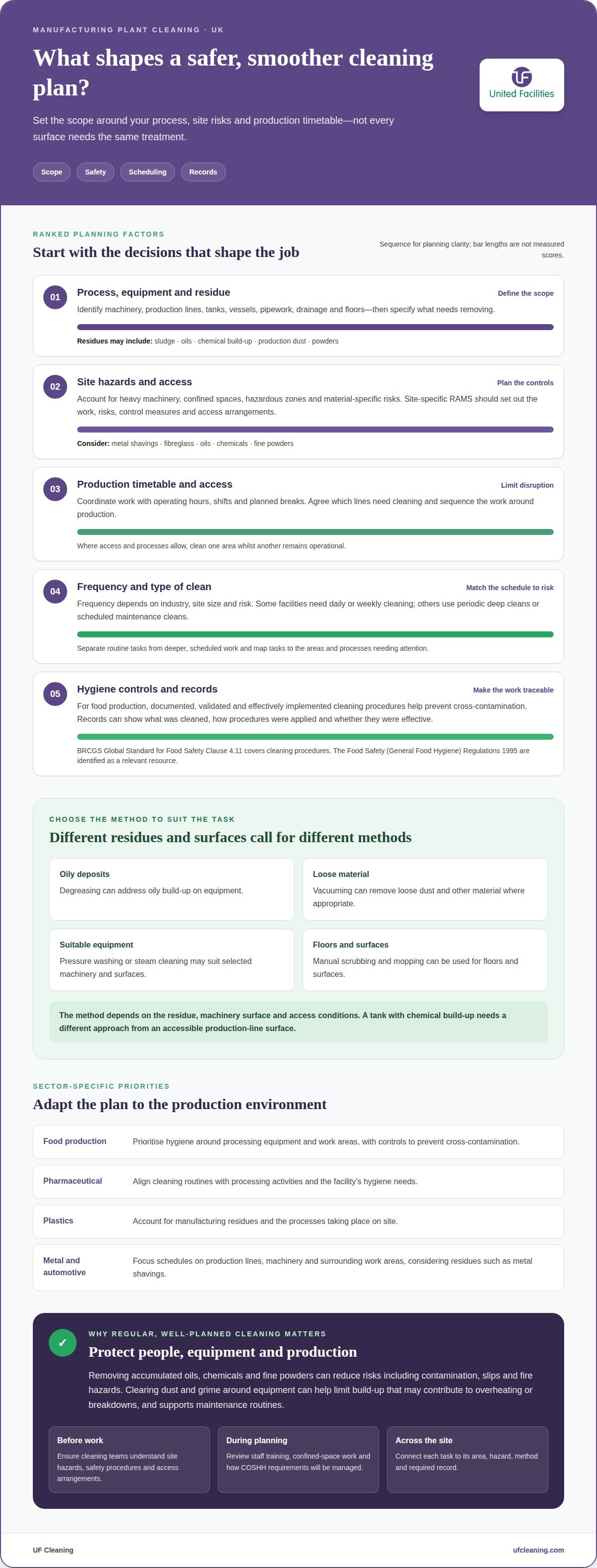
Cleaning for food, pharmaceutical, plastics, metal and automotive production
Cleaning plans should reflect each factory’s processes, materials and operating timetable. A manufacturing plant cleaning UK plan should distinguish routine tasks from deeper, scheduled work.
Food production and pharmaceutical sites may prioritise hygiene around processing areas. Plastics, metal and automotive factories need plans tailored to their processes and residues.
Production-line and plant cleaning schedules
Food factories can organise cleaning around production areas where hygiene is central. Pharmaceutical facilities may need routines aligned with their processing activities, while plastics plants can account for manufacturing residues. In metal and automotive settings, schedules can focus on production lines and surrounding work areas.
Frequency depends on the industry, site size and risk. Some facilities need daily or weekly cleaning; others use periodic deep cleans or scheduled maintenance cleans. A manufacturing plant cleaning UK schedule should map tasks to the areas and processes needing attention, then account for shifts and access.
Managing production downtime during cleaning
Coordinate industrial cleaning with operating hours and planned production breaks. For example, where access and processes allow, work can be scheduled in one area while another remains operational. Agree which lines need cleaning and plan the sequence around the production timetable.
Prioritise tasks that support routine maintenance, and schedule more extensive work when equipment is accessible. Food, chemical and automotive processes have different operating demands, so the sequence should reflect each facility’s production flow. Clear shift handovers and agreed access arrangements help prevent cleaning tasks from conflicting with production.
UK manufacturing plant cleaning company directory
A UK directory can help show where manufacturing plant cleaning companies are listed. City counts indicate market presence, but do not establish which service suits a particular workplace.
UK manufacturing plant cleaning companies
As of Sep 17, 2026, the directory records 70 companies in London, the highest city count listed. Manchester has 19 records, whilst Birmingham has 14. These figures indicate where directory entries are concentrated, not the quality or specialisms of individual companies.
The same list includes 39 companies with 201-500 employees, 17 with 501-1,000 employees, and 9 with 1,001-5,000 employees. Company size alone doesn’t show whether a team can work effectively in strict food processing spaces or around a specific production process. Treat the directory as a map of recorded businesses, then assess each against your site’s needs.
Choosing a qualified industrial cleaning contractor
Start by matching the proposed cleaning scope to your facility. A food-processing workplace has different hygiene priorities from a metal factory, while machinery, chemicals and access arrangements also shape the work. Review how the planned tasks, staff training and health and safety procedures address those conditions.
Next, compare the proposed schedule with your shifts and production timetable. Review how completed work will be recorded and access to relevant spaces coordinated. For example, a plan for a processing area should specify the cleaning tasks and how they fit around production, rather than rely on a generic workplace schedule.
Use these criteria to narrow the directory to providers whose approach fits your facility. To discuss cleaning requirements for a workplace, outline your site’s needs.
UF Cleaning: Office Cleaning London
UF Cleaning provides Industrial & Manufacturing Cleaning for industrial sites and production areas. Where your site also includes offices, its Office Cleaning London service covers office cleaning needs, and Office Hard Floor Cleaning is available for workplace floors.
These services complement plant cleaning rather than replace specialist machinery or process cleaning. Housekeeping is another option for organisations with broader workplace requirements. Choose the service according to the spaces and tasks that need attention.
For office cleaning alongside your site’s wider facilities needs, contact UF Cleaning to discuss your requirements.
Set a clear plan for your site
Start by defining what good cleaning needs to achieve across your facility. Consider which areas need routine attention, where production creates specific cleaning demands, and how the work should fit around operations. A clear scope gives manufacturing plant cleaning in the UK a practical starting point.
UF Cleaning provides Industrial & Manufacturing Cleaning, alongside Office Cleaning London, Housekeeping and Hotel Management for organisations with wider facilities needs. The appropriate support depends on the spaces and tasks involved.
Share the priorities for your site and the areas that need attention. Contact UF Cleaning about your plant to discuss the next step and move towards a considered cleaning plan.
Frequently Asked Questions
What Does Industrial Plant Cleaning Actually Cover?
Industrial cleaning covers tasks defined for a particular site, from production areas to equipment and surrounding surfaces. A useful scope identifies the areas to clean, the soil or residue present, and any access restrictions. For example, it can distinguish machinery surfaces from floors and adjacent workspaces, making responsibilities and completed tasks easier to track.
What types of industrial cleaning services do you offer?
UF Cleaning provides Industrial & Manufacturing Cleaning for industrial sites and production areas, as well as structured hygiene cleaning for food factories. The scope should reflect the facility’s processes and priorities. A food production site, for instance, may need a defined hygiene routine, while another industrial workplace may focus on maintaining production areas.
What is industrial cleaning and how does it differ from regular cleaning?
Industrial cleaning addresses the conditions and requirements of production environments, rather than routine upkeep of general workplace areas. It is planned around equipment, production residues, access arrangements and hygiene priorities. For example, a factory plan may account for areas used during processing, while regular office cleaning focuses on workspaces and shared facilities.
What situations or industries require specialist industrial cleaning?
Specialist industrial cleaning is relevant when production creates specific hygiene, residue or access requirements. Food factories may need structured hygiene cleaning, while pharmaceutical and chemical-processing facilities need routines suited to their operating environments. Plastics, metal and automotive plants may also need cleaning planned around equipment and production activities, rather than a general commercial cleaning schedule.
Can industrial cleaning be carried out outside working hours?
UF Cleaning lists early-morning, evening, daytime, weekend and 24/7 rapid-response scheduling options. For a production site, a cleaning plan should identify which areas need access and how work fits around shifts and operating activity. Agreeing the sequence and access arrangements helps teams plan cleaning with the facility’s timetable in mind, whether work is scheduled during or outside standard operating hours.
Can you clean high or hard-to-reach areas safely?
Safe cleaning of high or hard-to-reach areas starts with assessing the height, access route, surface and nearby operations. Before work begins, the plan should identify suitable access equipment, hazards and controls. In a production environment, it should also account for machinery and staff movement below the area, organising the task without creating avoidable risks for workers or operations.